• العربية
  • فارسی
Brand
  • Iran Insight
  • Politics
  • Economy
  • Analysis
  • Special Report
  • Opinion
  • Podcast
  • Iran Insight
  • Politics
  • Economy
  • Analysis
  • Special Report
  • Opinion
  • Podcast
  • Theme
  • Language
    • العربية
    • فارسی
  • Iran Insight
  • Politics
  • Economy
  • Analysis
  • Special Report
  • Opinion
  • Podcast
All rights reserved for Volant Media UK Limited
volant media logo

Iranian rights lawyer sentenced to prison, HRANA reports

Aug 4, 2026, 00:55 GMT+1

Iranian rights lawyer Babak Eslami-Farsani has been sentenced to nine months in prison on charges of "propaganda against the state," the HRANA news agency reported.

According to HRANA, Branch 23 of the Tehran Revolutionary Court convicted Eslami-Farsani after he was summoned to a Tehran prosecutor's office in June.

Eslami-Farsani represented the family of Mehrshad Shahidi, who was killed during the 2022 nationwide protests in the city of Arak.

Most Viewed

Khamenei warns Pezeshkian next resignation will be accepted, in-law says
1

Khamenei warns Pezeshkian next resignation will be accepted, in-law says

2

Iran hangs two more political prisoners as execution wave widens

3

Tehran records heaviest damage in latest war, municipal report shows

4

Economic crisis drives Iranians to sell hair, rent laptops

5

More Iranian teenagers at risk of execution, rights groups warn

Banner
Banner
Banner

Spotlight

  • Anti-Islam posts follow Iran's dawn executions, sparking hardline backlash

    Anti-Islam posts follow Iran's dawn executions, sparking hardline backlash

  • Why Afghans still risk death to reach Iran
    ANALYSIS

    Why Afghans still risk death to reach Iran

  • Iran's president met Mojtaba Khamenei in the back seat of a car
    EXCLUSIVE

    Iran's president met Mojtaba Khamenei in the back seat of a car

  • Trump's U-turn reopens Tehran's political faultline
    INSIGHT

    Trump's U-turn reopens Tehran's political faultline

  • Deny first, negotiate later, Tehran's familiar diplomacy
    INSIGHT

    Deny first, negotiate later, Tehran's familiar diplomacy

  • Iran managing the inflation statistic, not the inflation
    ANALYSIS

    Iran managing the inflation statistic, not the inflation

•
•
•

More Stories

Female Iranian colonel charged after allegedly aiding protesters

Aug 3, 2026, 23:15 GMT+1
100%
Iranian police colonel Shahrzad Zamiri

A female Iranian police colonel accused of assisting protesters during January's nationwide unrest has been charged with offences including "disclosure of state secrets," according to rights group HRANA, in a rare case involving a serving security official.

Shahrzad Zamiri, 51, remains detained without trial in Mashhad's Vakilabad Prison, HRANA reported on Monday.

Informed sources told Iran International that Zamiri was summoned to report to Iran's police force several days after the protests before being detained. They said the accusations stem from her presence at the protests and alleged assistance to protesters.

Zamiri served as deputy for social affairs at the cyber police, known as FATA, in Khorasan Razavi province.

According to the sources, she spent about two months in solitary confinement after her arrest, during which she was denied telephone calls and family visits.

The sources added that Zamiri has been interrogated but has not been granted access to a lawyer. Her case remains at the investigative stage, with no trial held or verdict issued.

HRANA reported that an investigative hearing was held on Monday at the military prosecutor's office in Mashhad.

The agency said Zamiri faces five charges but identified only two of them: "disclosure of state secrets" and "operational action." Authorities have not disclosed the factual basis for the allegations.

Iran International's sources said authorities have also confiscated Zamiri's property. Her telephone contact and family visits, suspended since late May, have now resumed, according to HRANA, citing a source close to her family.

Cases involving the detention of serving or former members of Iran's police or armed forces rarely become public. Previous reports have, however, pointed to isolated instances of dissent or resistance among security personnel involved in suppressing protesters.

Iranian authorities have not released a comprehensive figure for the number of people detained following the January protests.

In recent months, the judiciary has intensified its crackdown through widespread summonses and arrests, lengthy prison sentences and a sharp rise in executions involving political and protest-related cases.

Khamenei warns Pezeshkian next resignation will be accepted, in-law says

Aug 3, 2026, 22:16 GMT+1
100%
Iranian President Masoud Pezeshkian arrives to address a ceremony marking Iran's National Industry and Mine Day in Tehran, July 21, 2026

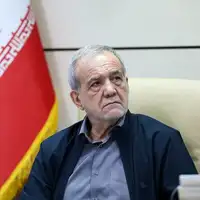
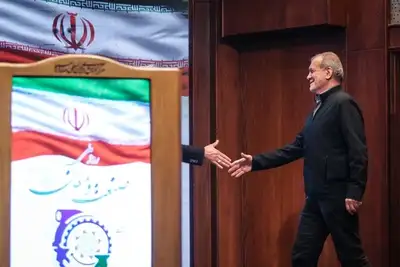
Iran’s Supreme Leader Mojtaba Khamenei has warned President Masoud Pezeshkian that his next resignation would be accepted, a relative of Khamenei by marriage said in a video released Monday, prompting sharp denials and political backlash.

Mohammad-Bagher Kharrazi, a senior cleric whose sister is married to Khamenei’s brother, claimed Pezeshkian had threatened to resign “28 times” but stopped after being warned that his next resignation would be accepted.

“If he resigns one more time, I will approve it. I will write ‘approved’ underneath it, and that will be the end of it,” Kharrazi quoted Khamenei as saying.

“Pezeshkian no longer dares,” he said. “They all backed down.”

Iran International reported on May 31, 2026, that Pezeshkian had submitted an official resignation letter to Khamenei’s office, saying his government had been excluded from major decisions and hardline Revolutionary Guards factions had taken control of state affairs.

A source familiar with the letter said at the time Pezeshkian argued that he could no longer fulfill his constitutional responsibilities and requested to leave office immediately.

However, Mehdi Tabatabaei, deputy for communications and information at Pezeshkian’s office, dismissed Kharrazi’s resignation allegation as “baseless and an outright lie.”

“A sinister alliance of deceitful agitators and proponents of extremism and incompetence has targeted sacred unity and national cohesion,” Tabatabaei wrote on X.

“Two years after their defeat at the ballot box, they are still seeking revenge against the will of the people,” he added. “They have become puppets of Iran’s enemies. It is deplorable.”

Ali-Asghar Shafieian, an adviser to the Pezeshkian administration, also rejected Kharrazi’s account, saying the cleric had neither met Khamenei nor maintained any contact with him.

“Mr. Kh has neither seen the Leader nor has any connection with him, and he is known for strange stories,” Shafieian wrote. “Do not manufacture rumors or indulge in fantasies.”

Shafieian suggested the remarks reflected anger in the faction associated with the sole dissenting vote in the Supreme National Security Council over the Iran-US memorandum of understanding.

He said the faction was unhappy about the agreement’s signing, Khamenei’s trust in Pezeshkian, the decision now being implemented and praise of the president by both the late Ali Khamenei and the current Supreme Leader.

Reformist political activist Ahmad Zeidabadi separately described Kharrazi’s remarks as a “tension-provoking claim,” saying they served no purpose other than inflaming tensions during an already difficult period.

Zeidabadi cited Kharrazi’s previous threats against political critics during the reform era and urged state institutions to clarify the matter before the widespread circulation of his remarks created a new political controversy.

Khamenei to replace security chief

Kharrazi also claimed Khamenei planned to remove Mohammad-Bagher Zolghadr as secretary of the Supreme National Security Council and replace him with Mohsen Rezaei, the Supreme Leader’s military adviser.

“They are going to replace Mr. Zolghadr, and Mr. Mohsen Rezaei will take his place,” he said.

Kharrazi further claimed Foreign Minister Abbas Araghchi had been told that he had “no right to interfere in the negotiations under any circumstances,” accusing him of repeatedly threatening to withdraw from the diplomatic process.

Zolghadr, a former deputy commander of the Revolutionary Guards, was appointed secretary of the security council on March 24, 2026, replacing Ali Larijani after his death during the war. The appointment was approved by Khamenei and formally issued by Pezeshkian.

Iran International reported on March 25 that senior IRGC commanders had pressured Pezeshkian to appoint Zolghadr despite opposition from the president and other officials.

Rezaei, a former IRGC commander-in-chief and repeated presidential candidate, was appointed Khamenei’s military adviser on March 16.

The claims come amid a continuing struggle between Pezeshkian’s allies and hardliners over responsibility for the Iran-US memorandum of understanding, which was signed by the Iranian and American presidents on June 17.

Pezeshkian said an overwhelming majority of security council members had approved the text, while hardliners argued that the agreement crossed Khamenei’s red lines.

Shortly after the MoU was signed, lawmaker Mohammad-Manan Raisi said Khamenei had taken the unusual step of requiring the support of at least 75% of council members before approving the agreement. He said all but one member voted in favor.

The dispute intensified after Vice President Mohammad-Jafar Ghaempanah said Khamenei had instructed officials to approve the MoU if it secured the three-quarters majority. Ghaempanah said Khamenei subsequently authorized the agreement while warning officials not to retreat in the face of excessive US demands.

His remarks prompted hardliners to accuse the Pezeshkian administration of portraying the Supreme Leader’s position as subordinate to a council vote.

Iran managing the inflation statistic, not the inflation

Aug 3, 2026, 21:00 GMT+1
•
Mohamad Machine-Chian
100%

A month-long banking outage helped Iran’s Central Bank claim inflation had nearly halved, even as prices stood 84 percent higher than a year earlier and food costs continued to rise sharply.

In late July, the governor of Iran's central bank, Abdolnaser Hemmati, announced a victory: monthly inflation, he said, had been nearly halved in a single month — from 7.4 percent in the month ending June 21 to 3.6 percent in the month ending July 22 — thanks to “measures and tools at the bank’s disposal.” He did not name a single tool.

Numbers like these need translation. Monthly inflation is a standard statistic everywhere, but in Iran it is the number people live by: when prices move this fast, the month-to-month change is what a household actually feels at the store.

By the central bank’s own report, prices are now about 84 percent higher than a year ago. Even the “victory” month is nothing to celebrate: 3.6 percent, repeated for 12 months, compounds to an annual rate above 50 percent.

What the announcement omitted is that for almost exactly that statistical month, Iranians could not use their banks.

On June 13, electronic services failed at four major state banks. The state-linked company that runs their infrastructure claimed a cyberattack and said it had taken backup systems offline as a precaution, while official promises of a fix kept slipping.

On June 23, a second wave hit eight banks. Card readers went dead and banking apps would not load in a country where everyday life runs on debit cards, leaving millions of people unable to reach their own money for weeks.

Bank Melli, one of Iran’s largest banks, later waived late-payment penalties for a precisely defined window: June 13 to July 14. That amounted to a full month of disruption, by the bank’s own admission.

The same month piled on more. The state semi-shut the country for about a week in early July for Ali Khamenei’s funeral ceremonies. In the second week of July, fighting with the United States resumed and the naval blockade of Iran’s ports returned.

Extreme heat and a failing power grid then closed offices and banks in several provinces in the final week. In a month like that, a great many purchases simply never happened — not because prices had calmed, but because buying was impossible. A purchase that cannot happen puts no pressure on prices.

The central bank’s own report records the tell. Food inflation — groceries, the most card-dependent of all purchases — collapsed from 8.7 percent to 1.8 percent.

The dials the governor did not mention moved the other way: prices versus a year earlier accelerated, and the 12-month average rose from 57.7 to 61.4 percent.

Street prices told the same story. The announced consumer price of a carton of eggs rose about 20 percent between late May and mid-July, roughly double the official inflation rate for the same stretch.

Halving an inflation rate ordinarily requires tight money sustained over a long period. In Iran’s case, no tightening of any kind occurred: deposit rates did not move until late July, liquidity kept growing rapidly, and there was no sign of fiscal restraint.

A central bank that possessed a painless one-month cure would also need to explain why it kept that cure in the drawer while annual inflation has averaged above 40 percent over the past five years.

There is an old warning in economics, associated with the British economist Charles Goodhart, that when a measure becomes a target, it ceases to be a good measure. Iran’s monthly inflation rate has now completed that journey.

In July, it stopped measuring price pressure in the Iranian economy and began measuring something else: the downtime of the country’s payment system.

A government can manage inflation, or it can manage the inflation statistic. Only one of these shows up at the grocery store.

Economic crisis drives Iranians to sell hair, rent laptops

Aug 3, 2026, 11:27 GMT+1
100%

Iranian households are increasingly selling personal belongings ranging from natural hair to empty perfume bottles and renting out or borrowing basic work tools such as laptops, reflecting deepening economic hardship, the semi-official ILNA news agency reported on Sunday.

The report described the trend as the emergence of a "survival economy," in which even the smallest household possessions have become tradable assets as families struggle with soaring inflation and shrinking purchasing power.

Online classified advertisements, according to ILNA, increasingly feature offers to sell used work shoes and clothing, empty perfume bottles and natural hair for extensions, alongside listings advertising the rental of property deeds, salary slips and other financial guarantees.

From laptops to perfume bottles

The agency also highlighted growing demand for laptop rentals, with users seeking temporary access to devices for basic tasks such as typing documents, using Microsoft Office software or attending online classes.

"What may initially appear strange or even humorous actually reflects declining purchasing power, changing consumption patterns and households' efforts to generate cash," ILNA wrote.

The shift, The report said, illustrates how ownership is increasingly giving way to renting, while everyday items are being used until the very end of their economic value.

  • Where steak is a dream

    Where steak is a dream

The findings come as inflation continues to weigh on Iranian households. According to the Statistical Center of Iran, annual inflation reached 66% in the Iranian month ending in late July, while year-on-year inflation stood at 87.9%.

A 'survival economy'

The growing number of advertisements, the report said, reflects a broader transformation in household finances, where assets once considered worthless or purely personal are increasingly being converted into immediate sources of income.

The agency said many sellers now bundle together low-value household items to improve their chances of making a sale, while advertisements offering natural hair have also become more common, with prices ranging from negotiable sums to several million rials depending on length, color and quality.

The report follows other recent signs of mounting financial pressure, including the spread of installment payments for healthcare and pharmaceuticals, as many Iranian families struggle to cover everyday expenses.

  • Iranians borrow for medicine while state shields Arbaeen healthcare

    Iranians borrow for medicine while state shields Arbaeen healthcare

The expansion of the market for second-hand goods, rentals and personal assets, ILNA said, reflects a growing effort by households to generate cash in an economy where almost anything can become a source of income.

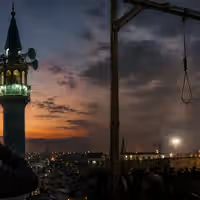
Iran hangs two more political prisoners as execution wave widens

Aug 3, 2026, 08:34 GMT+1
100%

Iran hanged two political prisoners early Monday after convicting them of alleged “spying and intelligence cooperation with Israel,” the judiciary said, extending a surge in executions carried out under broadly framed national-security charges.

Omid Behzad and Pouria Safvat, the judiciary's news outlet said, were executed on Monday, after Iran's Supreme Court upheld their death sentences.

According to Mizan, the two men transmitted “coordinates, images and information about Iranian military and security sites to officers from Israel's Mossad intelligence agency and affiliated communication channels” during the 12-day and 40-day wars in 2025 and 2026.

The pair, the report said, were identified and arrested by the Islamic Revolutionary Guards Corps' intelligence organization but did not specify when, where or how they were detained.

  • Iran executes 20-year-old protester as fears grow for other detainees

    Iran executes 20-year-old protester as fears grow for other detainees

The judiciary outlet also said Behzad maintained direct contact with the administrator of a Telegram channel linked to Israel and supported the US and Israeli military campaign against the Islamic Republic.

Mizan cited Behzad's confessions as evidence, although rights groups have for years documented that Iranian authorities have extracted confessions under coercion, torture or harsh detention conditions.

Iranian authorities use broadly worded charges such as espionage, acting against national security, armed rebellion, enmity against God and corruption on earth to crush dissent and remove political opponents.

Human rights organizations say these labels are routinely applied to protesters, dissidents and political prisoners to portray them as security threats and provide a legal pretext for execution.

Amnesty International, Human Rights Watch and UN experts have documented repeated cases in which such convictions were issued by revolutionary courts after grossly unfair or highly expedited proceedings, with defendants denied meaningful access to lawyers and verdicts based on torture-tainted forced confessions.

Charges against Safvat

Safvat, Mizan said, photographed Iranian air defense systems from rooftops during the 12-day war and sent the images through communication channels linked to Israel.

100%

The outlet said some of the locations he photographed were later bombed. Without providing evidence, it also alleged Safvat had direct contact with Mossad in some instances and sent messages to Iran International.

The court, according to Mizan, sentenced both men to death based on what it described as “explicit confessions, technical evidence, recovered messages and other evidence.” The sentences were upheld by the Supreme Court before being carried out on Monday.

Wider crackdown

Iran has intensified arrests, prosecutions and executions in recent months, with authorities sentencing or executing dozens of people on charges including espionage, involvement in protests and membership of the exiled opposition group Mujahedin-e Khalq (MEK).

  • Iran executes two protesters amid heavy security in Isfahan

    Iran executes two protesters amid heavy security in Isfahan

Human rights groups and activists say the authorities have expanded the crackdown following recent military confrontations, arguing that the campaign is intended to deter renewed public unrest over Iran's deepening economic and political crises.

Iran's latest wave of public hangings of protesters amounts to "killings" and "murders" that form part of a continuing crime against humanity, former United Nations prosecutor Professor Payam Akhavan told Iran International's Eye for Iran.

“What we actually have in Iran are arbitrary executions. These are killings. They are murders,” Akhavan said. "Specifically, the case can be made that this is a crime of extermination, given the large scale of the killings."