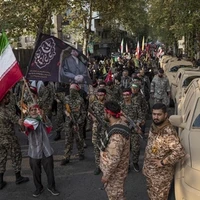
Pedestrians walk beneath a state-sponsored billboard depicting Donald Trump in a coffin in downtown Tehran, Iran, July 23, 2026
The suspension of US and Iranian attacks has revived hopes for diplomacy, but in Tehran the military lull has exposed a widening divide over whether the Islamic Republic should negotiate with Washington or press what hardliners see as a battlefield advantage.
Deputy Parliament Speaker Hamidreza Haji Babai made that resistance explicit on Monday, telling lawmakers that Iran would "never reach an understanding with the United States."
"We should not allow America to wage war whenever it wants and declare a ceasefire whenever it wants," he said during a virtual parliamentary session.
Former vice president Mohsen Mansouri, who served under the late President Ebrahim Raisi, voiced similar opposition in a social media post, arguing that Iran was discussing negotiations precisely when its military position had strengthened.
"We struck several ships, closed the strait and fought even harder than before. An arrow set Aramco ablaze, oil prices rose, and Iran's power became more evident than ever," he wrote.
"Why is it that just when our position is stronger and the enemy is more desperate, some immediately begin talking about negotiations, a ceasefire and reopening the strait?"
He added: "Do not restart this flawed cycle. The path to peace does not pass through negotiations and agreements. Struggle, jihad, vengeance and resistance are the road to peace."
The hardline pushback comes despite mounting signs that indirect diplomacy has resumed.
President Donald Trump said Monday that Washington was engaged in "very serious negotiations" with Iran while warning the United States would resume "very powerful military action" if diplomacy failed.
According to Turkey's Anadolu Agency, citing Pakistani sources, Pakistan and Qatar have intensified exchanges between Washington and Tehran.
The report said the mediators had proposed restoring the status quo that existed before July 9 through a two-week ceasefire, reopening maritime routes and resuming negotiations.
Iranian Foreign Ministry spokesman Esmaeil Baghaei confirmed in an interview with Austria's ORF television that Iran and the United States were exchanging messages through intermediaries.
At his weekly press briefing on Monday, however, he denied that Tehran had requested negotiations, insisting Iran had only been discussing shipping arrangements in the Strait of Hormuz with Oman.
Baghaei also rejected reports of a proposed ceasefire, saying Iran "has never allowed, and will never allow, the United States to determine the timing of war and peace."
Not everyone inside Iran shares the hardliners' view.
The reformist newspaper Etemad argued Monday that recent developments marked a turning point, with military confrontation giving way to deterrence and renewed diplomacy.
Former diplomat Abdolreza Faraji Rad wrote in Arman Emrooz that several developments—including the suspension of US attacks and Trump's latest remarks—suggested behind-the-scenes negotiations had either already produced results or were close to doing so.
He argued both sides still appeared to regard their earlier memorandum of understanding as valid.
Others dismissed that assessment.
Fada-Hossein Maleki, a member of parliament's National Security and Foreign Policy Committee, told the Iranian Labour News Agency (ILNA) that the reduction in US military operations reflected the impact of Iranian attacks on American logistical and operational infrastructure rather than diplomatic contacts.
"Iran has entered the offensive phase," he said. "In the offensive phase, there is certainly no discussion of negotiations."
The United States halted its nightly strikes on Friday after nearly two weeks of attacks, while Iran has not launched further strikes on US bases in the region since shortly after Washington's final operation.
Whether the lull develops into renewed diplomacy or merely precedes another round of fighting remains uncertain.
What has become increasingly clear, however, is that the military pause has opened a new political battle inside Tehran over whether Iran should negotiate from what some see as a position of strength or continue pressing its advantage on the battlefield.
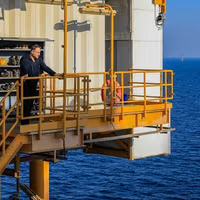
Workers operate an offshore drilling rig in the Iranian sector of the Caspian Sea, undated file photo
A widening scandal over the secret network used to move Iran's oil revenues around international sanctions has triggered growing criticism after senior officials acknowledged that intermediaries misappropriated at least $1.6 billion, with some fleeing the country.
The controversy has exposed the unofficial network of so-called trusties: companies and intermediaries entrusted with receiving and transferring oil revenues outside the international banking system.
Speaking on state television on Sunday, the head of Iran's State Inspection Organization, Zabihollah Khodaeian, said one intermediary alone had failed to return $200 million in state funds before leaving the country.
Khodaeian added that judicial authorities had opened 59 criminal cases against managers of trustee companies. Some suspects have been arrested, while others have fled abroad.
Iranian media also reported that prosecutors had sought Interpol Red Notices for 15 fugitives linked to the network.
The disclosures prompted unusually blunt criticism from Majid Reza Hariri, head of the Iran-China Chamber of Commerce.
In a public message addressed to Tehran's prosecutor, Hariri said the Interpol requests meant at least 15 trusted intermediaries had escaped with "billions of dollars" in national wealth.
"Who introduced these trusties? Who guaranteed them? And why is no action being taken against those who backed them?" he asked.
Although Hariri's estimate has not been independently verified, his comments echoed questions increasingly being raised in Iranian media over how individuals entrusted with handling billions of dollars in oil revenues could allegedly abscond without serious failures in oversight.
A product of sanctions
The trustee system emerged as international sanctions largely cut Iranian banks off from the global financial system.
Unable to receive oil payments through conventional banking channels, Tehran increasingly relied on trusted intermediaries with access to foreign companies and bank accounts to collect, hold and transfer export revenues.
Many of these intermediaries operate through countries including the United Arab Emirates, Turkey and Oman.
The arrangement became indispensable to sustaining Iranian oil exports under sanctions. But it also created a largely opaque financial architecture operating outside many of the transparency, auditing and compliance mechanisms that govern formal banking systems.
Trusties have never been clearly defined under Iranian law. Little is publicly known about how they are selected, what commissions they receive, what guarantees they provide or how their activities are supervised.
Critics say the structure also creates an inherent conflict of interest. Oil revenues can remain in intermediary accounts for days or even weeks before reaching Iran, allowing trusties to profit from holding large balances while the state bears the financial risk.
Questions over oversight
The growing scandal has also drawn attention to who ultimately oversees the network.
Oil Minister Mohsen Paknejad has previously said the Oil Ministry's responsibility ends with marketing and selling crude, while the Central Bank determines where export revenues are deposited and supervises their transfer.
The issue is especially sensitive because trusties are not ordinary commercial intermediaries. They are selected precisely because they are considered sufficiently reliable to handle some of the state's most strategically important financial transactions.
Officials maintain that such intermediaries remain indispensable as long as sanctions keep Iran largely excluded from the international banking system.
The expanding investigation, however, has transformed what was once a largely hidden mechanism of sanctions evasion into yet another damaging scandal for the Islamic Republic, raising difficult questions about both the alleged abuse and the system that allowed it to occur.
File photo by ISNA shows Rajaeishahr Prison west of Tehran
As international attention remains fixed on the Iran-US war and regional escalation, human rights advocates say Tehran is intensifying another campaign largely outside the global spotlight: the execution of protesters and political prisoners.
“The bombs are making noise and the world is looking at Iran, but what about the silence that is killing innocent people every day?” Azadeh Afsahi, founder of Iran House, told Iran International’s Eye for Iran podcast.
Rights groups say the war did not create the crackdown but has provided political cover for the Islamic Republic to fast-track death sentences, conceal executions from families and intimidate a population already traumatized by the violent suppression of nationwide protests in January.
Accelerated executions raise alarm
Rights groups estimate that around 100 political prisoners and protesters have received death sentences, while hundreds more face capital charges. More than 70 people are awaiting execution in Dastgerd Prison in the central city of Isfahan, according to Iran Human Rights.
Iran Human Rights says at least 24 people have been executed in connection with the January protests since March 19, most recently Mehdi Khaneki, a 26-year-old law graduate who was put to death on July 22.
Others have been executed over alleged ties to banned opposition groups or on espionage charges.
Those facing execution include people arrested following protests in Isfahan on January 8.
Iran executed Erfan Esfandiari, reportedly 18, and Gol Mohammad Mohammadi, a 23-year-old Afghan national, on July 19. Iranian authorities accused them of involvement in the deaths of four members of the security forces.
Rights groups say the defendants were denied fair trials and access to independent legal representation. Ten other men prosecuted in the same case remain at risk of execution, according to UN investigators.
The UN Human Rights Council-mandated fact-finding mission called on Tehran on Thursday to halt the executions immediately. It said relatives of at least two prisoners had been summoned for what appeared to be final visits, raising fears that further executions could be imminent.
The mission also raised alarm over efforts to expedite protest-related proceedings. It noted that Tehran prosecutor Ali Salehi announced on July 15 that cases connected to the protests and recent hostilities had been finalized and referred to court following an order from judiciary chief Gholam-Hossein Mohseni-Eje’i to accelerate proceedings.
ARTICLE 19, citing figures compiled by Hengaw, said Iran executed 109 people in June, including three women—a 10% increase from the same month last year. Only seven of those executions were officially announced, while at least 12 families received no advance notice, according to the organization.
The lack of warning has left some relatives learning about executions through official media.
According to AFP, the family of Vahid Baniamerian, a 34-year-old physics lecturer, received no warning before his execution. A relative said they were still awaiting a Supreme Court review when reports of his imminent execution began appearing in state media.
Baniamerian was executed alongside five other men convicted of alleged membership in the outlawed People’s Mujahedin Organization.
The executions also drew a response from US President Donald Trump, who wrote “Savages!!!” while reposting an image and account of Mohammadi’s execution. He also shared posts about Esfandiari.
Trump had previously warned Tehran against executing protesters. During the January 2026 uprising, he said the United States would take “very strong action” if authorities carried out hangings and told Iranians that “help is on its way.”
Human rights advocates, however, say public condemnation has not been matched by sufficient action.
Fear of another uprising
Shahin Milani, executive director of the Iran Human Rights Documentation Center, said the regime views internal rebellion as a greater threat to its survival than the prospect of a large-scale foreign invasion.
He said the Islamic Republic may fear its own population more than US military action. “The most serious threat that they face is from internal rebellion. This is from Iranian people bringing the regime down.”
Milani said the severity of the January crackdown demonstrated how seriously the authorities viewed that threat.
“They set a new standard in their own regime for brutality,” he said.
The executions, Milani argued, are intended both to frighten the wider population and demonstrate strength to regime supporters who might otherwise consider defecting.
He said they may delay further unrest but cannot resolve the economic hardship and political discontent driving opposition to the government.
“You cannot kill your way out of economic misery and discontent,” he said, predicting renewed demonstrations could emerge within months or years.
Afsahi said the crackdown has deepened depression and trauma among survivors and victims’ families, while international attention remains concentrated on the military conflict.
“Everybody cares about the bombs, but nobody cares about the hanging that is happening every day,” she said.
Despite that trauma, Afsahi said many survivors remain prepared to protest again.
“They’re just waiting,” she said. “They’re ready for that next ignition to be able to go out again.”
Brandon Silver, an international human rights lawyer and director at the Raoul Wallenberg Centre for Human Rights, said the executions should be viewed within the broader context of Iran’s record of domestic repression.
He pointed to the country’s high rates of executions, executions of people convicted of crimes allegedly committed as children, state hostage-taking and imprisonment of journalists.
“There is an effort to obfuscate, to hide these staggering statistics,” Silver said, describing the executions as part of “an ongoing campaign of mass domestic repression.”
He argued that abuses inside Iran have repeatedly spilled beyond its borders through hostage-taking and alleged plots targeting journalists, dissidents and human rights advocates abroad.
“When they’re able to carry this out within Iran, it puts all of us everywhere in danger,” he said.
Silver called on governments to move beyond statements by expelling officials involved in repression, imposing visa bans and freezing and seizing the foreign assets of regime figures. Those assets, he proposed, should be redirected to victims of the Islamic Republic.
Iranian prisoners have also begun challenging the execution campaign from inside the country. About 1,500 prisoners sentenced to death for drug-related offenses in Unit 2 of Ghezel Hesar Prison have staged a hunger strike and sit-in since July 13. The protest began after six inmates were transferred to solitary confinement in preparation for execution.
The protest has added a rare form of resistance from inside Iran’s prisons to the growing international campaign against the executions, according to the advocates interviewed by Eye for Iran.
They said the executions may demonstrate the regime’s capacity for repression, but they also reveal its fear that the anger driving Iran’s protest movement remains unresolved.
The war may have pushed that movement out of the headlines. It has not, they warned, eliminated it.
Nearly half of Iranian internet users said they were angered by the country's recent internet shutdown during the conflict with the US, while most opposed unrestricted internet access for government officials, according to a survey commissioned by the communications ministry.
The survey by the Iranian Students Polling Agency (ISPA), conducted between June 15 and June 21, found that 46.1% of internet users said the shutdown of international internet access made them "very" or "to a great extent" angry and frustrated. Another 47.1% said it caused little or no anger.
The poll found that 89.3% of Iranians aged 15 and older use the internet.
Among users, 38.8% said losing access to the global internet created serious difficulties communicating with friends and family, while 33.6% said the main impact was on entertainment, including watching videos and listening to music.
Almost one-third, or 29.6%, said their work and income would have been completely disrupted if international internet access had not been restored, underscoring the reliance of many Iranians on online connectivity for their livelihoods.
The survey also suggested the restrictions did not drive most users to state media. During the outage, 39.2% said they followed news through state television, while 21.3% relied on domestic social media platforms such as Baleh and Eitaa and 14.5% turned to satellite television channels.
The findings also highlighted widespread dissatisfaction with internet services. Some 72.3% of users said they were little or not at all satisfied with internet speed, while 56.9% said increasing internet speeds would be their top policy priority. Another 21.5% said reducing internet filtering should be the priority.
The survey found 61.1% opposed unrestricted, unfiltered internet access for government officials, while 24.6% supported such access.
The communications ministry has estimated the internet shutdown cost Iran's economy about 5 trillion rials ($58 million at the official exchange rate) a day, according to the report. The survey also found that 58% of respondents viewed internet-based businesses as a key driver of job creation.
The survey was conducted on behalf of the communications ministry among a sample of 4,545 people.
Iran's president Masoud Pezeshkian gestures in a meeting, with State broadcaster chief Peyman Jebeli to his left
Iran’s government has publicly accused the state broadcaster of censoring President Pezeshkian’s remarks in which he said the late Supreme Leader Ali Khamenei privately ordered officials to negotiate with the United States despite publicly ruling out talks with Washington.
The dispute has reignited a long-running confrontation between Pezeshkian's administration and the Islamic Republic of Iran Broadcasting (IRIB), which reformist and pragmatic politicians have for years accused of partisan coverage and a pro-hardline editorial line.
The omitted remarks came during a televised interview in which Pezeshkian described how Iran's leadership decided to resume negotiations.
"After the Twelve-Day War, the martyred Supreme Leader officially announced that we would no longer negotiate with the United States," Pezeshkian said. "State television broadcast those statements as well."
According to the president, he and other senior officials later met Khamenei to explain the country's circumstances, reminding him that he himself had argued that a prolonged state of "neither war nor peace" was unsustainable.
"We asked, 'What should we do?' He instructed us to go and negotiate," Pezeshkian said.
"He also sent a message saying, 'Go and resolve the problem,' because it was not possible to continue under conditions of neither war nor peace."
Pezeshkian stressed that opening negotiations did not amount to a concession, adding that even now, despite what he described as "difficulties communicating with the Leader," the government's diplomatic steps continued to be taken "under his guidance and instructions."
The remarks appear to describe a distinction between Khamenei's public stance and his private guidance to senior officials, although Pezeshkian did not explain why the two differed.
The president's office later complained that the passage had been removed from the version broadcast by state television, prompting criticism from government supporters and renewed accusations that IRIB had selectively edited the interview.
The broadcaster has not publicly explained why the segment was omitted.
The clash is the latest in a series of disputes between Pezeshkian's administration and IRIB.
Since taking office, government officials and reformist politicians have repeatedly accused the broadcaster of favouring hardline political factions, selectively editing interviews and undermining the elected government through its news coverage.
IRIB has consistently rejected accusations of political bias, saying its editorial decisions are made according to professional standards.
An Iranian flag is raised during a state-organized ceremony at Tehran's Azadi Square commemorating the country's slain Supreme Leader, July 24, 2026
President Donald Trump’s increasingly explicit threats of a wider Iran war have fueled anxiety and speculation inside the country, as analysts and social media users debate whether the conflict is approaching a more destructive and unpredictable phase.
On Friday, Trump met his top advisors to discuss the possible escalation but later told reporters he had not yet decided whether to launch major new strikes. He at the same time warned that the US military is “locked and loaded” to escalate the campaign.
His comments came one day after he told Axios he was considering launching a military strike on Iran "larger than all previous attacks" and that he was close to making a decision.
Inside Iran, however, the focus quickly shifted from Trump's words to what they might signal.
International affairs analyst Amir-Ali Abolfath drew parallels with the opening hours of the war.
"I have the same feeling I had on the night of February 28th before the major attack," he wrote. "It may not happen tomorrow, but if the current trajectory continues, another day like that—or an even bigger one—could lie ahead."
Another widely shared post by X user Tohid Javadi reflected similar anxiety.
"All the signs point to extensive bombing of Iran in the coming hours and days. Unless Iran fully surrenders, this situation will continue."
Military exchanges widen
The speculation was reinforced by another night of military exchanges.
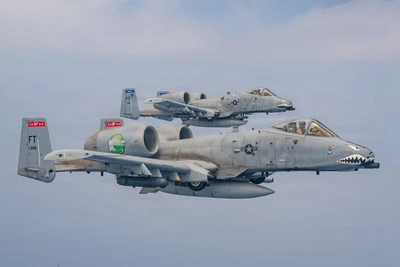
US Central Command carried out strikes mainly across southern Iran targeting military installations, logistics facilities and air defense systems.
Iran, meanwhile, continued attacks on US positions in Kuwait, Bahrain, Jordan and Iraq's Kurdistan Region.
The Islamic Revolutionary Guard Corps (IRGC) claimed it had struck a US base in Kuwait as well as an Amazon data centre in Bahrain, alleging the facility had provided intelligence support to the US military.
Iran's army also claimed attacks on Isa Air Base in Bahrain and Al-Azraq Air Base in Jordan.
In a separate statement, the IRGC urged civilians in those countries to remain at least 500 metres away from potential Iranian targets.
Social media activist Hatef Salehi argued that the scale of the American military buildup suggested Washington was preparing for more than coercive diplomacy.
"This enormous military buildup and deployment of advanced US equipment to the region is highly unlikely to be merely psychological or diplomatic pressure on Iran."
War or pressure campaign?
Not everyone believes the latest escalation points to an imminent regional war.
Political analyst Amin Shayegan argued that the confrontation remains "more a contest of endurance than a purely military competition."
According to Shayegan, Washington is attempting to gradually erode Iran's military and economic capabilities, while Tehran is seeking to tie the costs of the conflict to global energy markets and international trade in an effort to alter US calculations.
Diplomatic activity has added another layer of uncertainty.
Britain announced the withdrawal of all its diplomats from Tehran, while reports circulated that US military aircraft had departed British air bases for operations related to Iran.
Iranian media also reported that French and German diplomats had left Tehran. France's embassy denied those reports, while the German embassy told Iran International that it remained open but was currently providing limited consular services.
Attention also focused on the arrival of an Omani delegation in Tehran.
Officially, IRNA said the visit concerned coordination of shipping management in the Strait of Hormuz. But Oman has long served as the principal intermediary between Tehran and Washington, prompting widespread speculation online that Muscat could also be carrying messages related to the rapidly escalating conflict.
Some users interpreted the visit as a final warning before a larger US military operation, while hardline commentators instead portrayed it as another attempt to revive negotiations—an outcome they argued Tehran should reject.