Satellite images show Iran rapidly rebuilding military sites - WSJ
Iran is rapidly repairing military and civilian infrastructure damaged by months of US and Israeli strikes, the Wall Street Journal reported Thursday, citing satellite imagery and Israeli and Western officials.
Images showed roads and tunnel entrances restored within weeks at missile bases near Kangavar, Kermanshah and Dezful, while reconstruction was also visible at an IRGC-linked shipyard in Bandar Anzali and a missile-component plant near Tehran.
Israeli officials told the newspaper that Iran’s recovery had proceeded faster than expected.
One said some strikes had only collapsed entrances to deeply buried missile facilities, leaving weapons inside intact.
Workers remove a damaged vehicle from a bridge near Bandar Abbas after a US airstrike, as the conflict between Iran and the United States continues to intensify, July 18, 2026
Recent statements by officials in Tehran and Washington illustrate how public rhetoric has shifted beyond military deterrence toward explicit threats against civilian and energy infrastructure across the Middle East.
The escalation accelerated after President Donald Trump warned that the United States would destroy an Iranian bridge or power plant for every attack on shipping in the Strait of Hormuz.
Iranian officials responded not by narrowing the confrontation but by broadening it, signaling that any future conflict would no longer be confined to military targets or the strategic waterway itself.
Until recently, Iranian messaging had focused largely on asserting its authority over the Strait of Hormuz and threatening commercial shipping.
Since Trump's warning, however, officials and state media have increasingly portrayed bridges, power grids, oil infrastructure and other civilian facilities across the region as legitimate targets in a broader campaign of reciprocal retaliation.
Iranian Foreign Minister Abbas Araghchi responded on Wednesday by declaring that Iran would follow an "eye for an eye" doctrine.
"I believe any attack on Iran's bridges, power plants or civilian infrastructure will be met with a powerful and decisive response," he said, warning that retaliation would target not only US assets but also any regional country facilitating such attacks.
On Thursday, Secretary of State Marco Rubio escalated the rhetoric further, saying Trump's Iran policy amounted to "a head for an eye" and warning Tehran it would pay a heavy price for attacks on Americans or US interests.
Iran's chief negotiator, Parliament Speaker Mohammad Bagher Ghalibaf, dismissed Washington's warnings and declared that the confrontation had entered an "either all or none" phase.
"If Iran is prevented from exporting oil or securing its domestic infrastructure, no infrastructure in the region will be safe, and no one will be able to sell oil," he warned.
His remarks reflected a growing effort to frame attacks on Persian Gulf energy infrastructure not simply as retaliation but as an integral part of Iran's deterrence strategy.
State and IRGC-linked media quickly amplified that message.
The IRGC-linked Tasnim News Agency quoted senior military sources as saying Iran had a "steel determination" to control the Strait of Hormuz and would strike multiple energy targets across the region in response to any attack on Iranian bridges or power plants.
State television likewise warned that Trump's infrastructure threats "will have no result other than the expansion of the war."
The rhetoric broadened further after Trump said he was considering strikes on Iran's nuclear facilities under Pickaxe Mountain.
In response, the Khatam al-Anbiya Central Headquarters warned such an attack would constitute an existential escalation, compelling Iran to target "all interests of America, its allies and supporters" throughout the Middle East.
Not everyone in Tehran supported the increasingly confrontational tone.
Former Iranian ambassador to Germany Hossein Mousavian argued that "continued military confrontation between Iran and the United States will produce no winner and will instead drag the region and the global economy into a costly war of attrition."
Writing in Rouydad24, he said the only viable exit lay in "an immediate return to diplomacy, an agreement on the security of the Strait of Hormuz, and the achievement of a durable nuclear deal."
Yet those voices remain overshadowed by an increasingly reciprocal exchange of threats.
Rubio has warned that Iran "will have to pay a price" if it continues attacking US interests, while Iranian hardliners increasingly argue that accepting a ceasefire itself was a strategic mistake.
Lawmaker Abolfazl Abutorabi told Didban Iran that Washington would have "kissed our boots" had Tehran continued fighting for another two weeks.
The increasingly symmetrical rhetoric suggests both governments are treating attacks on civilian and energy infrastructure not as exceptional acts of escalation but as legitimate retaliation, lowering the threshold for a conflict that could spread well beyond the battlefield and the Strait of Hormuz.
A file photo from ISNA shows people queuing at a gas station in Iran.
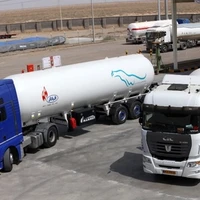
Russia’s turn to imported gasoline after Ukrainian attacks damaged its refineries is adding demand to a tight Asian fuel market, creating a potential new complication for Iran as it struggles to cover a daily shortfall of about 30 million liters.
Iran currently produces about 105 million liters of gasoline a day while consuming approximately 135 million liters, according to Reza Sepahvand, a member of parliament’s energy committee. He said in May that wartime damage had reduced domestic production while fuel imports had also declined.
Before the US-led war that started on February 28, Iran covered part of its fuel deficit through imports and barter arrangements, particularly with traders in the United Arab Emirates.
Those regular seaborne channels have been largely cut off by the ongoing US naval blockade, which bars maritime traffic entering or leaving Iranian ports. Tehran has diverted some trade through Oman’s Khasab port and Iraq’s Umm Qasr, but trade sources say those indirect routes are slower, more expensive and have far less capacity than conventional shipping, making them ill-suited to replacing large fuel deliveries.
The disruption has left Iran more dependent on a narrower pool of non-Western suppliers and alternative trading networks. That pool is now facing additional demand from Russia, which has turned to gasoline imports after Ukrainian drone strikes damaged its refining sector and disrupted domestic supplies.
Reuters reported that Russia was seeking as much as 400,000 metric tons of gasoline a month from countries including India, Belarus and Kazakhstan. At least 60,000 tons had been shipped from India to Russia by early July.
Where Russian and Iranian demand overlaps
Not all those purchases directly compete with Iran. Fuel from Belarus and Kazakhstan largely reaches Russia through established regional and overland networks that Tehran does not normally use.
The more relevant overlap is in India and the wider seaborne fuel market, where Russian purchases could increase competition for available cargoes, tankers, insurance and financial intermediaries.
Miad Maleki, a senior fellow at the Foundation for Defense of Democracies and a former senior sanctions strategist at the US Treasury, told Iran International that Russia and Iran were increasingly looking to overlapping parts of the non-Western energy market.
“Both countries are now drawing from the same pool of non-Western refiners with spare export capacity, but Russia is a far bigger buyer,” Maleki said.
India has sharply increased its exports of gasoline and other refined fuels in response to international shortages. Its exports of light and middle distillates were expected to reach 1.55 million barrels per day in July, almost double the 866,000 barrels per day recorded in May, Reuters reported, citing data from the commodities intelligence firm Kpler.
But the additional Indian supply has not fully relieved pressure on the Asian market. Kpler estimated that Asian imports of light and middle distillates would reach 5.8 million barrels per day in July, about 18% below levels seen before the latest conflict-related disruptions.
The Financial Times reported that a 42,000-ton gasoline cargo originating at India’s Vadinar refinery was scheduled to arrive at a Russian terminal. More than 90% of the crude processed at Vadinar this year had come from Russia, according to Kpler, effectively allowing Russian oil to be refined in India and shipped back as gasoline.
For Iran, the concern is not that Russia has already taken cargoes intended for Tehran. There is no public evidence that Moscow has directly displaced a specific Iranian purchase.
Rather, Russia is adding substantial demand to a market in which Iran already faces limited suppliers, restricted banking access and higher transportation and insurance costs.
Why Tehran has fewer options
Iran’s reliance on imported fuel had been increasing even before the war. A confidential Oil Ministry report obtained by Iran International showed that the country imported nearly 5 billion liters of gasoline and diesel combined in the Iranian year ending in March 2025, twice the volume recorded a year earlier.
The figure covers both gasoline and diesel and does not establish the volume of gasoline imports alone. But it illustrates Iran’s growing dependence on foreign fuel as domestic consumption outpaces refinery production.
The report said Iran had increasingly relied on barter arrangements because sanctions restricted its access to international banking and conventional payment systems. Tehran exchanged fuel oil for gasoline and diesel, particularly through traders operating in the United Arab Emirates.
Russia’s greater purchasing power and established commercial relationships could give it an advantage where the two countries’ needs overlap.
“Russia’s economy and import bill dwarf Iran’s, giving it far more purchasing power and better logistics networks with India, Kazakhstan and Belarus,” Maleki said.
Any resulting pressure inside Iran would probably not appear first through an official increase in gasoline prices. Fuel is heavily subsidized, and the government has historically been reluctant to raise prices because of the risk of public anger.
Instead, a prolonged shortage could lead to tighter quotas, uneven distribution, longer lines at filling stations and greater reliance on unofficial markets.
Drivers in several parts of Iran were already reporting tighter rationing, long queues and gasoline being sold outside the official distribution system at sharply higher prices in May, according to Iran International.
Russia’s gasoline imports do not mean Iran will lose access to foreign fuel. But they introduce another large buyer into parts of the market Tehran relies on at a time when Iran is already struggling with damaged production capacity, rising consumption and restricted access to international trade.
An Iranian cleric visiting the Islamic Revolutionary Guard Corps Aerospace Force Museum in Tehran, November 2025
President Donald Trump’s threat to strike Iran’s Pickaxe Mountain nuclear-linked facility has intensified hardline calls for Tehran to withdraw from the Nuclear Non-Proliferation Treaty and develop a nuclear weapon.
The debate gained fresh momentum after Trump warned Tuesday that the United States would target the deeply buried facility, known in Persian as Mount Kolang Gaz La, if Iran sought to restore its nuclear program there.
Advocates of this view argue that the recent wars demonstrated that conventional military capabilities alone no longer provide sufficient deterrence, making a nuclear option increasingly necessary. Others stop short of openly advocating nuclear weapons but argue that Iran should at least leave the NPT in response to growing US threats.
The arguments echo comments made by Fereydoun Abbasi, the former head of the Atomic Energy Organization of Iran and a politician closely associated with Saeed Jalili’s hardline camp, months before he was killed in Israeli strikes during the 12-day war in June 2025.
In January 2025, Abbasi argued that under the new security environment, “the dangers of not building a bomb and lacking strong deterrence are far greater than the costs of acquiring it,” warning that weak deterrence would only encourage direct aggression.
Abbasi also maintained that Iran had long ago crossed the scientific and technical threshold required to build a nuclear weapon, arguing that the remaining obstacle was no longer technical but rather “a strategic decision.”
In his view, when threats from Israel and its allies become existential, missile deterrence and reliance on regional allies are no longer sufficient, leaving the country increasingly vulnerable without a nuclear deterrent.
Social media campaign targets negotiating officials
Many hardline social media users now argue that Iran should build a nuclear bomb as quickly as possible. They have also criticized officials they describe as “eager for negotiations”—including President Masoud Pezeshkian, Parliament Speaker Mohammad-Bagher Ghalibaf and Foreign Minister Abbas Araghchi—for failing to put withdrawal from the NPT on the government’s agenda.
One X user writing under the name Ayyar reacted to Foreign Ministry spokesman Esmaeil Baghaei’s statement that Iran remained committed to the NPT.
“Just hours after Baghaei declared that Iran is still a member of the NPT, Trump threatened to bomb the Pickaxe Mountain nuclear facility,” the user wrote. “They killed the country’s leader along with thousands of Iranians and repeatedly struck our nuclear facilities. What exactly must the enemy do before we leave the NPT? Are you asleep?”
Another user, writing under the name Sam, argued: “Why are we afraid of leaving the NPT? Afraid of a global consensus against Iran? Staying in the treaty hasn’t prevented that. We have no choice but to build nuclear weapons for comprehensive deterrence. Nuclear weapons could be the final answer.”
Another account, Seyed Mehrdad, wrote: “The answer to a nuclear threat is not threatening regional infrastructure. Deterrence lies in leaving the NPT and conducting a live nuclear test.”
Other users argued that Iran should not remain without nuclear weapons if countries such as Turkey or Saudi Arabia eventually acquire them, insisting that “missile power alone cannot guarantee deterrence.”
Another post claimed that nuclear-capable bombers would not threaten Iran if the country already possessed nuclear weapons, reflecting a broader argument among hardliners that only an atomic arsenal could prevent further US or Israeli attacks.
Debate spreads beyond social media
The discussion has also spread into conservative media. On June 28, the IRGC-affiliated Fars News Agency published an opinion piece titled “There Is No Alternative but to Build an Atomic Bomb,” arguing that Iran required nuclear deterrence to secure the “peace of mind” necessary to resolve other disputes through negotiations.
Fars later clarified that the article had appeared in its interactive opinion section and did not represent the agency’s official editorial position.
Other conservative outlets, including Kayhan, and hardline members of parliament have generally avoided explicitly endorsing nuclear weapons. They have, however, increasingly referred to concepts such as “redefining deterrence,” “reviewing nuclear commitments” and “revising the country’s defense doctrine.”
Calls for NPT withdrawal intensify
Trump’s latest warning against Pickaxe Mountain has also prompted some conservative figures to publicly raise the possibility of leaving the NPT.
Political analyst Mohammad Hossein Khoshvaght, who has close ties to the late supreme leader’s family, questioned whether conventional responses to US attacks would simply encourage further aggression, asking whether such a cycle could continue “until Iran is brought down.”
Former senior Revolutionary Guards commander Ghorbanali Salavatian urged Iranian authorities to formally notify international organizations that Iran would withdraw from the NPT if the United States attacked Pickaxe Mountain.
He added that such a withdrawal should occur “without delay” if an attack took place.
Khamenei’s fatwa returns to focus
The debate has also reopened questions surrounding the religious prohibition on nuclear weapons issued by the late Supreme Leader Ali Khamenei.
Following Khamenei’s death, some social media users argued that Mojtaba Khamenei, as the new supreme leader, should revoke or revise his father’s fatwa declaring nuclear weapons religiously forbidden in light of the changed security environment.
One user wrote in March that because Ali Khamenei was no longer a living source of emulation, his fatwa was no longer binding. The user described the pursuit of nuclear deterrence as “a national demand and the right of the Iranian people.”
The issue had already surfaced in September 2025, when 70 members of parliament argued that Khamenei’s previous ruling should be changed or reinterpreted and demanded authorization for the development and possession of an atomic bomb to establish “nuclear deterrence.”
The lawmakers argued that while the use of nuclear weapons could remain religiously forbidden, producing and possessing them solely for deterrence should be treated differently.
Official position remains unchanged
Before Ali Khamenei’s death, Iranian officials and nuclear negotiators consistently maintained that his fatwa was a permanent religious ruling rather than a temporary political decision.
According to their interpretation, not only the production and use of nuclear weapons but even their possession solely for deterrence is forbidden under Islamic law. They argued that Iran’s deterrence should instead rest on missile capabilities, technological advances and human capital.
Under Shiite jurisprudence, however, a new marja, or source of emulation, may issue rulings that differ from those of his predecessors.
Araghchi acknowledged this possibility in an interview with Al Jazeera in April, saying any change to the nuclear fatwa would depend on the position adopted by Iran’s new supreme leader.
For now, the government’s formal position remains unchanged. Baghaei said Monday that Iran remained a member of the NPT and recognized its obligations under the treaty, although he added that Tehran continually reviewed its foreign policy and national security options.
Baghaei also said Wednesday that no nuclear activity was taking place at Pickaxe Mountain, accusing Washington of using the site as a “fabricated pretext” for further attacks and sabotage.
File photo shows Iranian miners resting after work at a mine.
Iranian workers who have gone months without pay may have only two months of financial resilience left without government intervention, a labor representative warned on Thursday, as wage arrears mount following conflict between the United States and the Islamic Republic.
"The country will certainly face significant unrest among workers by the end of the summer if the current trend continues," Akbar Shokat, executive secretary of the Workers' House in Qom province, told the ILNA news agency.
Many workers, according to ILNA, who were temporarily laid off during the conflict and turned to jobs such as ride-hailing to make ends meet have since been recalled to factories, only to find that wages for June and July remain unpaid. Having returned to work, they are also no longer eligible for unemployment benefits.
Most Iranian workers, Shokat said, already live below the poverty line after years of wage suppression, leaving them with little capacity to absorb further economic pressure.
Employers accused of withholding wages
Shokat accused some employers of exploiting the current economic conditions by reducing production and delaying wage payments despite having sufficient raw materials and finished goods in storage.
"Some employers are taking advantage of the current situation," he said, adding that businesses which accumulated wealth over previous decades had a moral responsibility not to shift the burden of the crisis onto workers.
He urged the government to introduce emergency economic measures, including customs exemptions for imported raw materials and bank financing for manufacturers, to help companies continue operations and prevent further wage delays.
Shokat also called for legal action against employers who withhold workers' wages while stockpiling goods.
Strikes spread across sectors
ILNA has reported a growing number of labor protests in recent weeks.
On June 23, the agency reported that 1,600 workers at Tabriz Machinery Group stopped work after two months without pay, demanding payment of wages owed for May and June.
Earlier, healthcare workers in Islam-Abad-e Gharb of Kermanshah province gathered to protest low wages, delayed payments and worsening living conditions, criticizing what they described as unequal pay across Iran's health system and incomes that remain well below the poverty line.
Economic pressures deepen
The labor concerns come as Iran's economy faces mounting pressure following the conflict with the United States. The rial has weakened sharply against foreign currencies in the open market, with the US dollar trading above 1.91 million rials.
Separately, Saeed Shojaei, deputy planning minister at the Ministry of Industry, Mine and Trade, told the Ettelaat newspaper on July 15 that financial losses from electricity shortages affecting industry are expected to increase from about 3,030 trillion rials in the 2024 to 4,730 trillion rials in 2025.
US Secretary of State Marco Rubio attends the 33rd ASEAN Regional Forum (ARF), part of the ASEAN Foreign Ministers' Meeting, at the Philippine International Convention Center on July 23, 2026 in Pasay, Metro Manila, Philippines.
US Secretary of State Marco Rubio said President Donald Trump’s policy toward Iran was “a head for an eye,” warning Tehran it would pay a heavy price for attacks on Americans and US interests.
Rubio made the remark when asked about Iranian Foreign Minister Abbas Araghchi invoking the principle of “an eye for an eye.”
“The president’s policy is a head for an eye,” Rubio told reporters at an ASEAN summit in Manila.
“They will pay a very heavy price for the things they’re doing. They’re already paying a very heavy price,” he said.
Rubio said Iran’s industrial and defense industrial bases had been “decimated” and that Tehran was continuing to lose missile launchers and radar systems.
“They’re losing launchers. They’re losing radars every single night. They are suffering billions of dollars in damage, and their economy is a disaster,” he said.
Despite Iran’s rhetoric, Rubio said, “they are suffering tremendously, and they’re going to suffer more until they come to their senses.”
US goal is denuclearized Iran
Rubio said the Trump administration’s goal was a denuclearized Iran, not regime change.
“I think the US is seeking a denuclearized Iran that will never have a nuclear weapon,” Rubio said.
“Our issue and our concern and our focus is denuclearizing Iran. They can never have a nuclear weapon.”
Asked whether Washington was comfortable leaving Iran’s current leadership in power, Rubio replied: “They can’t have a nuclear weapon.”
He also rejected suggestions that Trump had made regime change an objective of the conflict.
“He never said regime change was a goal,” Rubio said.
“From day one of the operation, it was very clear that we were going to degrade their missile launchers, their drones, and their factories and their navy.”
Rubio said Trump had argued that the Iranian people deserved better leadership, but added that Washington’s national interest was ensuring Iran never acquired a nuclear weapon.
Iran not ready for a deal
Rubio said he did not believe Iran was ready to reach an agreement with Washington despite repeated indirect messages seeking talks.
"These people are calling us every day, begging, let's do a deal. They send us messages through other countries, third countries," Rubio said.
"The problem is, every time these people do a deal, they either break it or after they make it, they want to change the deal."
"I don't think they're serious about making a deal," he said, adding: "I think they'll be ready soon because the price they're paying is very high."
Rubio said Iran had suffered extensive military and economic damage.
"They're losing launchers. They're losing radars every single night. They are suffering billions of dollars in damage, and their economy is a disaster," he said.
Despite Iran's rhetoric, Rubio said, "they are suffering tremendously, and they're going to suffer more until they come to their senses."
Warning to Iran
Asked about Iranian Foreign Minister Abbas Araghchi's remarks invoking "an eye for an eye," Rubio responded: "The president's policy is a head for an eye."
"They will pay a very heavy price for the things they're doing. They're already paying a very heavy price," Rubio said.
He said Iran's industrial and defense industrial bases had been "decimated" and said Tehran would continue to pay a price for its actions.
Russia question
Asked about a report that US intelligence analysts were investigating whether Russia had assisted Iranian drone strikes on CIA facilities in the Persian Gulf, Rubio declined to comment on the specific allegation.
"Let's imagine that were true. I certainly wouldn't discuss it in the press," he said.
Rubio said Iran had spent years building up the military capabilities it was now using.
"Nothing that Iran is doing, nothing that anyone's doing to help Iran is in any way increasing their ability to target Americans," he said.
"Iran has spent the better part of 20 years not just sponsoring terrorism, but building long-range rockets, short-range missiles and drones."
He said Tehran had intended to double its stockpile and use its missiles and drones to deter action against a nuclear weapons programme.
"The world will be a safer place because we addressed it," Rubio said, referring to US military action against Iran's capabilities.