• العربية
  • فارسی
Brand
  • Iran Insight
  • Politics
  • Economy
  • Analysis
  • Special Report
  • Opinion
  • Podcast
  • Iran Insight
  • Politics
  • Economy
  • Analysis
  • Special Report
  • Opinion
  • Podcast
  • Theme
  • Language
    • العربية
    • فارسی
  • Iran Insight
  • Politics
  • Economy
  • Analysis
  • Special Report
  • Opinion
  • Podcast
All rights reserved for Volant Media UK Limited
volant media logo

Iran protester handed down three death sentences, rights group says

Jul 23, 2026, 09:02 GMT+1Updated: 10:10 GMT+1
Ahad Shokouhian, a 38-year-old Tehran flower market worker, has received three death sentences over charges linked to the January 2026 protests.

A Tehran court has sentenced protester Ahad Shokouhian to death three times over his involvement in January demonstrations, the Hengaw Organization for Human Rights reported on Thursday.

Shokouhian, 38, was arrested in Pakdasht on Jan. 15 and tried before Judge Iman Afshari in Branch 26 of Tehran’s Revolutionary Court.

He was charged with "acting against national security following calls by opposition groups," "assembly and collusion to act against national security," and "destruction of public property," the group said.

The court handed down the three death sentences despite Shokouhian being the third defendant in the case, according to the report. An official forensic medical report confirmed his severe asthma physically prevented him from carrying out the strenuous activities alleged by security forces, raising serious doubts about the charges.

Shokouhian was denied access to a lawyer of his choice during detention, while his court-appointed attorney attended only one hearing, Hengaw said. Evidence submitted by his private defense lawyer during the appeal process was also ignored.

Twelve other co-defendants in the case have also been sentenced to death, some multiple times, according to the rights group. Shokouhian has been held at Ghezel Hesar Prison in Karaj since late June.

Shokouhian, a worker at Tehran’s Imam Reza Flower Market, is the sole breadwinner for his family, caring for his 80-year-old mother and his 55-year-old disabled brother. His six-month detention has plunged the family into severe financial hardship and left them unable to cover basic living expenses, the group said.

Most Viewed

Why Iran’s Pickaxe Mountain has become Trump’s next target
1
ANALYSIS

Why Iran’s Pickaxe Mountain has become Trump’s next target

2

Hardliner accuses Ghalibaf of paving way for coup through US deal

3

Bombing Iran's coast misses the target in Tehran, analysts warn

4

After Hormuz, are Iran-backed Houthis closing another vital strait?

5

Bulgaria’s move to allow US aircraft draws NATO member closer to Iran war

Banner
Banner
Banner

Spotlight

  • Why Iran’s Pickaxe Mountain has become Trump’s next target
    ANALYSIS

    Why Iran’s Pickaxe Mountain has become Trump’s next target

  • Araghchi interview draws fire from Iran hardliners

    Araghchi interview draws fire from Iran hardliners

  • Iran economists say war is turning malaise into crisis
    INSIGHT

    Iran economists say war is turning malaise into crisis

  • Beyond espionage: Araghchi says spies seek to shape Iran's decisions
    ANALYSIS

    Beyond espionage: Araghchi says spies seek to shape Iran's decisions

  • Qatar, Pakistan push Iran-US diplomacy as war escalates
    INSIGHT

    Qatar, Pakistan push Iran-US diplomacy as war escalates

  • Family of executed protester says he was tortured into false confession

    Family of executed protester says he was tortured into false confession

  • Iran secretly buried first of 12 sentenced to death in protest case

    Iran secretly buried first of 12 sentenced to death in protest case

•
•
•

More Stories

Rushdie attacker contacted person in Iran before attack, US prosecutors say

Jul 23, 2026, 08:58 GMT+1
100%
Author of The Satanic Verses, Salman Rushdie.

US federal prosecutors said the man convicted of stabbing author Salman Rushdie contacted a person in Iran before the 2022 attack to confirm that the fatwa calling for Rushdie's death remained valid, the New York Times reported, as his federal terrorism trial opened on Wednesday.

The trial in federal court in Buffalo will determine whether Hadi Matar acted independently out of religious anger or carried out the attack in response to the fatwa issued by Iran’s first Supreme Leader Ruhollah Khomeini and in service of Lebanon's Hezbollah, according to the New York Times.

"He wanted everyone to know he was doing this in the service of Hezbollah," federal prosecutor Timothy C. Lynch said in his opening statement. "He wanted to do it so he could be perceived as an Islamic martyr."

  • Two years after the attack: Salman Rushdie, the fatwa, and resilience

    Two years after the attack: Salman Rushdie, the fatwa, and resilience

Matar, 28, faces charges of providing material support to a designated terrorist organization and committing an act of terrorism transcending national boundaries. If convicted on all counts, he could spend the rest of his life in prison.

He was convicted last year in a separate New York state case of attempted murder and sentenced to 25 years in prison for the August 2022 attack.

Prosecutors point to Iran contact

According to the New York Times, federal prosecutors say Matar contacted a person identified as Kamyar in Iran in May 2022, about three months before the attack.

Prosecutors say Matar wrote that he knew where to find Rushdie but was unsure "how to do it." They said he then asked whether the fatwa against the author remained valid and proceeded with the attack after receiving confirmation.

100%
Hadi Matar, who stabbed author Salman Rushdie, appears in court.

Ruhollah Khomeini, issued the fatwa in 1989 after the publication of The Satanic Verses, a novel that prompted protests from many Muslims over its depiction of a fictionalized version of the Prophet Muhammad.

Hezbollah evidence disputed

Prosecutors, Lynch said, will present text messages, notebook entries, propaganda videos and other evidence that they argue shows Matar was motivated by Hezbollah and Iranian leaders.

  • Trial of Salman Rushdie's knife-wielding attacker begins

    Trial of Salman Rushdie's knife-wielding attacker begins

Matar, according to prosecutors, compiled propaganda videos titled "Rushdie Fatwa 1.6" that included a 2006 speech by former Hezbollah leader Hassan Nasrallah condemning cartoons depicting the Prophet Muhammad. They also said Matar sent the videos to others.

Prosecutors further say Matar used the name and birth date of a Hezbollah fighter on a fake identification card and kept notes weighing the advantages and disadvantages of killing Rushdie.

Defense lawyer Nathaniel L. Barone II rejected that his client acted on behalf of Iran or Hezbollah.

"The government didn't know what Hadi Matar's mental state was at that time," Barone told the court.

Before the trial, Barone described Matar as a religious man angered by The Satanic Verses, arguing the attack stemmed from personal outrage rather than direction from a foreign government or militant group.

Rushdie expected to testify

Rushdie is expected to testify this week about the attack, as he did during the state trial last year.

  • Salman Rushdie assailant found guilty of attempted murder

    Salman Rushdie assailant found guilty of attempted murder

The author was stabbed more than a dozen times while preparing to speak at the Chautauqua Institution in western New York about writers living in political exile. He suffered severe nerve damage and lost sight in one eye.

Prosecutors must persuade jurors that Matar did more than act on personal religious conviction and instead knowingly provided support to Hezbollah, a key legal distinction that could determine whether the terrorism charges succeed.

The trial is expected to last about two weeks.

Rubio says US will strike Iran shipping threats, remains open to diplomacy

Jul 22, 2026, 10:35 GMT+1
100%
US Secretary of State Marco Rubio speaks during a press conference on the sidelines of the Association of Southeast Asian Nations (ASEAN) Foreign Ministers' Meeting in Pasay, Philippines on July 22, 2026.

US Secretary of State Marco Rubio said on Wednesday that Iran was under severe economic and military pressure but the United States would continue targeting its ability to attack commercial shipping while remaining open to a negotiated solution.

"Iran's in a lot of trouble," Rubio told reporters on the sidelines of the ASEAN summit.

He said Iran was facing "hyperinflation, runaway inflation, high food costs," adding that the country's military infrastructure had suffered "a tremendous amount of damage."

Rubio accused Tehran of spending "every penny they have" over the past two decades "not spending it on their country," but instead "sponsoring terrorist groups and building up their missiles and their drone systems."

He said those missile and drone capabilities had been intended to shield Iran's nuclear ambitions.

"A year from now, Iran would have had so many missiles and drones that they would have been behind a conventional shield that would have given them immunity to do whatever they wanted."

Shipping campaign

Rubio said the United States was focused on protecting commercial shipping and reducing Iran's ability to threaten maritime traffic.

"Ships are trying to go through the Straits and they're getting blown up. Commercial ships are going through the Straits and they're being blown up," he said.

"The United States is defending that shipping and, in addition, is targeting the places that are launching against those ships that continue to degrade Iran's ability to target and harm global shipping."

"So that's what's happening there, and that's what we're focused on."

Memorandum of understanding

Asked about Iran's announcement that it had suspended its commitments under the Islamabad memorandum of understanding with the United States, Rubio said agreements depended on compliance.

"If you make a deal, if you sign on to an agreement, and then you violate the agreement, the agreement's no longer valid," he said.

"That doesn't mean you can't have a future agreement, but ultimately, that future agreement will have to be judged on whether or not you're complying with the conditions."

Rubio said the memorandum "called for the opening of the Straits, free and fair navigation."

"In fact, they were supposed to put out a statement to that regard a week and a half ago, and instead, on the day they were supposed to put out that statement, instead of doing that, they targeted and hit a ship."

Diplomacy remains possible

Rubio said Washington had not abandoned diplomacy despite the military campaign.

"We remain open to diplomacy. We remain open to working it out in a negotiated way."

"But right now, they don't seem to be serious about that, and so we're going to continue to protect shipping."

He added that other countries should join the effort.

"We think other countries should join us in that endeavor. We don't need them to, but they should because they're more impacted by it than we are."

"And at the same time, we are going to, when the opportunity presents itself, degrade their ability to target global shipping."

China and the Strait of Hormuz

Rubio said China's actions had not changed the course of the conflict with Iran and suggested Beijing opposed any disruption to navigation through the Strait of Hormuz.

"Nothing that's happened, nothing that China has done, has in any way changed the trajectory of what you're seeing in terms of the conflicts we're having with Iran," he said.

"I don't think they're big fans of what Iran is trying to do in the Straits."

"They've said so publicly that they oppose tolling or any sort of restraint on freedom of navigation in the Straits, and we hope they'll continue to say that. It's important that other countries say that as well."

Why Iran’s Pickaxe Mountain has become Trump’s next target

Jul 21, 2026, 22:30 GMT+1
•
Negar Mojtahedi
100%
A satellite view shows an overview of the Natanz nuclear facility and Pickaxe Mountain, near Natanz, Iran, June 30, 2026. Vantor/Handout via REUTERS

President Donald Trump vowed Tuesday to strike Iran’s Pickaxe Mountain, but experts say the deeply buried nuclear facility, potentially central to Tehran’s efforts to restore enrichment, may be far harder to disable than his warning suggests.

“The new site that they’re talking about, they’re trying to possibly reconstitute a site, we’ll hit that site,” Trump told reporters Tuesday during an Oval Office meeting with Lebanese President Joseph Aoun.

“Any site where they’re even thinking about nuclear, we’ll be hitting it very, very powerfully.”

Hours after the US president’s warning, Iran’s joint military command warned that any US attack on Iran’s nuclear or other sensitive sites would widen the regional war, according to state media.

US interests and those of countries supporting Washington would face a “powerful assault” by Iran’s armed forces, Khatam al-Anbiya Central Headquarters said.

Raja News, a hardline Tehran outlet, went further, calling for Iran to publish a list of vital infrastructure across the region, particularly in the United Arab Emirates, and strike the targets if the United States attacks Pickaxe Mountain.

The outlet said Iran should not wait for an attack before responding and urged officials to present a practical plan for withdrawing from the Nuclear Non-Proliferation Treaty.

Trump’s warning followed an Israeli intelligence assessment, first reported by The Wall Street Journal, that Iran moved thousands of uranium-enrichment centrifuges into Pickaxe Mountain last fall.

Israel shared the assessment with Washington, but the allegation has not been independently verified, and neither country has publicly disclosed the evidence supporting it.

If accurate, the reported transfer would make Pickaxe one of the most strategically important surviving sites in Iran’s nuclear program.

Centrifuges enrich uranium by spinning uranium hexafluoride gas at extremely high speeds and are essential for producing nuclear fuel or weapons-grade material.

“When you assemble centrifuges like that, the next step is to put them in an enrichment plant,” David Albright, president of the Institute for Science and International Security, told Iran International.

Iran began building Pickaxe Mountain after an explosion in 2020 damaged an above-ground advanced centrifuge assembly facility at Natanz in an attack widely attributed to Israel. Tehran said the underground complex would replace the damaged assembly plant.

Satellite imagery has shown years of continued construction. Albright said the underground complex appears significantly larger than would be required for centrifuge assembly alone, leading his institute to assess that it could eventually also house a uranium-enrichment plant.

If centrifuges are being stored there, experts say the facility could provide Tehran with a pathway to restore uranium enrichment despite months of US and Israeli military strikes.

A difficult target

Its depth also makes Pickaxe one of Iran’s most difficult nuclear facilities to attack.

Andrea Stricker, deputy director of the Foundation for Defense of Democracies’ Nonproliferation Program, said the facility is estimated to sit roughly 300 to 450 feet beneath a granite mountain, potentially placing it beyond the reach of conventional US bunker-buster bombs.

“Essentially, Pickaxe is where Iran could reconstitute a nuclear weapons pathway,” Stricker told Iran International.

Rather than attempting to penetrate the mountain itself, experts say military planners could seek to disable the facility by targeting its tunnel entrances, ventilation systems and electrical infrastructure.

“You don’t look to get a bunker buster to pass through the mountain. I mean, that’s just not possible,” Albright said.

But he added that the complex was “not immune from destruction or shutting it down.”

“If they have centrifuges in there and they can’t use them, then that is a step forward to try to keep Iran from building nuclear weapons,” he said.

Stricker said another option would be to destroy access through the eastern and western tunnel entrances, preventing Iran from re-entering the complex while allowing the site to be monitored for renewed activity.

Preventing reconstitution

For Rebeccah Heinrichs, a senior fellow at the Hudson Institute, Pickaxe represents a different phase of the military campaign.

While Washington still has conventional military targets it can strike from the air, Heinrichs said Pickaxe presents a more complex challenge because of its depth and its potential role in rebuilding Iran’s nuclear program.

If Trump concludes that airpower alone cannot prevent Iran from restoring its nuclear capabilities, Heinrichs said any use of US forces on the ground would more likely involve a limited special-operations mission than a conventional invasion.

"This would be a special operations mission on the ground," she told Eye for Iran, suggesting any such operation would likely be conducted alongside Israel to secure or remove sensitive nuclear material.

There is no public evidence that Washington is planning such an operation.

Heinrichs also suggested that the United States may have deliberately avoided striking Pickaxe so far to preserve the possibility of entering or securing the complex, although Washington has not publicly indicated that this was its reasoning.

Whether Trump ultimately orders an attack remains uncertain, and his warning may be intended partly to deter Iran from activating the facility.

But the president’s remarks, the Israeli intelligence assessment and mounting concern among nuclear experts have placed Pickaxe Mountain at the center of a broader strategic question: how to prevent Iran from rebuilding its nuclear program after months of military strikes.

Paris weighs reducing embassy staff in Tehran, source says

Jul 21, 2026, 11:59 GMT+1
100%
French embassy in Tehran

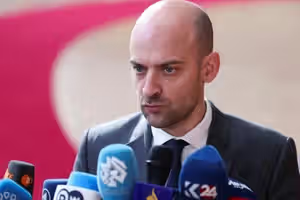
France is reviewing whether to reduce staffing at its embassy after two French diplomats were detained, interrogated and allegedly abused by Iranian security forces in Tehran, according to information obtained by Iran International on Tuesday.

French Foreign Minister Jean-Noël Barrot had already confirmed that two members of the French embassy were detained for several hours on Sunday, calling the episode "serious and unacceptable" and warning it "cannot go without consequences."

"One of them was physically abused," Barrot said, describing the detention as an "extremely serious act of intimidation" and a "flagrant violation of diplomatic immunity."

According to a source familiar with the matter who spoke to Iran International, Iranian security forces detained the two diplomats, took them to an undisclosed location and interrogated them. Both were subjected to psychological pressure during their detention and questioning, and that at least one was physically assaulted, the source said.

The episode has heightened concern among staff at the French embassy in Tehran, with several employees asking to return to France before completing their assignments, although their postings have not officially ended, according to the source.

French authorities are now considering whether to end some diplomatic assignments early and reduce the embassy's presence in Tehran, the source added.

Paris seeks answers

Iran International has sent a formal request to the French Foreign Ministry seeking comment on the condition of the two diplomats, Paris' planned response and the possible impact on embassy operations in Tehran.

100%
Demonstrators gather outside the French Embassy in Tehran in October 2020, protesting the publication of caricatures of the Prophet Muhammad. Protesters hold placards depicting French President Emmanuel Macron, burn his image, and call for a boycott of French goods.

The ministry had not responded by the time of publication.

Barrot said he had raised the matter directly with Iranian Foreign Minister Abbas Araghchi, telling him the detention represented a serious breach of diplomatic immunity protected under international law.

According to Barrot, the two diplomats were responsible for French programs supporting Iranian civil society, particularly artists and scientists. Both were released and are expected to return to France.

Relations deteriorate

The detention comes as relations between Paris and Tehran continue to worsen over Iran's nuclear program, regional policies and the imprisonment of French nationals.

France has said it opposes lifting sanctions on Iran unless Tehran abandons its nuclear program and changes what Paris describes as destabilizing regional policies. Paris has also called for a broader European role in negotiations over Iran.

The dispute follows years of friction over French nationals held in Iran. Paris has repeatedly called for the release of Cécile Kohler and Jacques Paris, who have been detained since 2022, describing their imprisonment as arbitrary and accusing Iran of using foreign detainees to seek diplomatic concessions.

Earlier this year, France brought a case against Iran before the International Court of Justice over alleged violations of consular rights.

  • France accuses Iran of assaulting diplomat, warns of consequences

    France accuses Iran of assaulting diplomat, warns of consequences

The detention of accredited embassy staff broadens the dispute from French citizens held in Iran to diplomats protected under international law, adding another point of strain in relations between Paris and Tehran.

Iranian authorities had not publicly commented on the case by the time of publication.

Iran secretly buried first of 12 sentenced to death in protest case

Jul 21, 2026, 10:45 GMT+1
•
Farnoosh Faraji
100%
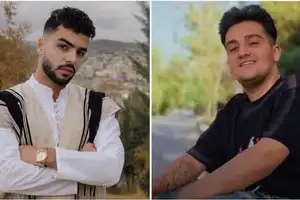
Erfan Esfandiyari (L) and Alireza Raisi (R).

Iranian authorities secretly buried teenage protester Erfan Esfandiyari without his family present and have reinstated the death sentence of another young defendant in the same Isfahan case, sources told Iran International.

Esfandiyari, 19, was executed on Sunday. He was among 12 defendants sentenced to death over unrest in Isfahan’s Ali Khani Square during nationwide protests in January.

Another defendant was Alireza Raisi, whose sentence had previously been overturned and reduced to 20 years in prison, but has now been reinstated and upheld by Iran’s Supreme Court, according to a source with knowledge of the matter.

The sources could not be named for fear of retribution by Iranian authorities.

Secret burial after execution

A source close to Esfandiyari’s family said his relatives waited outside Dastgerd Prison in the central Iranian city of Isfahan until 5:30 a.m. after he was transferred to solitary confinement.

After waiting until dawn and returning home, Esfandiyari's father received another call ordering him back to the prison, accompanied by one other man, the source said.

Authorities forced the family to pledge that Esfandiyari’s body would not be buried in Isfahan and that they would not hold a funeral, sources told Iran International.

His body was buried in Buin Miandasht, a city in western Isfahan province, without his family present. His relatives were also barred from holding a memorial ceremony.

Iran’s judiciary-affiliated Mizan news agency reported on Sunday that Esfandiyari had been executed alongside 24-year old Afghan citizen Gol-Mohammad Mohammadi, who was also detained during the January uprising in Isfahan.

Cousin of slain protester faces execution

Another source told Iran International that Raisi, who was born in 2004 and is his family’s only son, had been sentenced to death on the charge of “enmity against God.”

The death sentence was initially overturned on appeal and replaced with a 20-year prison term.

However, Raisi’s family was informed on July 5 that the death sentence had been reinstated and upheld by the Supreme Court, the source said.

He has since been transferred to solitary confinement at Dastgerd Prison and is considered at imminent risk of execution, the source said.

Raisi is the cousin of Ramin Raisi, a 28-year-old protester who disappeared on January 9 during demonstrations in Isfahan’s Baharestan neighborhood.

After searching for nine days, his family found his body at the Bagh-e Rezvan mortuary with four gunshot wounds to the chest.

Intelligence Ministry agents traveling in two vehicles arrested Alireza Raisi outside the entrance to Bagh-e Rezvan cemetery on January 19, one day after Ramin’s burial, people close to the family told Iran International.

Security agencies refused for several days to acknowledge holding him and sent his family between different state institutions before they eventually learned that he was in prison.

The family sought to appoint a lawyer but was told Raisi had no right to choose his own counsel and could only be represented by a court-appointed lawyer.

Sources told Iran International that one piece of evidence used against Raisi was a voice message in which he asked Ramin to take part in the protests.

After tracking Raisi’s mobile phone, agents linked him to the deaths of four law enforcement personnel in Ali Khani Square, an accusation his family denies.

Raisi’s mother has multiple sclerosis, and he has two sisters. His family had planned to hold his engagement celebration at the beginning of the year.

A dozen sent to death row

Iran’s judiciary-affiliated Mizan news agency said indictments were issued against 16 people in the Ali Khani Square case and several defendants were sentenced to death.

Iran International reported on July 8 that 59 people were initially arrested during the January protests and the ensuing crackdown in Ali Khani Square. Of those, 23 were sentenced to prison terms ranging from five to 10 years.

Twelve defendants were sentenced to death: Abolfazl Ebrahimi, Amirhossein Ebrahimi-Analoucheh, Erfan Esfandiyari, Shervin Bagherian, Ghaem Hosseini, Ali Dashti, Alireza Raisi, Abolfazl Sepahi, Alireza Sepahi, Amirhossein Safari, Gol-Mohammad Mohammadi and Amirhossein Maleki.

The Ali Khani Square case forms part of a broader escalation in Iran's use of the death penalty against political prisoners since January's protests, the June war with Israel and the conflict with the United States that began on February 28.

Tehran prosecutor Ali Salehi said on July 14 that cases linked to the protests and the two wars had been handled by special judicial branches, which issued prison and death sentences.

Iran’s judiciary has executed at least 50 political prisoners since March 18 and issued death sentences, lengthy prison terms and asset-confiscation orders against hundreds of others.

The trend has heightened concerns over rushed trials and the swift imposition and execution of severe sentences, drawing condemnation from rights groups and prompting hunger strikes by prisoners.