Jordan says it intercepted three missiles launched from Iran
Jordan’s armed forces intercepted three missiles launched from Iran, causing no casualties or damage, Jordanian state media reported.




Iran’s exiled prince Reza Pahlavi said in an interview with Reuters that the US-led war against the Islamic Republic was a “necessary step” to prevent further bloodshed and give Iranians a better chance of ending clerical rule.
In the interview recorded in Paris on July 14, Pahlavi linked the military campaign to the January 8 and 9 protests, when demonstrators answered his call for nationwide action and were met with a brutal crackdown.
He said the scale of the violence showed that Iranians could not be expected to return safely to the streets while the forces responsible remained capable of crushing another uprising.
“We cannot expect people to be able to safely return to the streets to take on the final battle” without protection or the means to neutralize forces hostile to them, he said.
Pahlavi argued that US and Israeli strikes had weakened the Islamic Republic’s repressive apparatus and helped “equalize” the balance between the government and protesters.
“The campaign that started as a result of the massacre — that led to the intervention by the Israelis and the American forces to strike the regime — was an element that was perhaps a necessary step to avoid further bloodshed,” he said.
The protests began in late December after a sharp fall in the rial deepened economic and political discontent. As demonstrations spread, Pahlavi called on Iranians to take part in nationwide action on January 8 and 9 by gathering in the streets or chanting from their homes.
Millions joined the protests across Iran before security forces opened fire on demonstrators and authorities imposed sweeping internet restrictions.
Documents, medical records, field reports and testimony reviewed by Iran International indicate that at least 36,500 people were killed on January 8 and 9, making the crackdown one of the deadliest episodes of state violence against protesters in modern history.
Pahlavi said the killings demonstrated the limits of peaceful protest against a government willing to use overwhelming force against its own population.
“On January 8 and 9, people went to the street still peacefully, just chanting the slogan,” he said. “When that happens, you cannot expect that by the same method of nonviolence, you can achieve the same result with the way this regime is behaving.”
The United States and Israel launched their military campaign against Iran on February 28, striking Revolutionary Guards facilities, missile and drone units, military command centers and other state targets.
Pahlavi said the attacks had weakened the institutions responsible for suppressing dissent and could help prevent another massacre.
“When you have the mechanism of repression of the regime weakened as a result of those strikes, those are added help,” he said. “Those are the kind of outside interventions that may be required.”
He said the intervention could ultimately save lives that would otherwise be lost in another confrontation between protesters and the security forces.
“It’s really a matter of trying to protect more lives from being lost under this regime that is demonstrating that it has no limit in terms of how far it’s willing to go to kill its own citizens,” he said.
Pahlavi nevertheless stressed that foreign governments should not decide who would govern Iran after the Islamic Republic.
“It is not for a foreign government to decide who or what should be the alternative for Iran,” he said. “That’s up to the Iranian people.”
He said his campaign, which began after the 1979 revolution that overthrew his father, had always centered on Iranians’ right to determine their own political future.
“I’ve never asked for any kind of endorsement from any leader or governments,” he said.
‘A bridge to destination’
Pahlavi has presented himself as the leader of a temporary transition rather than a candidate seeking to predetermine whether Iran should become a monarchy or a republic.
“My position as a transitional leader is, I’m not the destination, I’m a bridge to the destination,” he said.
He said his role would be to act as a neutral arbiter and oversee a political process in which Iranians could debate and choose the country’s future system.
“I’m not taking sides, either for a monarchy or for a republic,” he said. “My job is to make sure that there’s a healthy debate and that in the end people decide what it is that they actually would prefer to have as the final form.”
Pahlavi said his coalition included former leftists, republicans and people once affiliated with groups that opposed his father’s government.
He said former members of the three major leftist groups Tudeh Party, the Fadaiyan-e-Khalq and the Mojahedin-e-Khalq (MEK) had joined his movement, presenting that as evidence that the opposition had become more unified.
“I don’t know how far more can you stretch the tent, including those people, to prove that in fact there is much more unity than ever, certainly inside Iran,” he said.
He added, however, that there were three groups with which he would not cooperate: supporters of the Islamic Republic, the MEK as an organization and separatists.
“There are certain lines that I’m not going to cross,” he said.
Pahlavi also rejected violence, intimidation or criminal conduct by people claiming to support him.
“I believe in pluralism. I believe in tolerance. I believe in civility, in debate, in argument, in comportment, respect, and no hostility of any kind,” he said.
He said anyone who violated those principles would not be considered a supporter and should face legal consequences if their conduct was criminal.
Pahlavi also acknowledged concerns over statements made by people associated with his political team, saying stricter internal protocols were being introduced.
He said those close to him would have to exercise greater caution because their remarks could be interpreted as representing his movement.
‘A democratic culture’
Turning to Iran’s political future, Pahlavi said most Iranians wanted secular democracy, the rule of law and protection of human rights, but warned that building a democratic political culture would take time.
“What I think will take some time, and I mean that in the most honest way possible, is to bring about a democratic culture,” he said.
Pahlavi also clarified earlier statements about contacts with members of Iran’s security forces.
He said individual members of the Basij, the Revolutionary Guards and the regular military had contacted him discreetly over the years to express opposition to the Islamic Republic.
He denied, however, that he had been in direct communication with the IRGC’s senior command.
“It’s not like, in fact, talking to the IRGC command. Not at all,” he said.
Pahlavi said he had advocated for the IRGC to be designated as a terrorist organization for at least a decade because of its role in repression at home and military operations abroad.
He described the Guards as the central institution keeping the Islamic Republic in power and said increasing pressure on it remained a key part of his political strategy.
Pahlavi is the eldest son of Mohammad Reza Shah, Iran’s last monarch, who was overthrown in the 1979 revolution that brought the Islamic Republic to power. The royal family left Iran shortly before the revolution, and Pahlavi has lived in exile since then.
Women dominate Iran’s universities but remain sharply underrepresented in engineering and other technical fields, Iran’s vice president for women’s affairs said on Monday, calling for a review of admissions and the social barriers shaping their choices.
Zahra Behrouz-Azar said women account for more than 64% of applicants seeking university admission and more than 52% of the country’s university students.
However, she said the overall figures conceal a pronounced gender divide between academic disciplines.
Speaking at the unveiling of Iran’s annual statistical report on women, she said the gap is quite wide in technical and engineering subjects, where approximately 573,000 men graduated, compared with about 180,000 women, during the latest year covered by the report.
The imbalance reflects a wider international pattern. Women account for around 35% of graduates in science, technology, engineering and mathematics worldwide, a proportion that UNESCO says has remained largely unchanged for a decade.
Behrouz Azar said, however, that Iran’s gender gap appeared more pronounced and required closer research into the cultural, social and institutional forces shaping students’ choices.
“Which beliefs and cultural and social factors cause girls to gravitate less toward fields such as electrical engineering, computer science and some other technical disciplines?” she asked.
Behrouz-Azar said the disparity was particularly striking because Iranian women had established a strong presence in content production, the digital economy and freelance work, but were less likely to enter programming, coding and specialist areas of artificial intelligence.
She warned against the assumption that some disciplines were inherently “male” or that women did not need to enter them. Her office had raised the matter with the science minister and requested a detailed review of university admission procedures and other factors contributing to the disparity, she said.
The vice president did not allege that formal admissions rules explicitly excluded women from those subjects. She instead called on academics and researchers to examine the “hidden layers” behind the statistics, including whether social attitudes, education and career expectations discourage girls from pursuing technical fields.
Behrouz-Azar also linked women’s representation in technology to the development of artificial intelligence, saying researchers in AI ethics had argued that greater participation by women could contribute to systems that placed more emphasis on ethics and care.
Iran’s expansion of women’s access to university has not produced comparable participation in the labor market. World Bank data put the female labor-force participation rate at about 14% in 2025, while an International Labor Organization assessment reported a large and persistent divide between women and men in access to paid work.
That reflects not only personal choice but also decades of bureaucratic and social barriers limiting women's employment.
That disconnect means many highly educated Iranian women remain outside formal employment even as they make up a majority of the university population. International labor bodies have previously pointed to restrictions on women’s access to formal employment despite major advances in education.
The United States intensified its military campaign against Iran after the first confirmed American combat deaths of the conflict, while Secretary of State Marco Rubio insisted Washington remained open to diplomacy with Tehran.
The renewed offensive, which entered its ninth consecutive night, came as Iranian media reported explosions across the country's southern coastline and, for the first time in the latest campaign, in the northwestern city of Tabriz, suggesting the geographic scope of the strikes may be expanding.
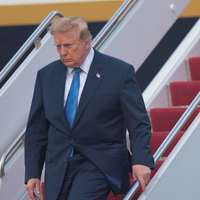
US president Donald Trump said the latest attacks honoured "probably three great patriots" killed in the conflict, describing them as soldiers who had fought to ensure "Iran cannot have a nuclear weapon."
"We hit them very hard again tonight," he told reporters after returning to Washington following the World Cup final.
US Central Command later said it had completed its ninth consecutive night of strikes, targeting Iranian military command centres, air defence and coastal surveillance sites, maritime capabilities, missile and drone launch sites, and communications networks to further degrade Tehran's ability to threaten shipping through the Strait of Hormuz.
Despite the escalation, Rubio reiterated that the United States remained open to a diplomatic solution, maintaining the administration's position that military pressure and negotiations can proceed in parallel.
The widening conflict also rippled through global energy markets. Brent crude rose more than 3% on Monday, climbing above $90 a barrel for the first time since June 11 as attacks on shipping and uncertainty over the Strait of Hormuz intensified.
Iran broadens its threats
Iran, meanwhile, adopted an increasingly confrontational tone in a series of statements issued by the Islamic Revolutionary Guard Corps.
State media reported fresh missile launches from Lorestan province toward what were described as "enemy targets", while the IRGC claimed it had carried out a surprise strike on the US base at al-Tanf in Syria in retaliation for American attacks that killed Iranian conscript soldiers near Iranshahr.
US Central Command previously denied an earlier Iranian claim that the base had been attacked.
In another statement, the IRGC claimed two oil tankers attempting to transit the Strait of Hormuz had exploded after trying to use what it described as an unsafe route under US pressure.
It warned that the waterway would remain unsafe "for even a single drop of oil and gas" as long as US military operations continued and threatened further "punitive" action against American forces.
The force also claimed Jordanians had provided intelligence that enabled attacks on US military facilities at al-Azraq and Aqaba. Those claims could not be independently verified.
Escalationm vs diplomacy
The widening military campaign has fuelled speculation in Washington that the strikes are intended to pave the way for a broader phase of the conflict if diplomacy ultimately fails.
Yet the political messaging from both capitals points to a more complicated picture.
Rubio's remarks echoed comments earlier this week by Vice President JD Vance, who argued that military pressure and diplomacy should proceed together. Iran's chief negotiator and parliament speaker, Mohammad-Bagher Ghalibaf, similarly described war and negotiations as complementary tools for defending national interests.
The parallel rhetoric suggests both governments may be seeking to strengthen their bargaining positions ahead of another round of talks rather than abandoning diplomacy altogether—even as the battlefield widens.
Whether that strategy succeeds may depend not only on developments on the ground but also on mounting economic pressure.
The deaths of two US service members in Iranian attacks on Jordan, Tehran’s suspension of its commitments under the memorandum with Washington and a new threat from Iran’s Supreme Leader have raised fears that the war is entering a darker and more dangerous phase.
US Central Command said in a statement the two service members were killed in action on July 17 as US and partner forces defended against Iranian ballistic missile and drone attacks in Jordan. One American service member remained missing in action.
Four other US service members were medically evacuated to hospitals in Jordan and later discharged, CENTCOM said. Other personnel evaluated for minor injuries had returned to duty.
This brings the total number of American service members killed since the Iran war began in late February to 16, with more than 430 wounded, according to official figures.
“Godspeed, heroes. Their sacrifice only stiffens our resolve,” US Secretary of War Pete Hegseth said in a post on X.
The deaths came as Iran expanded missile and drone attacks against US-linked facilities across the region, targeting sites in Jordan, Kuwait and Bahrain. Jordan said it intercepted 10 missiles early Saturday, while Kuwait reported injuries and damage to a power and desalination plant.
The Gulf Cooperation Council condemned the attacks as a dangerous escalation and said infrastructure and civilian facilities had been hit. GCC Secretary General Jasem Mohamed Albudaiwi said the bloc stood with Bahrain, Kuwait and Jordan in measures taken to defend their security and sovereignty.
Tehran also intensified its warnings to Arab governments along the Persian Gulf. Seyed Majid Mousavi, commander of the IRGC Aerospace Force, advised the rulers of those states to take Iran’s “final warning” seriously.
Separately, an unnamed Iranian security official warned that Dubai and Abu Dhabi airports, along with the ports of Fujairah and Jebel Ali, should be evacuated immediately if the United States struck civilian infrastructure in Iran, the IRGC-affiliated Fars news agency reported.
Mojtaba Yousefi, a member of parliament’s Construction Committee, said Israel and Persian Gulf states were more vulnerable than Iran if infrastructure became a target. He said Tehran could strike Israeli railways and bridges.
Collapse of Iran-US MoU
The threats unfolded alongside the breakdown of the diplomatic understanding between Tehran and Washington. Iranian officials said the country had suspended its commitments under the Islamabad memorandum of understanding after accusing the United States of violating the agreement.
Deputy Foreign Minister Kazem Gharibabadi said Washington had “trampled all of its commitments” and that Iran was therefore no longer implementing its own obligations. He said there was no new information about possible talks with the United States, adding that Tehran was focused on defending the country.
Foreign Ministry spokesman Esmaeil Baghaei said Iran was still pursuing diplomacy while keeping its armed forces fully prepared. He said the MoU had operated on the basis of “commitment for commitment” and that Tehran no longer regarded itself as bound by it after what he called the US breach and the start of military attacks.
Iran’s announcement came as the United States continued striking infrastructure and military-linked sites inside Iran during a seventh consecutive night of operations.
US attacks hit bridges, a road tunnel, surveillance sites, underground weapons storage facilities and maritime infrastructure. A strike on the Mirzaei tunnel in Hormozgan province severely disrupted telecommunications, causing widespread phone and internet outages in northern Bandar Abbas, local authorities said.
Officials in Hormozgan urged residents to avoid unnecessary road travel because of the possibility of renewed US attacks.
Khamenei vows ‘unforgettable lessons’ for US
Iran’s Supreme Leader Mojtaba Khamenei, who has not appeared in public since being reportedly injured in the February 28 attack on his father’s office, issued his latest written message, saying: “The Great Satan’s repeated breaches of understandings prove just how worthless and invalid the US president’s signature is.”
He accused Washington of bullying, expansionism and brutality, said the United States had once again revealed its “true face” and warned that Iran had “unforgettable lessons” for Washington if the US continued its military escalation and accepted heavier costs.
Khamenei’s message reinforced Tehran’s argument that the diplomatic track had collapsed because Washington could not be trusted. It also tied the formal suspension of the MoU to a broader warning that the conflict would continue both inside Iran and across the region.
US strikes have destroyed bridges, tunnels and rail links across southern Iran in a seventh straight night of attacks, severing roads to the Strait of Hormuz coast and feeding talk in Washington and Tehran that a ground assault may follow.
On the ground in Hormozgan province, the damage has fallen heavily on the civilian road network, and the tally has grown by the day.
On Friday the provincial governor's office said six bridges had been struck in Khamir county alone, cutting the Bandar Abbas to Lar highway; its list ran from the Gariveh bridge to spans near the villages of Latidan and Maru, with residents told to keep off the routes and leave them clear for rescue teams.
Within a day, officials were adding to it. The Shahid Mirzaei road tunnel was reported damaged in both directions, the Roudkhaneh Shour bridge was hit on the Bandar Abbas to Sirjan route, and two more bridges were damaged on the road from the Minab junction toward Roudan. With attacks continuing nightly, no official list has stayed final for long.
The attacks have also reached utilities. Iranian media reported missile strikes on power facilities and desalination pumps in the coastal city of Jask, leaving some 10,000 people in 20 villages without water, according to the Tasnim news agency. The maritime control tower at Chabahar, which the Tehran daily Etemad described as civilian infrastructure that guides shipping and coordinates sea rescues, was hit for the third time in a week.
A port city going quiet
The cumulative effect is visible in Bandar Abbas, the provincial capital and Iran's main commercial gateway on the strait. Iran International has learned that the city has gone semi-dormant under the naval blockade and the severing of its road links, with activity at Shahid Rajaee, the country's largest container port, reduced to a minimum.
Half of the port's workforce has been laid off in recent weeks, according to the information received, and those still employed are working for minimum pay. More than 4,000 containers are stranded in the port's yards. The blockade closed the sea route weeks ago; the strikes on bridges are now closing the roads.
The Strait of Hormuz, which normally carries a fifth of the world's oil, has been shut to Iranian exports and contested for a week, with US Marines boarding a tanker, the Revolutionary Guards saying they stopped four vessels with missile and drone fire, and Washington enforcing what it calls a naval blockade. The Guards say that until US attacks end, not a drop of oil or gas will leave the region.
Talk of a ground campaign
Trump has made no secret of the targeting. He told Fox News this week that the United States would knock out Iran's power plants and bridges unless Tehran returned to negotiations, and said the strikes would continue "until I say it's enough."
Asked in the same interview about sending ground troops, the president declined to rule it out. "Sometimes you need a ground campaign," he said, adding, "we have other people who will do the ground campaign for us." He said American forces had already struck Kharg Island, the hub of Iran's oil exports, two or three times, with instructions to spare the oil terminals themselves.
Vice President JD Vance has said the United States does not intend to send ground troops to Iran, leaving the administration's position less than settled. US officials, for their part, have said the attacks on southern Iran are designed in part to give Trump options.
In Tehran, some of the loudest voices in the Islamic Republic's establishment are reading the map the same way. Amir-Hossein Sabeti, a hardline lawmaker from Tehran, wrote on social media that the destruction of the south's transport links was most likely the prelude to a ground attack, arguing that damaged roads and bridges would hamper the movement of Iranian forces ahead of any attempt to seize islands or key points on the coast.
Sabeti reserved part of his message for his own government, demanding that President Masoud Pezeshkian and Parliament Speaker Mohammad Bagher Ghalibaf either deliver on their promise that the agreement with Washington would end the war or admit their judgment had failed.
The swipe pointed to a widening argument inside the establishment over who bears responsibility for the ceasefire's collapse.
Mohsen Rezaei, an adviser to Iran's supreme leader and a former Revolutionary Guards commander, warned that if US strikes continue for several more days, Iran will move into what he called full-scale offensive operations.
Analysts note that a week of air strikes has not reopened the strait, and that controlling it durably may ultimately require forces on the coast or islands that command it, a step no amount of bombing substitutes for.
The targeting of bridges, power stations and water plants, on both sides, has drawn warnings beyond the region.
UN Secretary-General Antonio Guterres said he was concerned by attacks on civilian infrastructure in Iran and across the Persian Gulf, where Kuwait's desalination plants have been hit twice in two days by Iranian strikes.
The 1949 Geneva Conventions prohibit attacks on sites essential to civilian survival, and American legal scholars warned earlier this year, after Trump first threatened Iran's infrastructure, that such strikes could amount to war crimes.
Oil prices climbed more than 4 percent on Friday to their highest level in over a month, a third straight weekly gain that adds pressure on Trump ahead of November's congressional elections.