The directive came a week after the collapse of a ceasefire with the United States and the resumption of fighting in southern Iran and the Strait of Hormuz.
It told media outlets covering attacks on civilian facilities and infrastructure to “refrain from publishing vital information,” avoid creating “fear and alarm among the public,” and withhold details about the extent of destruction or its impact on the delivery of public services.
The council said such information could be used “by the enemy to assess the effectiveness of its attacks.” It instructed media outlets to obtain information through the most senior provincial official responsible for any institution or facility that had been hit.
The directive also ordered media outlets to describe disruptions to public services using phrases such as “the issue is under review and being resolved,” rather than report the extent of the damage or provide specific details about its effect on services.
It said the Health Ministry and emergency services remained the only official and authoritative sources for civilian casualty figures.
The order followed a sixth consecutive night of US strikes on Iran. US Central Command said fighter jets, drones and warships had used precision weapons against dozens of military targets, including coastal surveillance and air-defense sites, military logistics infrastructure and maritime capabilities on Qeshm Island and near Bandar Abbas.
The strikes could expand further. Axios reported on Friday that the Trump administration plans to send dozens more aerial refueling planes to Israel as the US president considers a broader offensive against Iran, potentially targeting power plants, other infrastructure and additional nuclear facilities.
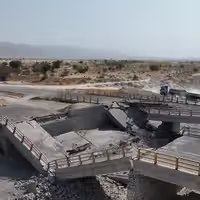
Iranian media reported that five bridges in Hormozgan province were hit, along with the railway station in the coastal city of Bandar Khamir and Iranshahr airport in southeastern Iran.
Iran’s state-run IRNA news agency said seven people were killed in strikes on bridges in Bandar Khamir.
The attacks also damaged power lines in Bandar Abbas and surrounding areas, causing outages, while a tower at the port of Chabahar was brought down. Iran said the tower monitored commercial traffic, while the United States described it as part of an IRGC surveillance network used to target vessels in the Strait of Hormuz.
With major international news organizations lacking permanent bureaus inside Iran, the directive further concentrates wartime reporting in the hands of state-controlled institutions and makes independent verification of attacks, casualties and infrastructure damage more difficult.