• العربية
  • فارسی
Brand
  • Iran Insight
  • Politics
  • Economy
  • Analysis
  • Special Report
  • Opinion
  • Podcast
  • Iran Insight
  • Politics
  • Economy
  • Analysis
  • Special Report
  • Opinion
  • Podcast
  • Theme
  • Language
    • العربية
    • فارسی
  • Iran Insight
  • Politics
  • Economy
  • Analysis
  • Special Report
  • Opinion
  • Podcast
All rights reserved for Volant Media UK Limited
volant media logo

CENTCOM says new strike wave hit dozens of targets in Iran

Jul 15, 2026, 03:14 GMT+1

US Central Command said on Tuesday American forces completed an additional round of strikes against Iran, hitting dozens of military targets near the Strait of Hormuz and along Iranian coastal areas.

“US Central Command (CENTCOM) completed an additional round of strikes against Iran at 10 p.m. ET, July 14, hitting dozens of military targets near the Strait of Hormuz and Iranian coastal areas,” CENTCOM posted on X.

“US fighter aircraft, drones, and naval vessels launched precision munitions against Iranian missile and drone sites, naval capabilities, and coastal defense systems during the seven-hour wave to further degrade Iran’s ability to threaten commercial shipping and civilian crews,” it said, accompanying the statement with a video of the attacks.

Most Viewed

Trump reinstates Iran naval blockade, notifies Congress of renewed fighting
1

Trump reinstates Iran naval blockade, notifies Congress of renewed fighting

2
ANALYSIS

Why so few Iranians have jobs despite low unemployment

3

Mossad recruited Ahmadinejad for Iran regime-change plot - report

4
INSIGHT

Iran risks its most valuable Arab partner over Hormuz

5

UK says support for Iran's IRGC outlawed under new state threats law

Banner
Banner
Banner

Spotlight

  • One flight, two chokepoints: why Iran wants an air bridge to Yemen
    ANALYSIS

    One flight, two chokepoints: why Iran wants an air bridge to Yemen

  • Iran parliament drops two hardline critics of US talks from security panel posts

    Iran parliament drops two hardline critics of US talks from security panel posts

  • Iran risks its most valuable Arab partner over Hormuz
    INSIGHT

    Iran risks its most valuable Arab partner over Hormuz

  • Why so few Iranians have jobs despite low unemployment
    ANALYSIS

    Why so few Iranians have jobs despite low unemployment

  • January protesters trapped in 'hell' of Greater Tehran prison, inmates say
    EXCLUSIVE

    January protesters trapped in 'hell' of Greater Tehran prison, inmates say

•
•
•

More Stories

One flight, two chokepoints: why Iran wants an air bridge to Yemen

Jul 15, 2026, 02:58 GMT+1
•
Negar Mojtahedi
100%
An Iranian Mahan Air flight lands in Sanaa airport in this screen-grab from a video by Houthi television Al-Masirah, July 13, 2026

An Iranian plane landing in Houthi-controlled Yemen looked like an oddly minor victory for Tehran. But it may have been the opening move in an effort to rebuild the allied force capable of threatening a second global maritime chokepoint alongside the Strait of Hormuz.

As the US-Iran memorandum of understanding unravels and the confrontation shifts toward the Strait of Hormuz, renewed fighting in Yemen is raising a broader question: is Tehran preparing another source of maritime pressure at Bab al-Mandab?

Hezbollah and Hamas have been severely weakened by Israeli military operations. The Houthis, by contrast, remain armed, entrenched and positioned astride one of the world's busiest shipping lanes.

Even a credible threat to Bab al-Mandab could unsettle shipping, energy markets and global supply chains. For Iran, that threat alone may be valuable.

The fight over one airplane

The latest escalation followed Yemen's decision to block an Iranian aircraft carrying a Houthi delegation returning from the funeral of Supreme Leader Ali Khamenei in Tehran. Yemen's internationally recognized government accused Iran of attempting to enter its airspace without authorization.

The dispute quickly escalated. An attack damaged Sanaa International Airport's runway. The Houthis blamed Riyadh before targeting Saudi Arabia's Abha International Airport with missiles and drones.

Senior Houthi official Mohammed al-Bukhaiti later warned of what he described as a "siege" of the Kingdom and openly identified Bab al-Mandab as a strategic pressure point.

"The key thing here was the precedent," Chatham House fellow Thomas Juneau told Iran International. "Iran and the Houthis are trying to force open the air bridge between Tehran and Sanaa."

Iran has long supplied the Houthis through maritime smuggling routes stretching around Oman and the Horn of Africa. Those routes are slow, costly and vulnerable to interdiction.

A direct air bridge would dramatically improve Tehran's ability to move sensitive military components into Houthi-controlled territory. That is why one apparently ordinary passenger flight mattered.

Rebuilding the Houthis

Farzin Nadimi, a defense and security analyst at the Washington Institute, believes Iran's urgency reflects another problem: after years of Red Sea operations and repeated US and Israeli strikes, the Houthis are running low on some of their more advanced military capabilities.

"They are very much eager to help the Houthis rebuild their strategic inventory in order to be a viable player again," he said.

Nadimi suspects the aircraft may have been carrying critical weapons components, although there is no independent confirmation of its cargo.

Modern missile and drone forces depend less on complete weapons than on a steady flow of electronics, guidance systems, engines and other specialized components.

If the Houthis are running low, a direct air link would offer Tehran a faster and more reliable route to replenish those capabilities.

A second chokepoint

The strategic importance extends well beyond Yemen.

The dispute between Tehran and Washington is already centered on the Strait of Hormuz, where Iran has demonstrated the leverage that can be created by threatening one of the world's most important energy corridors.

A revitalized Houthi force capable of disrupting Bab al-Mandab would force Washington, Saudi Arabia and their regional partners to consider the security of two strategic waterways simultaneously.

"Iran, having demonstrated the extraordinary value for itself of closing the Strait of Hormuz, absolutely understands that if it closes both Hormuz and Bab al-Mandab at the same time, the effect would be magnified," Juneau said.

"The effect on the global economy, the ability to pressure the US, to pressure Saudi Arabia and to pressure all of their allies."

Juneau cautioned that neither Tehran nor the Houthis appear poised to close Bab al-Mandab in the near term. But the ability to credibly threaten it would give Iran another source of strategic leverage.

Yemeni-American researcher and author Fatima Abo Alasrar believes the latest confrontation was deliberately engineered by Tehran.

"I think, honestly, Iran has engineered this escalation," she said.

In her view, widening the potential cost of confrontation creates another avenue through which Tehran can shape future negotiations with Washington.

Saudi Arabia's red line

The confrontation also threatens to upset the fragile balance that has prevailed in Yemen since the 2022 truce.

Saudi Arabia has spent years trying to extricate itself from a costly war that increasingly looked unwinnable.

"It's really Saudi Arabia that's been absorbing a lot of the pain here," Juneau said.

The Houthis understood Riyadh's reluctance to return to full-scale conflict and repeatedly tested how far they could push.

The attempt to establish a direct air bridge between Tehran and Sanaa appears to have crossed a different threshold.

Saudi Arabia may still prefer de-escalation. But allowing Iran an easier route to replenish Houthi military capabilities would strengthen an armed group positioned directly on its southern border and potentially restore its ability to threaten Saudi cities, airports and energy infrastructure.

Alasrar described Saudi Arabia and the Houthis as pieces on a much larger geopolitical chessboard.

"Houthis and Saudis are almost like pieces on a chessboard that are fighting with each other right now," she said. "But it's Iran and the US that get to impose everything."

Whether the Houthis intend to launch a renewed campaign around Bab al-Mandab remains uncertain. Juneau cautions they are not simply Iranian proxies waiting for orders, while Nadimi expects de-escalation unless the wider US-Iran confrontation expands significantly.

Hormuz has already demonstrated the leverage created by maritime chokepoints. Iran may not even need the Houthis to close Bab al-Mandab. If it succeeds in rebuilding their capabilities, simply making the threat credible could become a source of strategic pressure in its own right.
Divisions in Iran show success of Trump’s policy - White House

Jul 15, 2026, 02:40 GMT+1

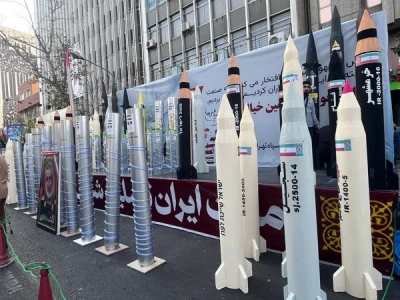
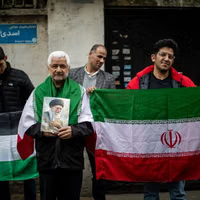
White House Deputy Chief of Staff Stephen Miller said on Tuesday that growing divisions among Iran’s leadership reflected what he described as the success of President Donald Trump’s policy toward Tehran.

Speaking to Fox News, Miller said Iran’s leadership now faced “giant, canyon-sized fissures” after decades of unity, adding that the United States was urging Tehran to support what he called a peace program and abandon its nuclear ambitions.

Kuwait says air defenses intercept drone attacks after Iranian strikes

Jul 15, 2026, 01:20 GMT+1

Kuwait’s General Staff of the Army said on Tuesday that its air defenses were confronting hostile drone attacks following what it described as Iranian aggression.

The statement said any explosion sounds heard were the result of air defense systems intercepting the attacks and urged residents to follow safety instructions issued by authorities.

Hegseth urges Iraq to disarm Iran-aligned militias after meeting PM

Jul 15, 2026, 01:14 GMT+1

US Secretary of War Pete Hegseth said on Tuesday that Iraq must assert its sovereignty and disarm Iran-aligned militias that he blamed for more than 600 attacks on US personnel this spring.

“I hosted Iraqi PM Ali al-Zaidi at the Pentagon today. To deepen our partnership, Iraq must assert its sovereignty and disarm the Iran-aligned militias responsible for 600+ attacks on US personnel this spring,” Hegseth posted on X.

“The US is also looking to the Iraqi Security Forces, including the Peshmerga and other Iraqi Kurdistan Region security forces, to lead in D-ISIS efforts as the OIR military missions winds down. A secure Iraq opens the door to strong commercial and defense cooperation,” he added.

US-Iran conflict converges on Hormuz

Jul 15, 2026, 00:46 GMT+1
100%
A projectile is fired during what the US Central Command (CENTCOM) said were strikes on Iran, in this screen grab taken from a handout video released on July 12, 2026

The war between the United States and Iran is increasingly being fought over control of the Strait of Hormuz, with both sides using the strategic waterway as a source of military and political leverage.

CENTCOM said its forces began another round of strikes at 3 p.m. ET against Iranian military assets it said had been used to attack commercial shipping in the strait. It added that US forces were preparing to resume the blockade of Iranian ports and coastal areas at 4 p.m. ET.

The IRGC responded by explicitly threatening regional energy exports, saying that as long as US “evil actions” continued, “not a single drop of oil and gas” would leave the region. It added that further US attacks would delay any reopening of the Strait of Hormuz.

Washington says the strikes are intended to protect commercial shipping and restrict Iranian maritime activity, while Tehran portrays control of the strait as a sovereign right and links its reopening to broader political and military conditions.

The latest operation followed a five-hour wave of US strikes on military sites in Bushehr, Chabahar, Jask, Konarak, Abu Musa and Bandar Abbas, according to CENTCOM.

Iranian media later reported explosions across southern Iran, including Bandar Abbas, Sirik, Ahvaz and Qeshm, while authorities said part of a power plant on Kish Island had been damaged.

At least three people were killed in a US strike in Hormozgan province, according to local officials after an environmental protection post and a fodder warehouse were hit.

As US strikes expanded along Iran’s coastline, Iranian attacks spread across the Persian Gulf.

Kuwait said an Iranian strike hit one of its naval vessels, injuring four service members. Its armed forces also reported intercepting one ballistic missile, five cruise missiles and 33 drones, while falling debris damaged civilian and critical infrastructure.

Bahrain sounded warning sirens after its air defenses intercepted Iranian aerial attacks. The IRGC claimed it had struck US military infrastructure in Bahrain and Kuwait and said it had also targeted a US air base in Jordan with ballistic missiles.

The maritime front widened in parallel. Two crude tankers operated by ADNOC Logistics and Services were hit by projectiles while transiting the Strait of Hormuz.

One Indian crew member was killed and several others were injured, prompting India to summon Iran’s deputy ambassador and lodge a formal protest.

A separate tanker reported being hit by a missile off Oman, while Stolt Tankers said one of its vessels was struck by an unidentified external device, causing a fire in its engine room.

Iranian leaders reinforced the military message with competing claims over the strait. Vice President Mohammad Reza Aref said it was natural for Iran to administer Hormuz while other countries retained the right to use it.

An army spokesperson said the waterway would reopen only under arrangements acceptable to Iran’s armed forces.

Washington, meanwhile, framed the blockade and strikes as measures to keep Hormuz open to non-Iranian shipping.

President Donald Trump said no country or entity should charge vessels for passage and declared the strait open to all traffic except ships traveling to or from Iranian ports or carrying Iranian cargo.

The growing confrontation triggered diplomatic and economic alarm.

Oman called for respect for international law and freedom of navigation, while India and New Zealand summoned senior Iranian diplomats. The Gulf Cooperation Council and several Arab states condemned attacks on commercial vessels and regional countries.

Oil prices climbed as markets assessed the risk of prolonged disruption through the waterway, which carries a significant share of global energy exports. Major shipping companies also rejected proposals for transit fees or restrictions in international waters.

The war that began over Iran’s nuclear program is increasingly being fought over control of the world’s most important shipping lane.