• العربية
  • فارسی
Brand
  • Iran Insight
  • Politics
  • Economy
  • Analysis
  • Special Report
  • Opinion
  • Podcast
  • Live TV
  • Iran Insight
  • Politics
  • Economy
  • Analysis
  • Special Report
  • Opinion
  • Podcast
  • Live TV
  • Theme
  • Language
    • العربية
    • فارسی
  • Iran Insight
  • Politics
  • Economy
  • Analysis
  • Special Report
  • Opinion
  • Podcast
  • Live TV
All rights reserved for Volant Media UK Limited
volant media logo

Iran welcomes death of Senator Graham, saying ‘Azrael is just’

Jul 13, 2026, 10:18 GMT+1Updated: 12:44 GMT+1

Iranian foreign ministry spokesperson said in response to the death of US Senator Lindsey Graham that “Azrael is just,” referring to the angel of death in Islamic tradition.

Esmaeil Baghaei accused the late senator of building his political life around war, violence and support for mass killings in the Middle East.

“The death of this hot-tempered and foul-mouthed senator will certainly not grieve any free human being,” Baghaei said.

Baghaei did not explain how his assertion that “Azrael is just” applied to the deaths of former Supreme Leader Ali Khamenei and senior IRGC commanders killed in the conflict.

The remark appears to apply a theological standard selectively, celebrating the death of an adversary while portraying the deaths of Iranian leaders as crimes demanding vengeance.

Most Viewed

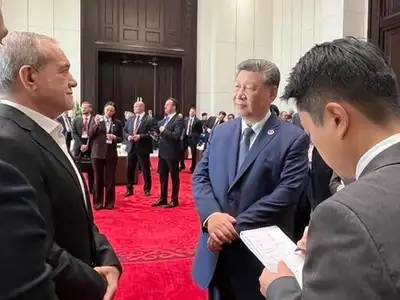
Xi snub reignites Iran’s doubts about China
1
INSIGHT

Xi snub reignites Iran’s doubts about China

2
INSIGHT

Five years ago, Iran’s planners put today’s crisis on paper

3
INSIGHT

US strikes deepen Tehran debate over compromise or confrontation

4

Iran drug shortages hit 800 medicines as costs could triple

5
ANALYSIS

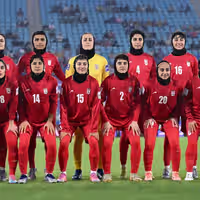
Women footballers came home under pressure. Now Iran wants them on camera

Banner
Banner

Spotlight

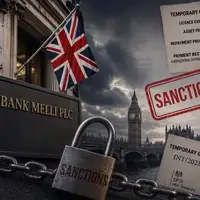
  • If Britain backs US plan, Iran's London bank shuts down on October 22
    ANALYSIS

    If Britain backs US plan, Iran's London bank shuts down on October 22

  • US strikes deepen Tehran debate over compromise or confrontation
    INSIGHT

    US strikes deepen Tehran debate over compromise or confrontation

  • Xi snub reignites Iran’s doubts about China
    INSIGHT

    Xi snub reignites Iran’s doubts about China

  • Trump’s call for an Iranian uprising runs into a trust problem
    ANALYSIS

    Trump’s call for an Iranian uprising runs into a trust problem

  • Five years ago, Iran’s planners put today’s crisis on paper
    INSIGHT

    Five years ago, Iran’s planners put today’s crisis on paper

  • Women footballers came home under pressure. Now Iran wants them on camera
    ANALYSIS

    Women footballers came home under pressure. Now Iran wants them on camera

Banner
•
•
•

More Stories

Cannabis emerges as leading drug among Iranian women

Jul 13, 2026, 09:54 GMT+1
100%
A woman smokes a cannabis cigarette in Iran in this undated file photo.

Women’s drug use has increased in Iran over the past decade, with cannabis products now the most commonly used substances among female users, a senior anti-narcotics official said on Sunday.

“The use of drugs among women has unfortunately increased over the past seven to 10 years, and this trend often begins with cigarette smoking,” Soleiman Abbasi, Director General of Treatment at Iran’s Drug Control Headquarters, told the ILNA news agency.

“Hashish and cannabis are the most common drugs used by women in society, and there is not a significant tendency among women to use other specific narcotic substances,” he added.

Women, Abbasi said, still account for far fewer drug users than men, although no precise official figures are available. Even so, he warned that addiction among women carries wider social consequences because of their central role in family life.

“When the mother of a family becomes addicted, the family structure quickly falls apart,” Abbasi said, adding that women who do not use drugs often play a key role in maintaining family cohesion.

Iran faces one of the world's most severe drug-use challenges because of its proximity to Afghanistan, historically the world's largest producer of opium, and the long-standing availability of opiates. Official and expert estimates suggest around 2.8 million Iranians are regular drug users, with broader estimates including occasional users exceeding four million.

Cannabis use gaining ground among younger women

Available research indicates cannabis use among Iranian women remains substantially lower than among men but has been rising, particularly among younger women and university students.

100%
An Iranian woman smokes in this undated file photo.

A 2021 systematic review covering 90 Iranian studies found that 0.2% of women in the general population reported cannabis use during the previous year, compared with 1.3% of men. However, researchers identified a statistically significant increase in cannabis use among female university students between 2000 and 2020, reflecting growing consumption among younger, urban women.

Researchers have linked the trend to urbanization, changing social attitudes, easier access through informal networks, and greater exposure to global youth culture through the internet, while cautioning that stigma and legal risks likely result in substantial underreporting.

Abbasi also warned about the dangers posed by increasingly contaminated drugs.

Laboratory testing has found many seized narcotics contain harmful chemical impurities, including lead, which can worsen users' health and may contribute to fatal poisonings beyond the effects of the drugs themselves, he said.

He also highlighted overdose as a growing concern.

  • Counterfeit drugs kill 7,000 people annually in Iran

    Counterfeit drugs kill 7,000 people annually in Iran

A study using data from Iran's Forensic Medicine Organization by Britain's Lancaster University recorded 11,944 drug-related deaths between March 2022 and March 2024, with men accounting for the overwhelming majority of fatalities and the average age at death around 37. Earlier official figures put annual drug-related deaths at roughly 3,000, suggesting the toll has increased sharply in recent years.

Diplomacy fades as US and Iran escalate over Hormuz

Jul 13, 2026, 03:40 GMT+1
100%
Vessels at the Strait of Hormuz, as seen from Musandam, Oman, June 22, 2026.

Hopes that the memorandum of understanding between Iran and the United States could evolve into a broader deal appeared increasingly remote on Monday as both sides carried out fresh strikes and clashed over control of the Strait of Hormuz.

The latest escalation saw the United States widen its attacks to dozens of locations across several Iranian provinces. While many of the reports could not be independently verified, they suggested a broader operational scope than in recent days.

US Central Command announced another round of strikes aimed at degrading Iran's ability to threaten commercial shipping through the Strait of Hormuz, the world's most important oil transit route.

State-affiliated Iranian media later claimed Tehran had launched extensive missile and drone attacks against US bases and vessels across the region.

Nour News, which is close to Iran's Supreme National Security Council, reported that the attacks had begun, while Sabereen News said several ballistic missiles had been fired from western and central Iran toward US military positions.

Bahrain's Interior Ministry subsequently activated air raid sirens and urged residents to avoid using or obstructing main roads unless necessary, adding that further safety instructions would follow.

A CENTCOM spokesperson told Al Jazeera that Iranian Revolutionary Guards forces had fired at commercial shipping in the strait, adding that US aircraft shot down an Iranian cruise missile and a one-way attack drone. Tehran has not confirmed those claims.

The maritime confrontation remained at the center of the escalation.

Iran continued to insist that the waterway remains under its control. Senior military officials said all foreign naval movements in the strait were under continuous surveillance and warned that no vessel would be allowed to enter Iranian territorial waters unlawfully.

In a strongly worded statement, Iran's Foreign Ministry accused the United States of violating both the memorandum of understanding and the UN Charter, saying American attacks over the past 24 hours had targeted transportation infrastructure, commercial shipping, cargo vessels and aviation facilities.

The ministry also accused Washington of pressuring Oman to undermine Iranian arrangements for managing shipping through Hormuz and warned Persian Gulf states against allowing their territory to be used for attacks on Iran.

It said the source of any attack on Iranian territory would be regarded as a legitimate target for retaliation.

The renewed military activity also rattled global markets.

Brent crude rose more than three percent in Asian trading as investors priced in the risk of prolonged disruption around Hormuz, through which roughly one-fifth of global oil supplies normally pass.

Regional governments appeared increasingly uneasy as the confrontation widened.

Iraq called for restraint and warned against actions that could endanger maritime navigation. Qatari officials, who had been attempting to preserve a diplomatic channel between Tehran and Washington, remained engaged with Iranian counterparts, although there was little indication mediation efforts were gaining traction.

Only days ago, officials on both sides continued to speak publicly about diplomacy. President Donald Trump said Iran had asked to continue talks and that Washington remained prepared to negotiate, while US officials described technical discussions as ongoing despite repeated violations of the ceasefire.

Those diplomatic signals now appear increasingly overshadowed by events on the ground.

Rather than serving as a bridge toward a broader agreement, the memorandum of understanding has become another point of contention, with each side accusing the other of violating its terms.

Can Tehran seek revenge and negotiate with Washington?

Jul 12, 2026, 22:07 GMT+1
•
Maryam Sinaiee
100%
A mourner holds a poster showing US President Donald Trump in crosshairs with the words “There will be blood” during funeral ceremonies for Ali Khamenei in Mashahd, Iran, July 9, 2026

Supreme Leader Mojtaba Khamenei’s renewed call for revenge over his father’s killing has emboldened hardliners demanding concrete action, while raising questions over how such threats can be reconciled with Tehran’s stated openness to diplomacy.

In a message issued after the burial of former supreme leader, Mojtaba Khamenei described retaliation for his father’s death in a February 28 airstrike as “a national demand”, adding that it “will most certainly be carried out.”

Judiciary chief Gholamhossein Mohseni-Ejei, recently reappointed by Khamenei for another five-year term, immediately welcomed the declaration that revenge for his slain father was inevitable.

“We will pursue and punish the murderers of the martyred Imam,” he wrote on X.

Former IRGC commander Mohsen Rezaei, now a military adviser to the supreme leader, said US president Donal Trump and Israeli Prime Minister Benjamin Netanyahu had crossed the Islamic Republic’s “red lines” and “must be met with decisive and proportionate punishment.”

“Revenge is part of the path of the Revolution,” he added.

The declaration revived a contradiction at the heart of Iranian policy: whether Tehran can negotiate with Washington while presenting revenge against its president as a national or religious obligation.

Hours before Khamenei’s message, Trump said 1,000 US missiles were “locked and loaded” and aimed at Iran, with thousands more ready to follow if the Iranian government acted on threats to kill him.

The message also intensified pressure on officials viewed as favouring engagement with Washington.

Some hardline commentators portrayed it as drawing a clear line between the supreme leader and supporters of negotiations, while others complained that senior officials and institutions had been slow to endorse it publicly.

President Masoud Pezeshkian had earlier affirmed Iran’s right to avenge what he called the “historic crime,” while Parliament Speaker and chief negotiator Mohammad-Bagher Ghalibaf said those responsible would face justice.

Neither had publicly commented on Khamenei’s latest message at the time of writing.

Former nuclear negotiator Saeed Jalili said avenging Khamenei would be “a defence of every nation’s sovereignty” and “the greatest service to international law.”

Hardline political activist Ahmad Ghadiri argued that advocating Trump’s assassination fundamentally contradicts negotiations with Washington.

Amir Chizari, a political activist close to Ghalibaf, disagreed. He maintained that the obligation to seek revenge, which he said Khamenei had imposed on all Muslims, “does not contradict the negotiations that have taken place so far.”

Reformist journalist Ahmad Zeidabadi questioned the logic of pursuing both tracks simultaneously.

“Those who say Iran should negotiate and reach an agreement with the United States while at the same time planning to cut off Trump’s head, or demanding his extradition to Iran to be killed, what framework of political or practical logic are they following?” he wrote.

Some hardline figures called for the rhetoric to be translated into action.

Political analyst Ehsan Salehi told Hamshahri’s online television channel that security agencies should establish dedicated units to carry out revenge operations.

“The word ‘revenge’ is neither ambiguous nor open to interpretation,” he said. “It has a clear meaning: punishing and eliminating the killers. It cannot be diluted into harmless slogans or symbolic projects.”

Salehi argued that a stronger response to the US killing of Qasem Soleimani in 2020 might have deterred subsequent attacks.

Cleric Mohammad Fayyazi said Khamenei’s declaration had effectively made revenge official policy and urged the government to endorse it formally, without what he called “pointless diplomatic considerations.”

The debate exposed broader disagreements over Iran’s priorities.

The news website Rouydad24 argued that while parts of the political and military establishment consider revenge the country’s foremost objective, others see the deteriorating economy and declining public trust as the more immediate threats.

It warned that becoming trapped in “a vicious cycle of emotional decisions” could bring tougher sanctions, greater economic hardship and deeper domestic discontent.

One reformist-leaning user argued that revenge also required the capacity to carry it out.

“A country that could not guarantee the security of its late leader, and cannot fully guarantee the security of its current leader, should first restore its own strength before thinking about revenge,” the user wrote. “Otherwise, the result will be no different from before.”

Religious scholar Saeed Sadoughi raised a more fundamental question.

“Suppose Trump and Netanyahu are gone and revenge is achieved. Will the country’s problems be solved?” he wrote. “Will issues such as high-level uranium enrichment and the Strait of Hormuz simply disappear? Will the country suddenly move towards development and prosperity?”

Senator Graham was a steadfast friend of the Iranian people, Prince Pahlavi says

Jul 12, 2026, 10:52 GMT+1
100%
US Senator Lindsey Graham speaks at a rally by Iranian opposition supporters in Munich, Germany, on February 17, 2024.

Iran's Prince Reza Pahlavi offered condolences following the death of US Senator Lindsey Graham on Sunday, calling him a “steadfast friend of the Iranian people” and a defender of freedom.

Pahlavi said Graham had stood with Iranians “when friends were seldom found” and had used his voice to amplify those fighting for justice.

“His support for Iran’s Lion and Sun Revolution earned him the title ‘Uncle Lindsey’ among Iranians. He will be remembered with profound gratitude and deep respect,” Pahlavi said in a post on X.

The Iranian prince extended condolences to Graham’s family, colleagues, the people of South Carolina and the United States.

The senior Republican lawmaker from South Carolina died after a “brief and sudden illness,” his office said in a post on X. US media reported that emergency personnel had responded to a call for cardiac arrest at his Capitol Hill home on Saturday night.

Graham backed Iranian opposition

Graham told a large gathering of Iranian opposition supporters in Munich in February that it was “a time of choosing.”

“I choose the Iranian people over the murderous ayatollah. It is time for him to go,” he said as he waved Iran’s pre-1979 Lion and Sun flag.

He said he had been “dreaming of a free Iran” and urged people around the world to speak out in support of Iran’s opposition movement.

Graham was also featured in Iranian government-aligned messaging during the funeral of former Supreme Leader Ali Khamenei in Tehran, where placards showed his face alongside US President Donald Trump beneath red target symbols.

A longtime voice on foreign policy, Graham was a prominent supporter of Israel and Ukraine and a staunch critic of Iran’s government. He consistently advocated a hard line toward US adversaries. His Senate website said he had “consistently pushed for outcomes in the War on Terror that protect our long-term national security interests.”

Tributes pour in

Trump called Graham “one of the greatest people and senators I have ever known” and described him as a hard-working patriot.

After Trump became president, Graham became one of his closest allies in Congress and a frequent golf partner.

“Israel has lost one of its greatest friends. America has lost a great patriot. I have lost a beloved friend,” Israeli Prime Minister Benjamin Netanyahu said in a statement.

Graham had only recently returned from Ukraine and had been scheduled to appear on NBC's Meet the Press on Sunday morning, the network said.

This structure keeps all the Iran-related reporting together before broadening out to US politics and international tributes, which I think is much stronger for your audience.

Iran tells pro-government rallies to continue until leader orders otherwise

Jul 12, 2026, 06:12 GMT+1
100%

Iranian authorities on Saturday instructed pro-government street gatherings to continue until Supreme Leader Mojtaba Khamenei orders them to end.

The directive, carried by the state-run ISNA news agency, described participants as Iran’s “summoned people” and said the gatherings had expanded with the supreme leader’s approval and guidance.

It said government supporters remained in mourning and were seeking revenge for those killed in the war, particularly former Supreme Leader Ali Khamenei, and should therefore remain in public squares until further notice.

The nightly gatherings began after Ali Khamenei’s death was announced at the start of the war in late February. Government institutions sustained them through speeches, religious ceremonies, patriotic performances and food distribution, while state media portrayed them as evidence of national unity and support for the Islamic Republic.

The phrase “summoned people” echoes remarks Ali Khamenei made before the war, when he said God would mobilize the public during a national crisis and that “the people would finish the job.”

The rallies later became a means of political pressure, with participants chanting against officials involved in negotiations with Washington. Some accused negotiators of betraying those killed in the war and called for talks with the United States to be halted.

Ali Khomeini, a grandson of Islamic Republic founder Ruhollah Khomeini, reinforced that position on Friday, saying negotiations with the United States should not be viewed as a path to peace.

“Negotiation means war; war has different forms,” he said, adding that anyone seeking peace with Washington was a traitor.

The gatherings have also highlighted the government’s shifting approach to women without the mandatory hijab. While some clerics criticized their presence, other officials welcomed them as part of a broader pro-government front.

Mojtaba Khamenei has not been seen in public since the war began, including after his father’s death, the announcement of his succession and Ali Khamenei’s burial. His positions have so far been conveyed only through written statements.