• العربية
  • فارسی
Brand
  • Iran Insight
  • Politics
  • Economy
  • Analysis
  • Special Report
  • Opinion
  • Podcast
  • Iran Insight
  • Politics
  • Economy
  • Analysis
  • Special Report
  • Opinion
  • Podcast
  • Theme
  • Language
    • العربية
    • فارسی
  • Iran Insight
  • Politics
  • Economy
  • Analysis
  • Special Report
  • Opinion
  • Podcast
All rights reserved for Volant Media UK Limited
volant media logo

Iran says it may no longer be bound by MoU if US violates terms

Jul 10, 2026, 21:44 GMT+1

Iran’s ambassador to the United Nations, Amir Saeid Iravani, said on Friday Tehran may no longer consider itself bound by the US-Iran memorandum of understanding if the United States continues what he described as violations of the agreement.

“Iran remains committed to the faithful implementation of the memorandum of understanding, provided that the United States fully and faithfully complies with its own obligation. However, should the United States continue to violate its obligations under the MoU, Iran will no longer be bound to fulfill its obligations under the MoU,” Iravani said.

“Under the Islamabad MoU, responsibility for maritime navigation through the Strait of Hormuz, including its due planning on all necessary demining operations, rests exclusively with Iran,” he added.

Most Viewed

A remote bridge shows how US-Iran war is expanding
1
ANALYSIS

A remote bridge shows how US-Iran war is expanding

2
INSIGHT

US strikes, Hormuz clashes push Iran deal to brink

3

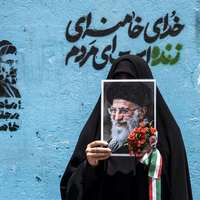
Ali Khamenei buried in Mashhad after days-long funeral

4
INSIGHT

Tehran torn between war and deal as Khamenei is buried

5

Iran turns Friday prayers into nationwide campaign for revenge

Banner
Banner
Banner

Spotlight

  • Iran faces region’s harshest mix of wartime contraction and inflation

    Iran faces region’s harshest mix of wartime contraction and inflation

  • Is the Iran-US MoU dead – or are we asking the wrong question?
    PODCAST

    Is the Iran-US MoU dead – or are we asking the wrong question?

  • For many Iranians, paychecks now barely cover food
    INSIGHT

    For many Iranians, paychecks now barely cover food

  • Iran’s economic pain deepens as factions trade blame
    INSIGHT

    Iran’s economic pain deepens as factions trade blame

  • Tehran torn between war and deal as Khamenei is buried
    INSIGHT

    Tehran torn between war and deal as Khamenei is buried

  • A remote bridge shows how US-Iran war is expanding
    ANALYSIS

    A remote bridge shows how US-Iran war is expanding

  • Trump's rhetoric U-turn leaves Iranians between dread, hope and memes
    VOICES FROM IRAN

    Trump's rhetoric U-turn leaves Iranians between dread, hope and memes

  • We live through decisions we don't make
    TEHRAN INSIDER

    We live through decisions we don't make

•
•
•

More Stories

Pakistan talks were part of a US deception, former Iranian FM says

Jul 10, 2026, 21:31 GMT+1

Former Iranian foreign minister Manouchehr Mottaki said talks in Islamabad were part of what he called a US deception and urged Iran's negotiators to accept that the process was intended to mislead them, adding that those who disagree should hear arguments from officials who hold that view.

“Islamabad was a plan, a broader scheme of deception and maneuvering against by the United States. The Americans had a plan that they thought they could finish within two or three days and achieve their goal, which was to bring an end to the Islamic Republic. They failed,” Mottaki said in a state TV interview.

“They still have not given up. They are not seeking negotiations, nor are they looking for messages or back-channel communications. They only want to finish the job. Now, however, this has become clear. They want to reach that goal by any means possible: a targeted war, a temporary war, a short-term war,” he added.

US to keep targeting Iran's Supreme Leader with sanctions, Bessent says

Jul 10, 2026, 21:18 GMT+1

US Treasury Secretary Scott Bessent said on Friday Washington would continue using "every tool" available to isolate Iran's Supreme Leader Ali Khamenei and other senior Iranian officials from the global financial system, adding that assets blocked under US measures would be preserved "for the Iranian people."

“The so-called Supreme Leader is hiding in seclusion while his regime crumbles. Treasury will continue using every tool at its disposal to isolate him and other regime elites from the global financial system. We will preserve these assets for the Iranian people,” Bessent posted on X.

For many Iranians, paychecks now barely cover food

Jul 10, 2026, 21:03 GMT+1
•
Maryam Sinaiee
100%
An Iranian family shops at a supermarket in Tehran as soaring food prices and shrinking purchasing power put growing pressure on households

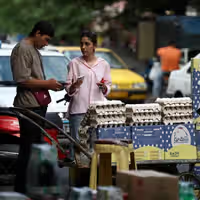
Years of high inflation have pushed millions of Iranian households into a struggle over basic expenses, with new estimates showing wages barely cover food costs before rent, healthcare and other necessities are even considered.

While the government continues to provide monthly cash subsidies and electronic food vouchers to a large share of the population, many families say these measures no longer come close to covering rapidly rising living costs.

An analysis by economic news website EcoIran comparing official food prices, a minimum nutritional basket and the minimum wage found that the salary of a married worker with one child is now enough to cover little more than the minimum monthly food needs of a three-person household.

The analysis estimated that an individual needed around 78 million rials in June to meet minimum nutritional requirements.

For households relying solely on the minimum wage, it found that almost all monthly income would be consumed by food purchases alone, leaving little for rent, utility bills, transportation, healthcare, education or clothing.

Unrelenting inflation

The squeeze comes as many Iranian families already spend between 50% and 70% of their income on housing costs.

Food prices have continued to climb sharply, with staples including red meat, poultry, dairy products, rice, eggs, cooking oil, fruit and vegetables increasingly out of reach for many households.

According to data cited from the Statistical Center of Iran, annual inflation currently stands at about 66%, while year-on-year inflation has jumped by roughly five percentage points over the past month to exceed 88%.

Food and beverage inflation has climbed above 130%, with some categories recording even sharper increases. Prices of red meat and poultry have risen by nearly 180% compared with a year earlier, according to Iranian market reports, causing demand to fall significantly.

Many Iranians say their personal experience of inflation is significantly worse than official figures suggest.

Economists note that inflation indexes measure a broad basket of goods and services, while lower- and middle-income families spend a much larger share of their income on essentials such as food, rent, transportation and medical care.

Dwindling middle class

Economist Kamran Nadri told Tejarat News that years of sustained inflation have inflicted lasting damage on household finances.

“Economic pressure on low-income groups and the middle class may be tolerable for a short period, but when it persists for years, it leaves broad social and economic consequences,” he said.

“Since 2018, following the United States' withdrawal from the nuclear agreement, Iran has experienced average annual inflation of around 40 to 45 percent,” Nadri said. “During that period, wages did not increase in line with inflation under successive governments, and the purchasing power of the middle class has declined markedly.”

Economists caution that even if Iran reaches an agreement with the United States and the risk of military conflict subsides, inflation is unlikely to fall quickly.

Political economy researcher Kamal Athari told ILNA that even under the most optimistic scenario—including sanctions relief and removal of obstacles such as Iran’s inclusion on the Financial Action Task Force (FATF)—it would still take years for Iran to restore normal commercial relations with the global economy.

“Under such circumstances, inflation could eventually decline, but the process would not be rapid,” he said.

‘It’s all on Pezeshkian’

Growing concern over living standards has prompted renewed calls for additional government support.

Mohsen Bagheri, a board member of the Tehran Islamic Labour Councils' Coordination Council, told Khabar Online that wages, which were set in early April, should be revised upward in the coming months.

He also argued that the value of electronic food vouchers should increase, saying they have remained unchanged despite rising prices and earlier government promises.

The economic pressure has also become part of the wider battle over Iran’s political direction after the war.

Hardline critics who continue to advocate confrontation with the United States and Israel have blamed President Masoud Pezeshkian’s administration for the deteriorating situation.

“Pezeshkian destroyed the country,” one hardline user wrote on X. “He created limitless inflation. He allowed us to be deceived by the enemy three times. Zero achievements, countless losses.”

Others have pushed back, arguing that continued calls for confrontation ignore the country’s worsening economic reality.

“Families are literally being destroyed, education, healthcare, housing, inflation, employment, and every economic indicator point to a bleak future,” one user wrote. “Yet some profiteers have forgotten the suffering of the people and keep calling for more war.”

Satellite images show Iran may be rebuilding nuclear sites - CNN

Jul 10, 2026, 20:20 GMT+1

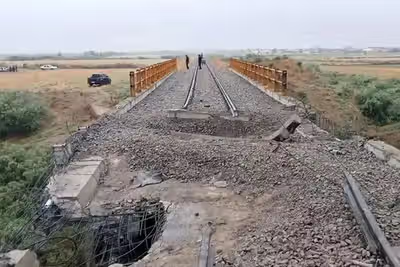
Iran may be repairing or rebuilding facilities at several nuclear and missile sites, including damage at the Parchin military complex southeast of Tehran, CNN reported Friday citing satellite imagery from Vantor.

A CNN visual investigation found repair and reconstruction work at Taleghan 2, a site inside Parchin where experts believe explosive material for nuclear weapons is stored. Images from June 22 and July 7 showed work on several impact holes left by US-Israeli strikes.

Separate imagery from June 21 showed vehicles entering and leaving tunnels at Pickaxe Mountain, a suspected underground nuclear site near Isfahan, while a June 17 memorandum with the United States was in effect.

US sanctions Iranian businessman over links to Mojtaba Khamenei, IRGC

Jul 10, 2026, 19:46 GMT+1
100%

The US Treasury on Friday sanctioned Iranian tycoon Ali Ansari, citing his links to Supreme Leader Mojtaba Khamenei and the Revolutionary Guards, as part of a broader action targeting Iran’s financial networks.

The Office of Foreign Assets Control added Ansari, seven other individuals and five companies to its sanctions blacklist. The entities include several Iranian exchange houses and companies based in Dubai, Hong Kong and Saint Kitts and Nevis.

The six designated entities include Lavasani and Partners General Partnership Company and Mohammad Darbani and Partners Exchange General Partnership Company in Tehran, and Mohsen Khandan and Partners General Partnership Company, also known as Khandan Exchange, in Shiraz. The other three are CDM Trading Limited in Hong Kong, Naba Alzaki Raw Materials Trading LLC in Dubai and Smart Global Limited in Saint Kitts and Nevis.

OFAC also designated Smart Global Limited, a Saint Kitts-based holding company linked to Ansari, while issuing General License Y to permit the wind-down of transactions involving the firm.

Ansari, who holds Iranian, Cypriot and Saint Kitts and Nevis citizenship, was designated under counterterrorism and Iran-related sanctions authorities.

The other seven sanctioned individuals were listed in Iran and linked by OFAC to the three exchange companies.