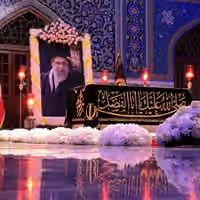
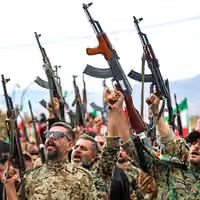
The funeral processions in Tehran and Qom were overshadowed by hardline supporters chanting slogans against President Masoud Pezeshkian and Foreign Minister Abbas Araghchi, a sign of growing tensions over the government's diplomatic course.
Videos circulating on social media showed Pezeshkian being escorted through crowds by his security detail as mourners shouted "Death to the compromiser." Another video captured an even more hostile reception for Araghchi, with chants including "Death to the traitor," and "Shameless."
Yousef Pezeshkian, the president’s son and adviser, condemned the incident, writing: "If anger is directed against our own forces, targets Muslim unity and undermines domestic cohesion, it means we have become a tool in the enemy's hands and opened a window of hope for it to inflict further blows."
The attacks prompted strong criticism from reformists as well as some conservatives who support parliamentary speaker Mohammad-Bagher Ghalibaf's cooperation with the government and negotiations with the United States.
Conservative journalist Mohammad Mohajeri criticized senior officials, particularly Supreme National Security Council Secretary Mohammad-Bagher Zolghadr and some members of the Supreme National Security Council, for remaining silent. "Their silence is itself creating an even greater sedition."
Reformist journalist Ali Asghar Shafieian argued that the slogans damaged Iran's national interests. "On the day of the funeral, when even critics wore black out of respect for Iran and its leader, slogans against the state's decision to end the war and against negotiators seeking sanctions relief dealt a blow to national dignity and security."
Notable absences
The funeral also drew attention for the absence of former presidents Mohammad Khatami and Hassan Rouhani, despite official expectations that the ceremonies would showcase unprecedented national solidarity. Former foreign minister Mohammad-Javad Zarif was also absent, while images showed former president Mahmoud Ahmadinejad attending the public procession.
Authorities have not explained whether the former officials chose not to attend or were prevented from doing so.
Unlike Pezeshkian, Ghalibaf, and Hassan Khomeini – the grandson of Islamic Republic founder Ruhollah Khomeini – attended only the tightly controlled farewell ceremony at Tehran's Mosalla rather than the public street procession.
Political analyst Ahmad Zeidabadi argued that the hostile atmosphere explained the absences. "[The behaviour of] those who ignored the sanctity of the funeral by insulting the president and foreign minister clearly explains why figures such as Mohammad Khatami and Hassan Rouhani did not attend."
He added: "If they showed no mercy even to Pezeshkian, who enjoyed Khamenei's full trust and respect, it is obvious what they would have done had Khatami or Rouhani appeared."
The reformist-leaning website Rouydad24 described the absence of former presidents as "not merely a ceremonial issue, but the loss of an opportunity to demonstrate political consensus at one of the country's most sensitive moments."
Calls for revenge dominate messaging
During the mourning ceremonies, some participants repeatedly called for retaliation against the United States, Israel, and particularly US President Donald Trump, whom they blamed for Khamenei's death. Many mourners carried red flags symbolizing vengeance.
One supporter wrote: "Officials, do you see these flags of revenge? People will be calmed by revenge against the enemy – not by negotiations."
Hardline journalist Parisa Nasrabadi argued: "Avenging the martyred leader is a decisive step toward restoring lost deterrence, a duty to prevent future assassinations of leaders, and an absolute necessity to protect the position of Iran's young leader."
Hossein Shariatmadari, editor of the hardline Kayhan newspaper, called on the government to officially declare Trump and even the pilots allegedly involved in Khamenei's killing worthy of death wherever they are found, and proposed offering a bounty for anyone who kills Trump.
Another commentary published by Tabnak argued that the massive turnout and chants demonstrated that Iranian authorities had "no option but to exact retribution against the killers of the martyred leader."
Was the funeral a referendum?
Several pro-government figures portrayed the turnout as a public referendum endorsing the Islamic Republic.
Lawmaker Jafar Ghaderi described it as "the revolution's largest popular referendum," arguing that the government should now respond by addressing economic concerns and rewarding public loyalty.
Zeidabadi challenged the analogy, writing: "It would be good to explain exactly what this referendum is about and in which law a 'street referendum' is defined."
A social media user similarly argued that authorities have long portrayed public gatherings as proof of popular endorsement without specifying either the subject of the alleged referendum or its legal basis.
Foreign influencers welcomed
The funeral also featured several foreign journalists and pro-Iran commentators, including American media personality Jackson Hinkle, The Grayzone editor Max Blumenthal, and British journalist and blogger Bushra Sheikh, all of whom are known for criticizing Western policy toward Iran. Their presence was widely celebrated by government supporters online.
A widely shared video showed Hinkle standing on a stage in Tehran’s Enghelab Square, leading mourners in chants of “Death to Zionists,” “Death to Israel” and “Death to America,” with the crowd repeating the slogans after him.