• العربية
  • فارسی
Brand
  • Iran Insight
  • Politics
  • Economy
  • Analysis
  • Special Report
  • Opinion
  • Podcast
  • Iran Insight
  • Politics
  • Economy
  • Analysis
  • Special Report
  • Opinion
  • Podcast
  • Theme
  • Language
    • العربية
    • فارسی
  • Iran Insight
  • Politics
  • Economy
  • Analysis
  • Special Report
  • Opinion
  • Podcast
All rights reserved for Volant Media UK Limited
volant media logo

Iran cleric warns US bases 'within missile range' if diplomacy fails
Jun 26, 2026, 11:34 GMT+1

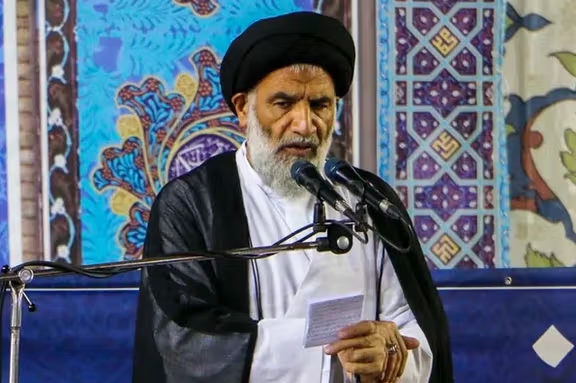
Mohammadnabi Mousavifard, the Supreme Leader's representative in Khuzestan and Friday prayer Imam in Ahvaz, warned that any future "mistake" by Iran's enemies would draw a decisive response.

"The remaining US bases in the region and Israel are within range of the Islamic Republic's missiles," Mousavifard said.

He also said Iran's negotiating team in Switzerland had been tasked with pursuing conditions set by Mojtaba Khamenei.

"The mission of the negotiating team in Switzerland is to pursue Mojtaba Khamenei's conditions," he said.

Mousavifard added that if the other parties did not honor their commitments, "the Islamic Republic will also return to the previous conditions."


Most Viewed

Inside the strike on a Shiraz lodging complex: why was a civilian site hit?
1
EXCLUSIVE

Inside the strike on a Shiraz lodging complex: why was a civilian site hit?

2
EXCLUSIVE

Sources detail Ali Khamenei bunker with blast-resistant room

3
INSIGHT

President's economic reality check fuels Iran's US deal debate

4

North Korea received $25 million for Iran tunnel technology, ex-diplomat says

5

FIFA lets fans take rainbow flags to Iran-Egypt match, but bars Lion and Sun

Banner
Banner
Banner

Spotlight

  • Iran's Pride Match is about visibility, not politics
    OPINION

    Iran's Pride Match is about visibility, not politics

  • Investigation traces January protest deaths to Gharazi Hospital in Isfahan
    SPECIAL REPORT

    Investigation traces January protest deaths to Gharazi Hospital in Isfahan

  • US-Iran MoU pauses conflict but leaves nuclear dispute unresolved

    US-Iran MoU pauses conflict but leaves nuclear dispute unresolved

  • Iran economists warn recovery needs reform not just relief
    INSIGHT

    Iran economists warn recovery needs reform not just relief

  • Rival visions of Iran take to the streets during Ashura
    INSIGHT

    Rival visions of Iran take to the streets during Ashura

  • Iran’s negotiators have 60 days; its factories may not
    ANALYSIS

    Iran’s negotiators have 60 days; its factories may not

•
•
•

More Stories

Japan allocates $10 million in humanitarian aid for Iran

Jun 26, 2026, 11:26 GMT+1
Japan allocates $10 million in humanitarian aid for Iran
100%

Japan said it would provide $10 million in humanitarian assistance to Iran as part of a $15 million emergency aid package for Iran, Lebanon and the West Bank announced on Friday.

The assistance for Iran will be delivered through international organizations, the International Committee of the Red Cross (ICRC) and the International Federation of Red Cross and Red Crescent Societies (IFRC).

According to Japan's foreign ministry, the funding includes $4 million for UNHCR to provide non-food items, water, sanitation and health services, $2.5 million for the IFRC for health and medical care, $2 million for the World Food Programme (WFP) for food assistance and $1.5 million for the ICRC for health and medical care.

Tokyo said the emergency grant was aimed at responding to the deteriorating humanitarian situation and that it would continue coordinating with international partners to support peace and stability in the Middle East.

Investigation traces January protest deaths to Gharazi Hospital in Isfahan

Jun 26, 2026, 11:18 GMT+1
•
Farnoosh Faraji
Investigation traces January protest deaths to Gharazi Hospital in Isfahan
100%
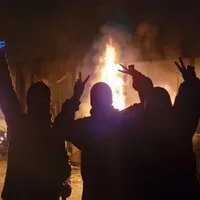
Silhouetted protesters flash victory signs in front of burning barricades during anti-government demonstrations in Iran in January 2026.

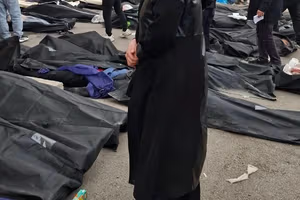
Iran International has launched a new phase of its campaign documenting the January massacre, focusing on Gharazi Hospital in Isfahan, where documents and witness accounts show the facility became a destination for many of those killed or wounded during the January 8-10 protests.

The investigation draws in part on a list of people recorded at Gharazi Hospital during the crackdown. Documents reviewed by Iran International have so far confirmed the identities of 24 people who died after being taken there.

Iran International has previously reported on several deaths connected to the hospital, including those of Iraj Kiani, Mohammadreza Saberi, Ahmadreza Mehrab Beik, Mehdi Masoumi and Mona Hosseini.

Those reports described a pattern of direct gunfire at protesters, denial of medical treatment, bodies removed without family consent, delayed release of remains, pressure on relatives and demands for large payments before bodies were handed over.

Hospital under security control

Witnesses, relatives and medical sources described the hospital as operating under tight security control during the three-day period.

They said security personnel controlled the hospital, many bodies were removed without informing families and records relating to some of the dead and wounded disappeared from the hospital's admission system.

  • Families help identify more victims linked to Alghadir hospital

    Families help identify more victims linked to Alghadir hospital

More than 100 injured people were brought to the hospital on the evening of January 9, according to information received by Iran International. A hospital source said the names of a number of injured and killed were removed from the electronic registration system shortly after being entered.

One medical staff member estimated that 140 bodies linked to the hospital were identified or seen during the unrest, though other sources suggested the real figure may have been considerably higher.

Morgue accounts

Medical sources and eyewitnesses said the hospital morgue reached capacity on the nights of January 8 and 9, with bodies stacked on top of one another. Several sources also said that some wounded people were transferred there alongside those already dead.

One member of the medical staff told Iran International that groaning could be heard from inside one of the body bags after it reached the morgue, suggesting that at least one person was still alive. Security personnel, the source said, prevented staff from approaching the individual.

Witnesses also described bodies being moved to external storage facilities after the morgue became full.

  • Pay for bullets: How Iran pressures families after killing protesters

    Pay for bullets: How Iran pressures families after killing protesters

Families told Iran International that some bodies were withheld for several days before being released under heavy security restrictions, with payments of between five billion and 10 billion rials, roughly $3,500 to $7,000 at the time, reportedly demanded before remains were returned.

The reports contrast with an announcement by Iran's Legal Medicine Organization on January 12 that examinations of those injured during the protests and the release of victims' bodies would be free of charge.

Protester's final hours

Among the cases documented is that of Farid Seifi, who was shot during the protests on January 8.

Witnesses said a security officer fired from a rooftop, striking him in the heart. His family took him to Gharazi Hospital while he was still breathing, but he later died there.

  • How one Tehran hospital became a window into Iran’s January massacre

    How one Tehran hospital became a window into Iran’s January massacre

People close to the family said security personnel subsequently removed his body. After several days and the payment of a substantial sum, his body were returned and buried under heavy security on January 15.

He had been married for only one year and eight months, and his wife was pregnant with triplets when he was killed.

Information from the streets of Isfahan also indicates that Gharazi Hospital became the destination for many people wounded by direct fire from security forces during the protests.

A witness said thousands of people had gathered when security forces advanced from the nearby streets on January 9. Officers first used tear gas and long-range fire before moving closer and opening direct fire on the crowd, according to the witness.

Several people fell after a burst of gunfire, forcing protesters to flee through side streets, the witness said.

One protester was struck by three bullets. "People tried to call emergency services, but the lines were busy," the witness said. "Eventually, several people stopped a car and asked the driver to take the protester's body to the hospital."

Wounded teenager says hospital opened judicial case

In a separate account, an 18-year-old identified as Mehdi said he was shot with live ammunition from about 10 meters away during protests in Isfahan on January 8, with the bullet striking above his knee.

He said protesters first took him to a nearby house, where they stemmed the bleeding. "As the number of wounded increased and space ran out, some protesters were treated in residential parking garages," he said.

Because of heavy blood loss, Mehdi later sought treatment at Gharazi Hospital, where he said staff opened a judicial case for him. Security agents visited his home several times after his hospital visit, he added.

Accounts received by Iran International show that fear of arrest, torture or being killed at hospitals led many wounded protesters to avoid medical centers altogether or leave shortly after arriving. Some instead received treatment in homes and parking garages with the help of local residents and medical staff.

The pattern has also meant that the true number of people wounded and killed was never fully recorded in official systems or, in some cases, disappeared after initial registration.

Iran International's campaign into the small town of Mamasani killings in Fars province has previously documented similar accounts of wounded protesters receiving treatment at home because they feared arrest at hospitals.

  • How a small town became an early flashpoint of Iran’s January bloodshed

    How a small town became an early flashpoint of Iran’s January bloodshed

The campaign to establish the facts surrounding the January protest crackdown continues by collecting, examining and verifying accounts from witnesses, victims' families, medical staff and local sources.

Testimony reviewed by Iran International has made Gharazi Hospital one of the central locations in the investigation. Multiple sources described it not only as a hospital where wounded protesters were denied treatment, but also as a site where bodies were used to intimidate families, extract payments, conceal evidence and erase traces of the killings.

Singapore 'deeply concerned' after flagged vessel hit by projectile off Oman

Jun 26, 2026, 11:13 GMT+1

Singapore's Maritime and Port Authority (MPA) said on Friday it was "deeply concerned" after a Singapore-registered container ship was struck by an unknown projectile while leaving the Strait of Hormuz.

The authority said the Ever Lovely sustained minor damage to its bridge on June 25 while sailing about 3.6 nautical miles off Oman's Khawr Naiwah.

All 21 crew members were safe and the vessel completed its transit through the strait and continued its voyage.

The MPA described the incident as "unprovoked, unjustifiable, and a breach of international law," adding that it remained in close contact with the ship's management company.

Evergreen Marine, the vessel's owner, said the ship's navigation systems and main engine were operating normally and there were no seaworthiness concerns.

UK police search London homes in Iran-linked national security investigation

Jun 26, 2026, 10:55 GMT+1

British counterterrorism police carried out searches at two residential addresses in northwest London as part of an investigation into suspected offenses under the National Security Act linked to Iran.

Counter Terrorism Policing London said the searches took place on Wednesday and that no arrests had been made.

Police said the investigation was not connected to recent arson attacks targeting venues in northwest and east London, including several linked to the Jewish community.

“We do not believe there to be any imminent threat to the public, nor to any particular communities, individuals or venues in connection with this matter,” said Commander Helen Flanagan, head of Counter Terrorism Policing London.

She said police had seen “a marked increase in the tempo” of investigations linked to national security and state threats over the past year, describing the case as part of broader efforts to disrupt hostile activity.

Hormuz shipping depends on coordination with Tehran, Iran deputy FM says

Jun 26, 2026, 10:20 GMT+1

Iranian Deputy Foreign Minister Kazem Gharibabadi said on Friday that safe navigation through the Strait of Hormuz could not be guaranteed through "ambiguous arrangements," parallel shipping routes or decisions made without regard to Iran as a littoral state.

"Safe passage in the Strait of Hormuz cannot be guaranteed through ambiguous arrangements, parallel routes or decision-making outside Iran's considerations as a coastal state," Gharibabadi wrote on X.

He said any "credible framework" for navigation must be based on coordination with Iran and on Article Five of the Islamabad memorandum of understanding.

"Otherwise, the designated parallel route will be suspended," he said.