Over recent days, social media users have voiced concern that a period of relative tolerance toward personal freedoms may be coming to an end.
With the immediate external crisis easing and further negotiations with Washington expected, many fear authorities could once again shift their focus to domestic social controls.
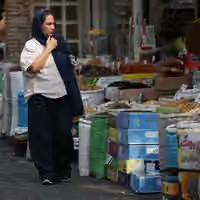
There has been no official announcement confirming the return of the morality police. But reports circulating online suggest increased scrutiny of hijab compliance in several cities, particularly the religious centers of Qom and Mashhad, although many of the incidents remain difficult to independently verify.
One widely shared video, which users say was filmed in the holy city of Qom, appears to show male and female officers attempting to persuade a young woman to enter a white van resembling those previously used by the so-called morality police.
In a separate video reportedly filmed in Mashhad, a police officer is seen confronting a young woman riding as a passenger on a motorcycle, telling her to buy a headscarf from a nearby shop before continuing her journey.
Another video from Tehran shows an argument between a young woman and several men. One tells her she has no right to appear without a head covering because it is against the law, while others threaten to call the police.
Optional, or is it?
Social media users have also reported visits by the Public Venues Supervision Office, the police body responsible for monitoring businesses, to inspect compliance with hijab regulations in companies, cafés and restaurants.
"They say hijab has become optional," one user wrote. "It's true that the way we dress has completely changed, both in the street and at work. But during these days of negotiations officials came to inspect our workplace over hijab.
"Imagine the anxiety in a company where most employees are women without hijab, fearing the business could be sealed because of them."
The legal rights group Dadban said reports from different parts of Iran suggested security, law enforcement and judicial institutions had once again increased their focus on domestic social control.
"Measures taken in recent weeks, from intensified street enforcement to growing pressure on citizens, point to the return of this approach," the group said.
"It appears that, following the reduction of external tensions, the responsible institutions have once again prioritized internal control and restricting individual and social freedoms."
Wartime tolerance, post-war uncertainty
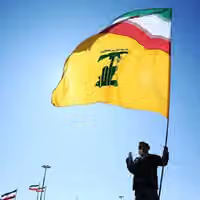
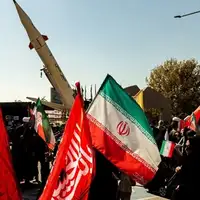
During the war, state media and some officials openly welcomed the participation of unveiled women in pro-government gatherings. Images of women without head coverings were broadcast on state television, breaking with longstanding editorial practice.
At one gathering, organizers even projected a performance by a Lebanese female singer onto a large screen, challenging the state's longstanding ban on solo female singing.
Those departures from established norms unsettled many hardline supporters of the Islamic Republic. Now, with a memorandum signed with the United States and the prospect of further negotiations ahead, some Iranians fear authorities could seek to reassure conservative constituencies by tightening social controls once again.
Others worry that radical groups could feel emboldened to intervene directly under the principle of "enjoining good and forbidding wrong," a religious doctrine frequently invoked to justify policing perceived moral violations.
"After an agreement, what can their street forces do?" one social media user wrote. "Will they once again be unleashed on the public over hijab and other issues? A confrontation between society and the state lies ahead."
Another predicted authorities would intensify hijab enforcement and close cafés to appease conservatives opposed to rapprochement with Washington.
Political scientist Morteza Nemati urged caution over reports of the morality police's return but highlighted what he saw as an irony.
"I don't know how accurate the reports about relaunching the morality police are," he wrote on X. "But if you do bring them back, please be careful not to accidentally arrest the same unveiled women whose images you were showing at the nighttime rallies."