Rubio, GCC ministers call for curbs on Iran’s missiles, drones and proxies


US Secretary of State Marco Rubio and GCC foreign ministers said in a joint statement on Thursday that "lasting regional peace and security requires addressing the full spectrum of Iran’s threats, including its ballistic missiles, drones, and support of proxies in the region."
The Ministers also emphasized the importance of reopening the Strait of Hormuz, noting that free, unconditional, and unrestricted navigation, including the right of transit passage as guaranteed under international law, remains essential to regional and global security.
The Ministers rejected any tolls, fees, or attempts to assert control over the Strait and welcomed the Sultanate of Oman and the International Maritime Organization’s announcement on the launch of an evacuation plan for over 11,000 seafarers stranded in the region.



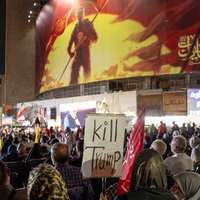

FIFA said fans will be allowed to bring rainbow flags to Egypt’s World Cup group match against Iran in Seattle on Friday, while barring Iran’s pre-revolutionary “Lion and Sun” flag from World Cup venues on the grounds that political symbols are prohibited.
The game coincides with Seattle’s Pride weekend after December’s draw placed the two Muslim-majority nations in the same fixture. Egypt and Iran had objected, saying such events clashed with cultural and religious values.
Both countries impose severe penalties on LGBTQ+ people.
Under Iran’s Islamic Penal Code consensual same-sex sexual conduct is criminalized and punished by penalties ranging from flogging to the death penalty.
A spokesperson for Iran's football federation told The Athletic that the Iranian federation has relayed to FIFA that it does not wish to see symbols or representations of the “movement” within the stadium, referring to the LGBTQ+ community.
FIFA, however, told the outlet it considers this World Cup to be an “inclusive event” and added that “rainbow flags and other flags representing sexual orientation and gender identity are permitted under the FIFA World Cup 2026 Stadium Code of Conduct.”
FIFA said Seattle’s Pride events are locally organized and not an official “Pride Match.”
The decision contrasts with FIFA’s ban on Iran’s pre-revolutionary “Lion and Sun” flag at World Cup venues, with the governing body saying its rules prohibit political symbols.
Earlier this month, a Los Angeles judge upheld FIFA's ban on the pre-revolutionary Iranian flag following an emergency hearing held hours before Iran's opening match against New Zealand.
The lawsuit, filed by the Institute for Voice of Liberty and Sam Kermanian, an Iran fan intending to go to the game, challenged FIFA's prohibition on the lion-and-sun flag associated with Iran's pre-1979 monarchy.
Los Angeles County Superior Court Judge Curtis A. Kin denied the request to block the ban.
"Free speech is incredibly important, it is sacred, a bedrock of our society, but it is not without limitation, such as private actor, on private property, and as shown by previous cases, regulating in reasonable way. I deny the application," Kin said, according to The Athletic.
The report said that FIFA has deemed the flag political in nature under its stadium code of conduct, which prohibits political, offensive or discriminatory materials at World Cup venues.
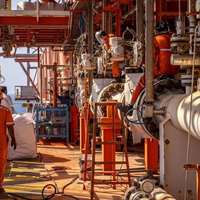
IRGC-affiliated outlets report that three tankers that were attempting to pass through a US-declared corridor in Omani waters turned back after receiving warnings from the IRGC.
The vessels were identified as the UAE-owned BLUE STAR I, Japan’s AZUMASAN and the Japan-managed OMEGA TRADER.
The reports said another vessel was later attacked near Oman, though the circumstances and the identity of the attacker were not immediately clear.
A cargo vessel was struck by an unknown projectile off the coast of Oman on Thursday, causing damage to its bridge but leaving no reported casualties or environmental impact, the UK Maritime Trade Operations said.
The British maritime security agency said the incident occurred at 2:10 PM UTC about 7.5 nautical miles southeast of Dahit, Oman. “A cargo vessel has been hit on the starboard side by an unknown projectile, causing damage to the bridge,” UKMTO said.
The ship’s master reported that all crew were safe and that there was no environmental damage.
The attack came after Iran’s IRGC Navy warned ships not to use any route through the Strait of Hormuz except those authorized by Iran
Ship & Bunker reported that vessel-tracking data showed traffic on routes close to Oman was continuing Thursday despite the warning.
A hardline Iranian lawmaker said the new Hormuz route defined by Oman in coordination with the United States and the International Maritime Organization challenges Tehran's dominance over the strategic waterway and sets a "dangerous precedent".
He claimed the new route, along with what he described as repeated violations of the recent memorandum of understanding, required an immediate military response.
“Given the repeated violations of the memorandum in this short period, an immediate military reaction is the only way to prevent the consolidation of this dangerous precedent in the Strait of Hormuz,” Rasaei said.
He said the move came one day after Parliament Speaker Mohammad Bagher Ghalibaf visited Muscat.
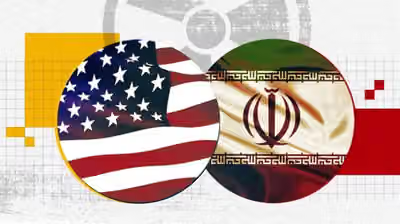
US Vice President JD Vance said one of the biggest breakthroughs of the Switzerland talks with Iran was an agreement in principle to establish a direct military communication channel between the Revolutionary Guard and CENTCOM in Doha to help prevent future escalation.
Speaking to UnHerd aboard Air Force Two after the Lake Lucerne summit, Vance said Washington had sought “a channel on the Iranian side” for reducing conflict.
“They were like, ‘OK, fine, we’ll send somebody from the IRGC to go hang out in Doha with somebody from CENTCOM, and that’s how we’re going to settle a lot of these disputes,’” he said.
The talks, mediated by Pakistan and Qatar, brought US and Iranian officials together after the recent war and amid efforts to turn a preliminary memorandum of understanding into a broader settlement.
Vance described the MOU as a “foundational document” rather than a final nuclear deal, saying its basic logic was: “Let’s open the Strait, let’s stop shooting at each other, and let’s see if we can make a nuclear deal.”
He said Iran was offering terms “radically different” from the 2015 JCPOA, including a tougher inspection regime and the “elimination” of its existing enriched uranium stockpile, while also seeking a transformed relationship with the United States and the world.
The vice president also linked the emerging arrangement to wider regional de-escalation, including Lebanon. At the end of the summit, he said progress on Lebanon was “very good” and pointed to a deconfliction mechanism discussed in Switzerland.
Vance said Israel and “every other nation in the region” had the right to self-defense, but added that Washington wanted that right exercised in a context of de-escalation.
He acknowledged that the process remains uncertain, saying Iran is “talking differently than they have in the past,” but that the question is whether Tehran’s actions will follow its words.

