Iran lawmaker says Pakistan’s PM meeting request part of plot to kill Khamenei


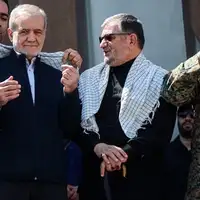
Iranian MP Kamran Ghazanfari said Pakistan Prime Minister Shehbaz Sharif’s stated interest in meeting Supreme Leader Mojtaba Khamenei was part of a US-Israeli plan to prepare the ground for targeting him.
Ghazanfari wrote on Iranian social media platform Eitaa that Sharif’s meeting with Khamenei was part of a plot by the United States and Israel to pave the way for Khamenei’s “martyrdom,” using the Islamic Republic’s term for being killed.

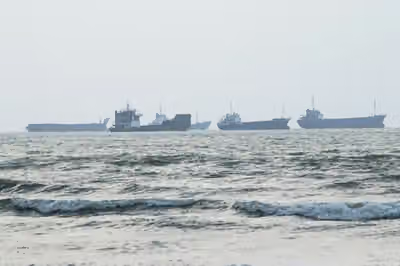



Secretary of State Marco Rubio said the United States would not do anything to undermine the security of its Persian Gulf allies when it comes to dealings with Iran and insisted that the Strait of Hormuz must remain “open and free.”
Rubio made the remarks during a visit to Kuwait City, where he met Kuwait Crown Prince Sheikh Sabah Khaled Al-Hamad Al Sabah as Washington seeks to reassure regional allies after the Iran war and the reopening of the Strait of Hormuz.
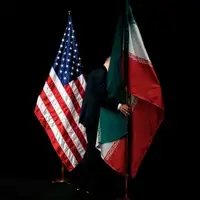
Rubio added that a technical group on Iran would reconvene later this month.
His comments come as the US-Iran memorandum has reopened commercial movement through Hormuz but left disputes over how the waterway will be managed, including Iranian claims of authority over permissions and future fees.
Bahrain has imposed strict limits on Ashura commemorations, the New York Times reported, in the latest measure targeting public Shiite religious activity amid heightened tensions after the Iran war.
The Sunni-ruled Persian Gulf state, where most citizens are Twelver Shiites, ordered this year’s Ashura observances to be cut from the usual 10 days to five and said processions must end by midnight, except in Manama, where they may continue until 2 a.m. In previous years, public processions often continued until dawn.
Bahrain has also barred citizens from traveling to Iran and Iraq until further notice, a move that affects thousands of Bahrainis who usually travel during this period to Karbala, one of Shiite Islam’s holiest cities.
The New York Times said the measures come after Bahrain, a close US ally that hosts the headquarters of the US Navy’s Fifth Fleet, faced hundreds of Iranian drone and missile attacks during the recent war.
Bahrain has long accused Iran of trying to stir unrest among its Shiite population and has taken a hard line against dissent, including the violent suppression of a pro-democracy uprising in 2011.
Italy sought to distance itself from the US war against Iran, saying American aircraft used bases on Italian soil only for “technical and logistical, non-kinetic” support and not for direct combat operations.
The clarification came after NATO Secretary General Mark Rutte told Fox News that 500 US planes had taken off from American bases in Italy to support Operation Epic Fury, Washington’s name for the war it launched alongside Israel against Iran.
Rome has repeatedly said it did not authorize Italian territory to be used for direct military action against Iran, a distinction that has become politically sensitive as European governments face questions over how far they helped the US campaign.
“As already clarified in parliament, the government authorized exclusively technical and logistical, non-kinetic activities,” Defense Minister Guido Crosetto said, adding that Italy had refused requests that went beyond those limits.
Crosetto said Rutte, who he said had “nothing to do with Operation Epic Fury,” had sent a “totally misleading message” by blurring the line between authorized support flights and combat-related operations.
A NATO official said Rutte had only referred to allies, including Italy, carrying out existing bilateral agreements on basing and overflights.
The dispute adds to tension between Prime Minister Giorgia Meloni’s government and President Donald Trump after Rome refused to support the US military campaign against Iran. Italy hosts about 120 US military facilities, including the Sigonella naval air station in Sicily and Aviano air base in northern Italy.
Opposition leaders demanded new explanations from the government, with former prime minister Giuseppe Conte calling for Meloni to clarify the matter in parliament.
Pakistan’s prime minister and Qatar’s premier discussed the US-Iran memorandum and said momentum should continue after the first technical-level talks in Bürgenstock, according to a statement from Islamabad.
Pakistan Prime Minister Shehbaz Sharif received a phone call from Qatari Prime Minister Sheikh Mohammed bin Abdulrahman bin Jassim Al Thani, his office said.
The statement said the two leaders discussed “the successful diplomatic efforts that led to the historic signing of the Islamabad Memorandum of Understanding between the US and Iran.”
“Both leaders expressed satisfaction with the first round of technical-level talks held in Bürgenstock and stated that positive momentum must continue so that negotiations could be successful,” it said.
A member of Iran’s parliament’s presiding board said Tehran’s nuclear technology is not negotiable and warned that any talks over nuclear knowledge or technology would violate Iran’s strategic action law unless approved by parliament.
Alireza Salimi said negotiations held “under the shadow of threat” amounted to imposition rather than diplomacy.
“Negotiation under the shadow of threat is not negotiation, but imposition,” Salimi said. “We will in no way accept such negotiations and will not submit to any threat.”
He added that red lines set by Supreme Leader Mojtaba Khamenei must be observed “case by case” in the talks.