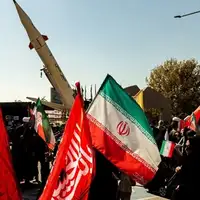
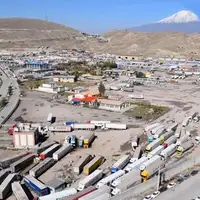
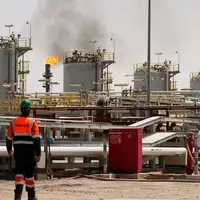
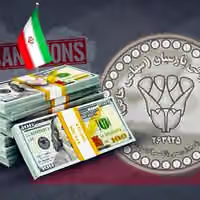
The central question, some observers say, is no longer whether Iran lost the war but whether it survived long enough to turn military setbacks into political gains.
"The Iranian regime is now entering the strategy of what I call surviving, recovering, and rebuilding," former Israeli intelligence official and Middle East analyst Avi Melamed said.
That assessment reflects a broader regional anxiety that after years of pressure on Iran's so-called Axis of Resistance, Tehran may now gain the time and space necessary to reconstruct its influence.
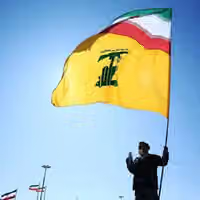
Since the October 7 attacks and the ensuing regional conflict, Iran's proxy network has faced unprecedented pressure. Hezbollah and Hamas have been weakened, while Iranian military infrastructure has come under direct attack.
Yet some in the region fear a return to “square one and even in the worst conditions,” as Melamed put it.
"The Iranian regime marked a triumph," Melamed added. "As far as the Iranian regime is concerned, it views itself as the victorious one."
Whether Tehran can ultimately translate survival into renewed influence will depend in part on whether the emerging understanding with Washington evolves into a durable agreement.
But the prospect alone has already prompted debate across the region about the political consequences of the war.
A changing Middle East
The implications extend beyond Iran.
Middle East analyst and ISGAP research fellow Dalia Ziada argues that one consequence of the war may be a more fragmented regional order. The familiar framework of an Iran-led axis facing Israel and moderate Arab states may no longer adequately describe the region's evolving dynamics.
"What we thought is a Gulf Cooperation Council or a unified Gulf opposition is now being dismantled, dismantled severely," Ziada said, adding that Iran's Arab neighbours will increasingly “act individually and they will not be shy about it.”
According to Ziada, the post-war Middle East may increasingly be shaped by competition between regional powers, mainly “between Turkey and the axis it represents and Israel and the axes it represents.”
This fragmentation comes at a moment of growing uncertainty over America's role in the region.
The reliability question
One theme surfaced repeatedly across interviews: concerns over US credibility.
"There is a narrative that has been already circling around for many years," Melamed said. "That narrative basically says that the United States is not a reliable ally."
Many Persian Gulf states had hoped the war would significantly reduce Iran's regional influence. Instead, the prospect of a US-Iran understanding has generated unease among some regional actors who fear Tehran could once again rebuild its capabilities.
Ziada argued that many regional actors feel abandoned.
"The US probably is not the same ally we expected it would be," she said.
For Arab monarchies, geography remains inescapable. Iran is not a distant adversary but a permanent neighbor with missile capabilities and extensive regional networks.
If the regime emerges emboldened, Persian Gulf states may increasingly feel compelled to accommodate Tehran even as they continue to view it as a threat.
Victory or strategic pause?
Not all analysts agree that Iran has emerged stronger.
Iran scholar Maj. (res.) Alex Grinberg argues that military realities still matter. In his view, Iran's ability to project power has been significantly degraded.
"Iran is now fighting for its survival and it fails to project power," said Grinberg of the Jerusalem Institute for Strategy and Security and the Turan Research Center.
He cautions against viewing the conflict through a zero-sum lens in which anything short of regime collapse constitutes failure.
"The balance of power shifted in favor of the US and Israel," he said. But, he added, "it doesn't mean that Israel and America control the Middle East."
Grinberg also argued that Tehran may be exploiting Washington's priorities.
"Iran is, of course, exploiting the weakness of the US, which resides in the mere desire to reach a deal," he said.
Whether Tehran ultimately gains influence, he argues, depends less on Iran itself than on the choices made in Washington.
A people forgotten
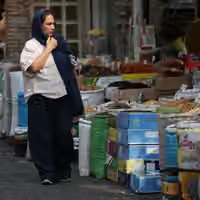
Lost amid discussions of geopolitics and regional balances of power are the people of Iran themselves.
Many Iranians had hoped that increased pressure on the Islamic Republic would lead to meaningful political change after years of repression and deadly crackdowns. Instead, some now express feelings of abandonment.
Melamed acknowledged those expectations.
"There has been a lot of expectations and hope," he said. "Well, it doesn't seem to be like the case at least at this point."
For many inside Iran, the post-war settlement is viewed not as a breakthrough but as a return to a status quo that has repeatedly failed to address their aspirations.
Their frustration underscores a deeper question: if military pressure, mass protests and international isolation do not alter the regime's behavior, what comes next?
The answer may determine not only Iran's future but also the future balance of power in the Middle East.
Wars do not always end with winners and losers. Sometimes they end with paradoxes.
The greatest paradox of all may be that a weakened Iran could still emerge with greater influence.