• العربية
  • فارسی
Brand
  • Iran Insight
  • Politics
  • Economy
  • Analysis
  • Special Report
  • Opinion
  • Podcast
  • Iran Insight
  • Politics
  • Economy
  • Analysis
  • Special Report
  • Opinion
  • Podcast
  • Theme
  • Language
    • العربية
    • فارسی
  • Iran Insight
  • Politics
  • Economy
  • Analysis
  • Special Report
  • Opinion
  • Podcast
All rights reserved for Volant Media UK Limited
volant media logo

UKMTO says Strait of Hormuz open, mine-clearance operations continue

Jun 18, 2026, 21:57 GMT+1

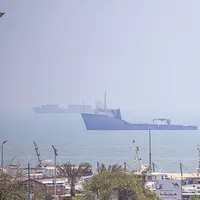
The UK Maritime Trade Operations (UKMTO) has issued a new advisory stating that the Strait of Hormuz is now open and that blockade operations have ceased.

The agency lowered the maritime security threat level in the waterway to “moderate” following what it described as the stated intentions of both the United States and Iran to reopen the strait.

UKMTO cautioned that active mine-clearance operations remain underway and warned mariners of the continued presence of mines in parts of the area.

Most Viewed

Text of US-Iran memorandum released
1

Text of US-Iran memorandum released

2

Toronto shooting probe uncovers trail leading to Tehran

3

US says Iran won't get funds upfront under MoU

4
INSIGHT

Can Iranians cheer Team Melli without cheering the state?

5

US says Iran deal will end enrichment, destroy uranium stocks, cap missiles

Banner
Banner
Banner

Spotlight

  • Who in Tehran is opposing a deal with Washington?
    INSIGHT

    Who in Tehran is opposing a deal with Washington?

  • A fragile compact: ambiguities that could undermine US-Iran MoU
    ANALYSIS

    A fragile compact: ambiguities that could undermine US-Iran MoU

  • A thaw with the US won't fill Iranian tables overnight
    INSIGHT

    A thaw with the US won't fill Iranian tables overnight

  • Why some think a weakened Iran could emerge stronger
    ANALYSIS

    Why some think a weakened Iran could emerge stronger

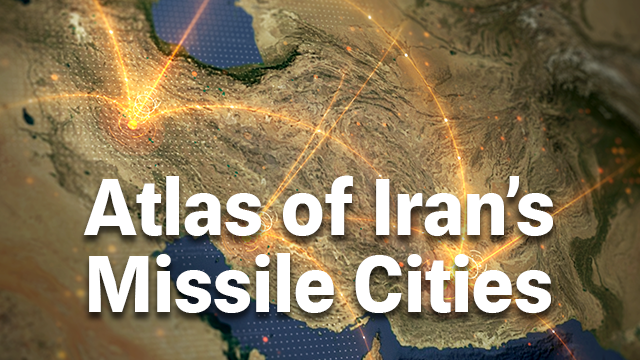
  • Atlas of Iran missile cities: The hidden network behind Tehran’s missile power
    SPECIAL REPORT

    Atlas of Iran missile cities: The hidden network behind Tehran’s missile power

  • Toronto shooting probe uncovers trail leading to Tehran

    Toronto shooting probe uncovers trail leading to Tehran

•
•
•

More Stories

Why some think a weakened Iran could emerge stronger

Jun 18, 2026, 21:37 GMT+1
•
Negar Mojtahedi
Why some think a weakened Iran could emerge stronger
100%

Iran emerged from the recent conflict militarily weakened, its regional proxies battered and its deterrence challenged, yet many analysts now warn that Tehran may be turning battlefield losses into political leverage.

The central question, some observers say, is no longer whether Iran lost the war but whether it survived long enough to turn military setbacks into political gains.

"The Iranian regime is now entering the strategy of what I call surviving, recovering, and rebuilding," former Israeli intelligence official and Middle East analyst Avi Melamed said.

That assessment reflects a broader regional anxiety that after years of pressure on Iran's so-called Axis of Resistance, Tehran may now gain the time and space necessary to reconstruct its influence.

Since the October 7 attacks and the ensuing regional conflict, Iran's proxy network has faced unprecedented pressure. Hezbollah and Hamas have been weakened, while Iranian military infrastructure has come under direct attack.

Yet some in the region fear a return to “square one and even in the worst conditions,” as Melamed put it.

"The Iranian regime marked a triumph," Melamed added. "As far as the Iranian regime is concerned, it views itself as the victorious one."

Whether Tehran can ultimately translate survival into renewed influence will depend in part on whether the emerging understanding with Washington evolves into a durable agreement.

But the prospect alone has already prompted debate across the region about the political consequences of the war.

A changing Middle East

The implications extend beyond Iran.

Middle East analyst and ISGAP research fellow Dalia Ziada argues that one consequence of the war may be a more fragmented regional order. The familiar framework of an Iran-led axis facing Israel and moderate Arab states may no longer adequately describe the region's evolving dynamics.

"What we thought is a Gulf Cooperation Council or a unified Gulf opposition is now being dismantled, dismantled severely," Ziada said, adding that Iran's Arab neighbours will increasingly “act individually and they will not be shy about it.”

According to Ziada, the post-war Middle East may increasingly be shaped by competition between regional powers, mainly “between Turkey and the axis it represents and Israel and the axes it represents.”

This fragmentation comes at a moment of growing uncertainty over America's role in the region.

The reliability question

One theme surfaced repeatedly across interviews: concerns over US credibility.

"There is a narrative that has been already circling around for many years," Melamed said. "That narrative basically says that the United States is not a reliable ally."

Many Persian Gulf states had hoped the war would significantly reduce Iran's regional influence. Instead, the prospect of a US-Iran understanding has generated unease among some regional actors who fear Tehran could once again rebuild its capabilities.

Ziada argued that many regional actors feel abandoned.

"The US probably is not the same ally we expected it would be," she said.

For Arab monarchies, geography remains inescapable. Iran is not a distant adversary but a permanent neighbor with missile capabilities and extensive regional networks.

If the regime emerges emboldened, Persian Gulf states may increasingly feel compelled to accommodate Tehran even as they continue to view it as a threat.

Victory or strategic pause?

Not all analysts agree that Iran has emerged stronger.

Iran scholar Maj. (res.) Alex Grinberg argues that military realities still matter. In his view, Iran's ability to project power has been significantly degraded.

"Iran is now fighting for its survival and it fails to project power," said Grinberg of the Jerusalem Institute for Strategy and Security and the Turan Research Center.

He cautions against viewing the conflict through a zero-sum lens in which anything short of regime collapse constitutes failure.

"The balance of power shifted in favor of the US and Israel," he said. But, he added, "it doesn't mean that Israel and America control the Middle East."

Grinberg also argued that Tehran may be exploiting Washington's priorities.

"Iran is, of course, exploiting the weakness of the US, which resides in the mere desire to reach a deal," he said.

Whether Tehran ultimately gains influence, he argues, depends less on Iran itself than on the choices made in Washington.

A people forgotten

Lost amid discussions of geopolitics and regional balances of power are the people of Iran themselves.

Many Iranians had hoped that increased pressure on the Islamic Republic would lead to meaningful political change after years of repression and deadly crackdowns. Instead, some now express feelings of abandonment.

Melamed acknowledged those expectations.

"There has been a lot of expectations and hope," he said. "Well, it doesn't seem to be like the case at least at this point."

For many inside Iran, the post-war settlement is viewed not as a breakthrough but as a return to a status quo that has repeatedly failed to address their aspirations.

Their frustration underscores a deeper question: if military pressure, mass protests and international isolation do not alter the regime's behavior, what comes next?

The answer may determine not only Iran's future but also the future balance of power in the Middle East.

Wars do not always end with winners and losers. Sometimes they end with paradoxes.

The greatest paradox of all may be that a weakened Iran could still emerge with greater influence.

Iran to invite UN watchdog to inspect nuclear sites, Witkoff tells Congress

Jun 18, 2026, 21:04 GMT+1

Iran will invite the UN nuclear watchdog to inspect its nuclear sites and help identify the locations of Tehran’s enriched material, White House Special Envoy Steve Witkoff told US lawmakers Thursday, according to The Associated Press.

Witkoff made the remarks in a closed-door briefing with congressional leaders and members of national security-related committees, AP reported, citing two people familiar with the discussion who spoke on condition of anonymity.

He told lawmakers that the memorandum of understanding reached between the United States and Iran did not include any “side deals,” but said a “side letter” had been drafted between Tehran and the International Atomic Energy Agency.

According to the people familiar with the briefing, Witkoff said the letter extended an invitation to IAEA Director-General Rafael Mariano Grossi and would allow him to bring “US nuclear inspectors” to Tehran.

The inspectors would begin work on locating and uncovering Iran’s enriched material, the people said.

Iran delegation suspends Switzerland trip over Lebanon attacks - Al Mayadeen

Jun 18, 2026, 20:35 GMT+1

Iran’s negotiating delegation suspended its trip to Switzerland because of continuing Israeli attacks on southern Lebanon, Hezbollah-affiliated Al Mayadeen reported, citing an informed source.

The source said the delegation had been preparing to travel for the first round of talks under the 60-day negotiation process before deciding to suspend the trip.

Tehran had informed the American side and mediators that the Lebanon file was central to the negotiations and to whether they would continue or be suspended, the source said.

The source said Tehran had warned that continued Israeli operations and attacks 10 kilometers inside Lebanese territory constituted a flagrant violation of the first clause of the memorandum of understanding and framework agreement.

US says Iran deal will end enrichment, destroy uranium stocks, cap missiles

Jun 18, 2026, 20:14 GMT+1
US says Iran deal will end enrichment, destroy uranium stocks, cap missiles
100%
US Vice President JD Vance speaks during a press briefing at the White House in Washington, D.C., U.S., June 18, 2026.

US Vice President JD Vance said a final deal with Iran will bar uranium enrichment, destroy Tehran’s enriched uranium stocks and cap the range of its missiles, as a 60-day negotiation period began Thursday following the signing of a US-Iran MoU.

Its implementation began Thursday, Vance told reporters at the White House, opening a 60-day negotiation period in which the two sides are expected to work out the terms of a final agreement. Talks are set to start Friday, with the US vice-president expected to join the negotiations Sunday.

Vance said the final deal, unlike the interim MoU, would have to settle the core US demands on Iran’s nuclear and missile programs: no uranium enrichment, the destruction of enriched uranium stocks and limits on the range of Iranian missiles.

“This is not the Obama deal,” Vance said, contrasting Trump’s approach with the 2015 nuclear agreement. “The Obama deal allowed the Iranians to enrich uranium. This deal will not allow the Iranians to enrich uranium.”

He said Tehran would also have to give up its existing enriched material under any final agreement.

“The enriched uranium stockpile has to be destroyed,” Vance said.

Vance added that the final deal would also restrict Iran’s missile program, saying, "We do expect that as part of the final deal they are not going to be able to build the kind of missiles that can broadly threaten the entire world."

No money without compliance

Vance rejected suggestions that Iran would automatically receive major financial benefits under the MoU, saying Tehran would get no US money and would only gain access to sanctions relief or outside investment if it fully complied and changed its behavior.

“The part of this MOU that I think have been most misrepresented by certain parts of the media is the idea that the Iranians get all these benefits,” Vance said. “You will hear things about $300 billion or $24 billion or this or that number of money or amount of money.”

“The simple fact is that the only way the Iranians get any of those resources, not a single penny, by the way, from the United States of America under any circumstances, but the only way that they would ever get any benefit of the bargain is if they comply fully and change their behavior,” he added.

Vance said the arrangement left Washington in a strong position regardless of Tehran’s choice.

“If the Iranians don’t change their behavior, their military and their nuclear program is still destroyed,” he said. “If they do change their behavior, then they are going to have a transformative relationship with the Middle East, and the Middle East will have a transformative relationship with the people of Iran.”

US sign-off for investment

Vance said any future foreign investment in Iran would require US approval because sanctions relief, waivers or exemptions would be needed before governments or companies could proceed.

He gave the United Arab Emirates as an example, saying Abu Dhabi could invest in Iran only if Tehran changed its behavior and Washington signed off on the necessary sanctions relief.

“Let’s say the United Arab Emirates, who have been a great ally over the last, not just a few months, but over the last many years. Let’s say that they would like to invest in building a power plant,” Vance said in earlier remarks. “That actually is impossible right now, because of the way that US sanctions work.”

“What we’re saying is that if you behave, and if the Emiratis themselves want to build a power plant, then we will do the sanctions relief necessary to make that possible,” he added.

Vance said such investment would not simply reward Iran but create regional leverage over Tehran.

“The good thing about that is that it actually creates integration, which is leverage,” he said. “A world where the Gulf Coast Coalition has greater leverage into the Iranian economy is a world where the Iranians are going to be heavily prevented from misbehaving.”

Waivers and transparency

Vance argued that sanctions alone had failed to force Iran to change its behavior, while the new approach would give Washington a clearer view of where money goes once restrictions are lifted.

Under the approach described by Vance, economic openings would depend on specific US approvals, including sanctions waivers, rather than broad or automatic relief. That would allow Washington to track which countries or companies invest in Iran, what projects they fund and whether Tehran is complying with its commitments.

“So, what I’d ask all of you is just to report honestly that the United States isn’t giving up a cent of money to Iran,” Vance said. “And even the economic benefits, the sanctions relief, and so forth, that comes along with this bargain only happens if the Iranians perform.”

Pragmatists gaining ground in Iran

He also said there were “real divisions” inside Iran over how to proceed and argued that “pragmatists” in the Iranian system were gaining ground.

“What we’ve seen over the last couple of months is that the pragmatists within the Iranian system, the people who really do want to transform their relationship with the Middle East and within the world, those people are winning the argument,” Vance said.

“The United States wants those people to win the argument,” he added. “The United States wants to have a better relationship, but in order for that to happen, the Iranians have to perform, and if they don’t perform, as we’ve said before, they don’t get any of the benefits of the bargain.”

Hormuz traffic resumes

Vance said Iran was complying with its early commitments in the Strait of Hormuz, where shipping traffic began to recover after weeks of confrontation.

“Last night, 12.5 million barrels of oil were through the Strait of Hormuz,” Vance said, describing it as the highest level since the beginning of the conflict.

“The Iranians, for the second night in a row, did not shoot at any ships in the Strait of Hormuz,” Vance said. “So far they are honoring their end of the commitment.”

Vance said US Central Command had allowed more than a dozen ships to pass through the naval blockade, saying Washington was also honoring its side of the early military provisions of the agreement.

US Central Command said separately that American forces had lifted the blockade on all maritime traffic entering and exiting Iranian ports and coastal areas in accordance with Trump’s direction.

“American forces are not impeding the transit of vessels to or from Iranian ports on the Persian Gulf and Gulf of Oman,” CENTCOM said in a post on X.

“All U.S. military blockade enforcement efforts have ceased,” it added.

CENTCOM said US naval ships would remain in the area to ensure all aspects of the agreement were “adhered to, obeyed and in full force and effect.

Iran’s Supreme National Security Council, in turn, said traffic through the Strait of Hormuz would be increased gradually and that vessels should pass at the time and along the route allocated to them due to security issues.

Technical details about passage through the strait will be announced by the Persian Gulf Strait Authority, the council said.

Measures on mine clearance will be carried out under the Islamabad memorandum of understanding, it added.

Israel trusts Trump to negotiate with Iran, Israeli UN envoy tells CNN

Jun 18, 2026, 20:13 GMT+1

Israel’s ambassador to the UN Danny Danon said Israel trusts US President Donald Trump to negotiate a peace deal with Iran.

“We have a very strong bond with the United States, with President Trump, his administration. We fought together. We won the war together against Tehran, and we are grateful for his leadership,” Danon told CNN’s Christiane Amanpour.

Danon said the memorandum of understanding was “only the start of the negotiations” and that Israel trusted Trump to “do the right thing and will bring a good agreement.”

“We’re going to look at the end results of the negotiations and we trust President Trump. He knows how to negotiate and his commitment that Iran will not have nuclear capability is crucial,” Danon said.