• العربية
  • فارسی
Brand
  • Iran Insight
  • Politics
  • Economy
  • Analysis
  • Special Report
  • Opinion
  • Podcast
  • Iran Insight
  • Politics
  • Economy
  • Analysis
  • Special Report
  • Opinion
  • Podcast
  • Theme
  • Language
    • العربية
    • فارسی
  • Iran Insight
  • Politics
  • Economy
  • Analysis
  • Special Report
  • Opinion
  • Podcast
All rights reserved for Volant Media UK Limited
volant media logo

Hardline outlet accuses Iranian officials of 'shielding leadership' narrative over US deal

Jun 15, 2026, 22:28 GMT+1

The hardline outlet Raja News on Monday criticized senior Iranian officials over their response to the reported US-Iran agreement, adding they were using praise of the leadership as a political “shield” to deflect accountability for the deal.

In a post on X, the outlet said Vice President Mohammad-Reza Aref and President Masoud Pezeshkian had framed the agreement as the result of guidance from Iran’s leadership and portrayed it as a national victory, drawing comparisons with similar messaging after the 2015 nuclear deal.

“Still hours after the announcement of the understanding between Iran and the United States, the familiar project of ‘using the leadership as a shield’ to justify the agreement and evade accountability has been launched by government officials,” Raja News wrote.

Most Viewed

Iran media publish purported details of Iran-US draft agreement
1

Iran media publish purported details of Iran-US draft agreement

2

Child labor rises as poverty deepens in Iran

3

World leaders welcome Iran-US deal, back path to final agreement

4
INSIGHT

Iran media split over US MoU as hardliners warn of retreat

5
INSIGHT

Iran-US MoU draws praise and backlash across Tehran’s political spectrum

Banner
Banner

Spotlight

  • Iran-US MoU draws praise and backlash across Tehran’s political spectrum
    INSIGHT

    Iran-US MoU draws praise and backlash across Tehran’s political spectrum

  • Iran media split over US MoU as hardliners warn of retreat
    INSIGHT

    Iran media split over US MoU as hardliners warn of retreat

  • Trump's Iran strategy underrates regime's resilience, ex-US diplomat says

    Trump's Iran strategy underrates regime's resilience, ex-US diplomat says

  • Lebanon may become first test of emerging Iran-US deal, experts say
    PODCAST

    Lebanon may become first test of emerging Iran-US deal, experts say

  • The uneasy mix of diplomacy and pressure in Canada’s Iran policy
    ANALYSIS

    The uneasy mix of diplomacy and pressure in Canada’s Iran policy

  • How Nourabad Mamasani became an early flashpoint of Iran’s January bloodshed

    How Nourabad Mamasani became an early flashpoint of Iran’s January bloodshed

•
•
•

More Stories

Iran-US MoU draws praise and backlash across Tehran’s political spectrum

Jun 15, 2026, 22:18 GMT+1
•
Maryam Sinaiee
Iran-US MoU draws praise and backlash across Tehran’s political spectrum
100%
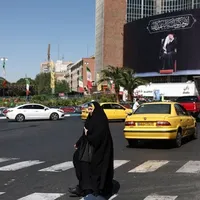
A woman walks past a billboard featuring a picture of Iran's late Supreme Leader, Ayatollah Ali Khamenei, after US and Iranian officials said they had reached a deal to end their war. June 15, 2026

The digitally signed Iran-US memorandum of understanding, expected to be formally signed in Geneva on Friday, has drawn sharply different reactions from Iranian officials, lawmakers, media outlets and social media users.

Iran's new Supreme Leader, Mojtaba Khamenei, has not yet commented on the announcement. President Masoud Pezeshkian, however, welcomed the development in a post on X, saying that if all provisions of the memorandum are implemented correctly, it could become "a source of pride for the country."

Pezeshkian said that an overwhelming majority of members of Iran's Supreme National Security Council had approved the text so that "America's genuine commitment to respecting the rights of the Iranian nation could be tested in practice."

Parliament Speaker Mohammad Bagher Ghalibaf, who also served as Iran's chief negotiator, struck a triumphant tone. In a message posted on X, he wrote that despite efforts by those who sought "to destroy the Iranian nation and force the country into submission, Iran had taken a major step toward final victory."

He added: "They wanted to, but they could not."

Judiciary chief Gholamhossein Mohseni Ejei also praised the outcome, saying the Islamic Republic had demonstrated "dignified and revolutionary diplomacy."

The announcement had an immediate impact on Iran's financial markets. The value of the US dollar and other foreign currencies, as well as digital assets such as Tether and gold prices, dropped following the news. Tehran's stock market also reacted positively when trading resumed on Monday.

Lawmakers split over agreement

Some members of parliament welcomed the reported memorandum.

Rouhollah Lak-Aliabadi told the conservative Tabnak news website that one of the memorandum's positive aspects was that “contrary to Washington's initial demands, there is no discussion of limiting the country's missile capabilities." He claimed that even American officials now speak of continued uranium enrichment "within specified frameworks."

"This shows that the Islamic Republic's military strength has been able to influence the course of negotiations," he said.

Hossein Samsami, a member of parliament affiliated with the hardline Paydari Front, argued that nuclear and regional negotiations are not permissible and that any future talks should serve only to buy time so that the country's deterrence capabilities can be strengthened.

In a post on X, he wrote that he follows the Supreme Leader's directives, but that his expert assessment differs.

This position was criticized by Lak-Aliabadi, who told Tabnak: "For someone to declare that even if the Leader supports a decision, he will still oppose it, is fundamentally unacceptable."

Hardline lawmaker Amirhossein Sabeti described the agreement as "hasty and weak," claiming it violated the Supreme Leader's red lines and reflected a "miscalculation" by officials.

According to Sabeti, "This agreement reflects the capabilities and understanding of the country's senior officials under current circumstances, not the satisfaction of the Supreme Leader." He further argued that the deal "will neither bring economic relief nor guarantee the country's security."

Mahmoud Nabavian, another hardline parliamentarian associated with the Paydari Front, called on authorities to provide the public with a detailed report on implementation of the memorandum, including provisions concerning the lifting of maritime restrictions, oil and petrochemical exports, banking and insurance services, and the release of frozen Iranian assets.

The hardline Raja News website criticized what it called an agreement with "the killer of the Leader," referring to US President Donald Trump, and questioned the lack of publicly available details regarding Iran's commitments under the memorandum.

Controversies over timing

Some hardliners also objected to the timing of the announcement. Because the news broke after midnight in Iran, while it was still June 14 in Washington — Trump's birthday — critics portrayed it as a symbolic gift to the US president.

Conservative journalist Parisa Nasr wrote: "Couldn't they have waited a few more hours until June 14 had passed in Washington before trumpeting the Iran-US peace agreement? Was giving a birthday gift to the killer of the martyred Leader also one of the unwritten conditions of the deal?"

Ahmad Qadiri, a hardline activist and researcher of international law, argued that Iran had obtained only promises while "what Trump has gained immediately is Iran's loss of credibility among the resistance front, lower oil prices, and having the agreement announced on his birthday."

Reformists and moderates welcome move

Several prominent reformist and centrist figures endorsed the reported agreement.

Former president Mohammad Khatami and former foreign minister Mohammad-Javad Zarif, who helped negotiate the 2015 nuclear agreement, both expressed support. In a statement, Khatami described acceptance of the memorandum as "a major and courageous step" and said that it was something "to be genuinely pleased about."

Reformist journalist Ahmad Zeidabadi offered a more measured assessment. Writing on his Telegram channel, he argued that the memorandum represented neither the surrender of one side nor the complete victory of the other.

"It is, like every other phenomenon, the ultimate result of the balance of power between the parties," he wrote, warning that absolutist interpretations favoring either side could complicate future negotiations aimed at reaching a final agreement.

The news website Rouydad24 described the current arrangement as "a major geopolitical ceasefire and a preliminary non-proliferation agreement" rather than a lasting peace settlement.

"Iranian diplomacy must now move from the phase of containing war to consolidating achievements and achieving the durable removal of sanctions — a marathon in which wisdom, domestic cohesion and avoiding unnecessary extremism are the first conditions for success," the report said.

In a commentary for Asr-e Iran, journalist Reza Ghibishavi argued that the end of the conflict could mark a historic turning point for the country.

"From Monday morning, with the official end of the war and the end of abnormal conditions, Iran enters a new era," he wrote. "A new Iran with a new leader, new circumstances, new experiences, a new society, a new region, a new agreement, a new America, and a new world. None of them will return to the past."


Vance describes US-Iran memorandum as 'very general' one-page document

Jun 15, 2026, 22:17 GMT+1

US Vice President JD Vance said on Monday that the memorandum of understanding between Washington and Tehran is a short, broad framework “about a page and a half” long, with key details to be worked out in later technical negotiations.

Speaking to CNN’s Jake Tapper, Vance said the document outlines general principles for implementation while leaving specific obligations and verification measures for future talks.

"The agreement links any benefits for Iran to compliance with its commitments under the deal," he added.

Iran leadership remains hostile to US despite diplomacy, Mark Levin says

Jun 15, 2026, 22:11 GMT+1

Conservative commentator Mark Levin said on Monday that Iran's leadership would remain hostile to the United States regardless of any agreement with Washington, adding that Tehran's behavior would not change under a negotiated settlement.

"Nothing we do in terms of a deal will change the behavior of this enemy," Levin wrote on X. "If you don't believe that you do not know what we are dealing with. If you do believe that you know that for them deals are made to be broken."

"The Iranian regime has not and will never change its ideology. And therein lies the problem, as nearly half a century of evil behavior has demonstrated and their own religious and political leaders and books and preaching make clear. They are about a cause, a revolution. They will not rest until it is exported everywhere, as Allah is said to command them. That is the reality. We are the enemy and must be destroyed," he added.

US sought ceasefire as Iran held firm in talks, Qaani says

Jun 15, 2026, 22:01 GMT+1

Commander of the IRGC Quds Force Brigadier General Esmail Qaani said on Monday Iran's military pressure strengthened its position in negotiations with the United States, adding that Washington sought a ceasefire while Tehran refused to back down.

Speaking to state media, Qaani praised Iran's negotiating team and said battlefield operations and diplomacy had worked hand in hand during the talks.

"From the tweet of the President of the United States, it is evident how his hands and feet were trembling," Qaani said. "This showed who was behind the missile launcher and who was in southern Lebanon, and that the same spirit of resistance characterized our brothers both on the battlefield and at the negotiating table."

"They were seeking a ceasefire through various means," Qaani said. "We stood firm with strength, and we prevented them from escaping and evading what they wanted," he added.

New Zealand considering IRGC terrorist designation, deputy PM says

Jun 15, 2026, 21:54 GMT+1
•
Alireza Mohebbi
New Zealand considering IRGC terrorist designation, deputy PM says
100%

New Zealand is actively considering designating Iran’s Revolutionary Guards as a terrorist organization, Deputy Prime Minister David Seymour told Iran International on Monday.

Seymour said Wellington condemned the Islamic Republic’s conduct toward its neighbors, its support for militant groups in the Middle East its activities close to New Zealand as Australia.

“There is no question that we believe this is an evil regime,” Seymour said. “We condemn their actions toward their neighbors, the sponsorship of terrorism throughout the Middle East and as near as Australia, and we especially condemn their behavior toward the Iranian people.”

He said New Zealand had not yet designated the IRGC in part because it still maintained diplomatic relations with Tehran, including an Iranian ambassador in Wellington, while New Zealand’s embassy in Iran was temporarily closed.

“Those connections can be of value,” he said. “There is some value in the connection and that’s why we have maintained our stance despite the fact that we condemn the behavior and actions of the government of Iran.”

Seymour said New Zealand’s police and intelligence agencies were “very aware” of the IRGC’s activities and were monitoring them.

“The New Zealand government and its various agencies, the police, intelligence agencies, have as a priority monitoring and controlling the IRGC and particularly protecting Iranian nationals who have become New Zealanders and make their home here,” he said.

He said he had personally discussed the issue with Prime Minister Christopher Luxon, adding that the government was not currently considering further action beyond the possible terrorist designation.

Seymour also referred to a recent joint statement by New Zealand and 21 other countries condemning the Islamic Republic’s extraterritorial actions.

“We signed that letter because we and the 21 other state parties have a set of values,” he said. “We should trade value for value, voluntarily get stronger together through mutually beneficial voluntary trade rather than use violence to achieve our aims.”

He added: “That is why we condemn this regime, its behavior both inside and outside Iran.”

Seymour called the Islamic Republic’s treatment of protesters “absolutely disgraceful and disgusting,” and said the Iranian government would not endure.

“I believe the time will come when they are no longer sustainable,” he said. “They will no longer be in power because Persia has a beautiful 5,000-year history.”

He added: “The greatness of that place will not be ended by this regime. They will become a footnote in a long history of a great civilization.”

Seymour also paid tribute to the “forty-thousand freedom fighters” killed earlier this year, saying Iranians seeking freedom would ultimately prevail.

“Living freely, with dignity, safe from violence, is the only way that anybody in the world has ever been able to reach their potential,” he said. “Over time, inevitably, you will succeed because you are right and they are wrong.”