Hojattollah Mirzaei, an economics professor at Allameh Tabataba'i University and former head of the country’s retirement funds, shed light on the compounding crisis at a panel hosted by Donya-e-Eqtesad newspaper.
He said rising exchange rates, import restrictions, higher transportation costs, intensifying inflationary expectations, internet shutdowns and government financial deficits are driving up unemployment and eroding household purchasing power.
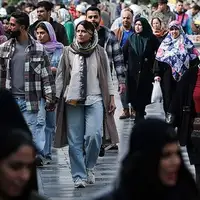
According to Mirzaei, an additional 3.5 million to 4.5 million people are expected to fall into poverty this year alone due to the economic fallout from the March war.
The cost-of-living crisis and the inflationary spiral
The macroeconomic pressure is being felt most sharply in household expenses.
The Central Bank of Iran reported an annual inflation rate of more than 50.6% in April. According to the same report, monthly inflation spiked to 67%.
Prices of some goods and services rose by up to 100% during the same period, vastly outpacing stagnant wage growth.
Prominent economist Masoud Nili warned that even if military tensions ease, economic conditions will not easily return to normal.
“The greatest current danger to Iran’s economy is being caught in an escalating inflationary spiral,” Nili said, calling it “a path that becomes increasingly difficult to control the further it goes.”
Market paralysis and the rise of the working poor
The inflationary pressure is coinciding with severe economic contraction.
Mirzaei projected that Iran’s economy will shrink by 8.8% to 10% in the current Iranian year, adding that even the 10% forecast may be optimistic.
The downturn has also frozen the labor market.
Hossein Rajabpour, head of the Saba Research Institute, said job creation has sharply declined, with the industrial sector suffering the heaviest losses following the recent conflict.
The crisis has also changed the profile of poverty in Iran. Social policy researcher Kowsar Yousefi said a significant share of those who are employed still live below the poverty line.
Frozen assets and the limits of a short-term fix
To ease the acute economic pressure, Iran is pushing for the release of roughly $24 billion in assets frozen in foreign banks.
Tehran hopes access to those funds could help stabilize the currency market, lower inflationary expectations and reduce the cost of importing basic goods and raw materials. Iranian officials have said “meaningful negotiations will not begin without the release of these assets.”
But economists warn that such cash injections would offer only temporary relief.
While access to foreign exchange reserves could help exchange rates, inflation and short-term growth, deeper structural problems would remain.
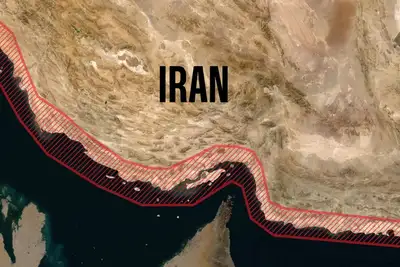
Iran is also hoping that a deal with Washington will end the blockade that has severely restricted its access to oil revenues in recent months, leaving 60 million barrels worth $6 billion stranded on tankers, according to TankerTrackers.
Even if a deal resolves those issues and sanctions are lifted, chronic weakness in domestic and foreign investment would continue to weigh heavily on the economy.
That vulnerability is reflected in global resilience data. According to a business environment resilience index compiled by Factory Mutual Insurance Company, which evaluates how effectively 130 countries withstand and recover from economic shocks, Iran ranks near the bottom at 125th.
The ranking stands in sharp contrast to regional peers such as Qatar and Saudi Arabia, both of which are among the world’s top 50 most resilient economies.