Witnesses describe gunfire, blocked exits and deadly market fire in Rasht
Witnesses in Rasht say protesters were driven into narrow market passages, trapped as fire spread and fired upon by security forces during January’s unrest, according to accounts gathered by Iran International.
The accounts are part of an Iran International public documentation campaign seeking to establish how many people were killed in Rasht, how the market fire unfolded and what happened to victims’ bodies and families in the days that followed.
The campaign is collecting and verifying accounts, images and videos from witnesses and families of those killed in Rasht, one of several cities where the January protests were met with severe force.
Parts of Rasht’s old market, including the booksellers’ market, the arched bazaar and the coppersmiths’ market, caught fire during the protests.
Witnesses in Rasht say protesters were driven into narrow market passages, trapped as fire spread and fired upon by security forces during January’s unrest, according to accounts gathered by Iran International.
The accounts are part of an Iran International public documentation campaign seeking to establish how many people were killed in Rasht, how the market fire unfolded and what happened to victims’ bodies and families in the days that followed.
The campaign is collecting and verifying accounts, images and videos from witnesses and families of those killed in Rasht, one of several cities where the January protests were met with severe force.
Parts of Rasht’s old market, including the booksellers’ market, the arched bazaar and the coppersmiths’ market, caught fire during the protests.

One eyewitness said security forces drove protesters toward areas with limited entry and exit points. After those areas were surrounded, fires broke out in the same sections.
The aftermath of the fire in Rasht bazaar
Trapped as fire spread
A witness described the smell of smoke, fire and burning as so strong that parts of Rasht remained hazy until near dawn.
The protests in Rasht began on Wednesday, January 7, when people gathered in the market and called on shopkeepers to close their stores. The crowd later moved toward Municipality Square. After Basij forces arrived, protesters dispersed for a time, but gatherings formed again around sunset in Sabzeh Meydan and near Bistoon Street.
One eyewitness said the crowd in Sabzeh Meydan initially numbered between 1,000 and 2,000 people, but grew over time.
Basij forces at first appeared confused, the witness said, because protesters were gathering in scattered groups across the city. When security forces moved toward one location, another gathering formed elsewhere.
The aftermath of the fire in Rasht bazaar
Crowds across the city
Protests on January 8 formed simultaneously in several parts of Rasht and later connected in central streets.
One witness described large crowds filling the streets from the Toutounkaran intersection to Municipality Square.
The witness said tens of thousands of people were on Imam Street and around Municipality Square, and that the protests were not limited to main roads but had spread into neighborhoods and side streets.
As the crowd grew and protesters gained control of parts of the city, security forces responded with tear gas and live ammunition, witnesses said.
Security forces blocked retreat routes from several directions, entered through nearby alleys and fired at protesters, according to the accounts.
Shooting at protesters was reported in Falakeh Gaz, Moallem Street, Municipality Square, Sabzeh Meydan, Shariati Street and routes around the market.
The aftermath of the fire in Rasht bazaar
'They came to hunt'
Witnesses said the crackdown intensified after about 10:30 p.m., when Revolutionary Guards forces entered the streets and direct fire with military weapons began.
One person who attended the January 8 protest in Rasht described the scene this way: “In the early hours, the crackdown was mostly carried out by the Basij. But from around 10:30 p.m., the IRGC came in. They came with AK-47s. The first person drove the motorbike and the person behind aimed and fired. It was as if they had come to hunt. Most of Rasht’s deaths began from that hour.”
The witness said security forces especially targeted teenage boys and young men. In some cases, they fired at car windows to force drivers to cross street barriers and clear the way for security forces.
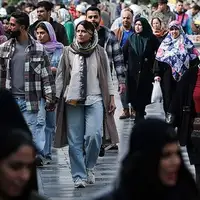
People walking at Rasht bazaar the day after the fire in January
When fire reached the market
The fire in Rasht’s market began while security forces were suppressing protesters in different parts of the city.
The fire started near Shariati Street and the Haj Mojtahed Mosque area, witnesses said. Because of the market’s dense layout, it spread quickly to other sections.
Some people trying to escape gunfire and security attacks were pushed toward Rasht’s market, a maze of narrow passages with limited exits.
Witnesses said security forces blocked the market’s exits from both sides. After that, parts of the market caught fire.
Protesters and other people trapped inside the market faced two deadly choices: remain amid smoke and flames, or try to leave and risk being shot by armed forces.
Some of those who died around the market were shot while trying to escape, witnesses said, while others were trapped by smoke and fire.
Some of the dead in the market area were shopkeepers who had gone inside to remove goods and save their property but were caught in the fire and blocked passageways.
One eyewitness said that around 2:30 a.m., after phone lines were reconnected, word spread that the market was burning.
“I and a few others went toward the market and saw several old caravanserais burning,” the witness said. “People were trying to pull goods out of shops that the fire was approaching.”
Describing the scene, the witness added: “Everyone was either helping or crying. One shopkeeper whose store and all his goods had burned was shouting, ‘My whole life is gone.’ Right there, several people began chanting against Khamenei.”
People walking at Rasht bazaar the day after the fire in January
Delayed firefighting
Fire engines were initially unable to fully enter the market area, and the first vehicles arrived after several hours of delay, according to accounts gathered by Iran International.
One witness said people were banging on the side of a fire truck and pleading with the driver to move farther into the market to control the fire. The driver, who had stopped near the shops, said: “I have orders only to come this far. They won’t let me go any farther. My mission ends here.”
Iran International also received accounts saying security bodies, including the Intelligence Ministry and the IRGC Intelligence Organization, had instructed firefighters not to begin full firefighting operations at that stage.
Some protesters were shot while fleeing the market area, witnesses said, while others were trapped in smoke and flames.
By early Friday morning, security forces had closed off part of Municipality Square near the start of Sa’di Street.
The bodies of several protesters were gathered there and then taken away in Nissan pickup trucks, according to accounts received by Iran International.
Direct fire in the streets
On the evening of Friday, January 9, the violence by security forces grew more intense. Fewer people were in the streets, witnesses said, and security forces fired without warning at even small gatherings.
Motahari Street, Moallem Street and nearby alleys were among the areas where witnesses reported blood on the asphalt and direct gunfire.
One witness said: “There was no warning anymore, no tear gas, no batons. Just direct fire with military weapons. Even inside the alleys, the asphalt was bloody.”
After the crackdown, Rasht was filled with reports of killed and wounded protesters.
In the following days, people shared news of deaths with one another in shops and on the streets.
One witness said that on Sunday, January 11, large crowds had gathered around the Bagh-e Rezvan cemetery in Rasht, with roads packed with cars for several kilometers.
The witness said an acquaintance who had gone to Bagh-e Rezvan for a relative’s burial reported that hundreds of bodies had been transferred there that day for identification.
Pressure on families
Families said the bodies of some of those killed were handed over only after relatives were forced to sign written undertakings.
Some families were pressured to accept the official narrative that their loved ones had been killed by “Israeli and American agents,” according to accounts received by Iran International.
The accounts from Rasht suggest that January’s events in the city went beyond a street crackdown.
The full scale remains unclear, including the number of people killed, who ordered the response and why families say they were pressured afterward.
Iran International’s public campaign aims to document the names, stories and evidence of those killed in Rasht, before their deaths are buried in silence or overwritten by official denial.
Alghadir hospital was already one of the clearest windows into Iran’s January massacre. Now, after a public campaign by Iran International, families and witnesses have come forward with more names tied to the same corridors, storage rooms and rear courtyard.
Iran International has now identified 21 people whose bodies were taken to Alghadir or whose final hours passed through the hospital, including 12 cases detailed in this report.
The accounts add to the record of two nights in which the east Tehran hospital became a transfer point for the wounded and the dead.
On January 8 and 9, witnesses said the streets around Alghadir saw heavy gunfire as security forces opened fire on protesters around Haft Hoz, Tehranpars and Nezamabad.
Inside the hospital, the accounts describe a place where people came for treatment or shelter, only to face the reach of the crackdown inside the wards.
Nights when Alghadir became a crime scene
According to accounts received by Iran International, security forces not only obstructed treatment for wounded protesters brought to Alghadir, but in some cases shot injured people, blocked medical care and moved bodies to storage rooms and the hospital’s rear courtyard.
Witnesses and informed sources said doctors, nurses and other medical staff continued trying to save the wounded despite pressure and threats. They treated protesters in operating rooms, hallways, ambulances and hospital rooms.
One witness said several young protesters entered the hospital to escape security forces chasing them during the demonstrations. Security forces later entered the hospital, closed the doors and fired tear gas inside.
According to the witness, some hospital workers hid protesters in bathrooms and wards, and dressed them in medical clothing to keep security forces from identifying them.
A member of the medical staff said that when more than 70 wounded protesters were brought to the hospital, security forces shot and killed four injured people in front of nurses trying to treat them.
A body taken from home
Sources familiar with the events told Iran International that security forces seized the body of a medical student who had been transferred to Alghadir on January 8 and have never told his family where he was buried.
His family had initially taken the body home to Boumehen, east of Tehran, hoping to prevent authorities from confiscating it and to bury him secretly.
Hours later, security forces found the family’s address using the student’s national identification card, which had been left inside his bloodied jacket. Officers raided the home, used tear gas and took the body away as relatives pleaded with them to leave it behind.
Sources said the family has received no information since then about where he may have been buried.
Iran International is withholding the student’s identity for security reasons.
A courtyard of bodies
A witness who sent video and information to Iran International said Alghadir’s rear courtyard had become a holding and transfer area for the bodies of protesters killed on January 9.
The witness, who had been hit by shotgun pellets during the previous day’s protests, returned to the hospital the next morning for treatment. He said he entered the building to the sound of families crying and shouting.
He walked toward the rear courtyard and morgue area, where he saw blood on the ground and several bodies nearby. Many families were gathered around the hospital grounds, but security forces pushed them away.
After some time, he said, bodies were loaded into pickup trucks and families were told to continue searching at Behesht Zahra cemetery.
“Most of the bodies I saw in the hospital courtyard belonged to people under 30 years old, and there was even the body of a child around 12 or 13 years old among them,” the witness said.
Amirparsa Ashkbous: A student in a blue blanket
Amirparsa Ashkbous was 21 and in his final term studying microbiology. Before joining the January 8 protests, he had sent an audio message criticizing those ignoring calls to gather while people his age were preparing to risk arrest or death.
Iranian slain protester Amir Parsa Ashkbous
According to information received by Iran International, Amirparsa joined protests around Haft Hoz with friends and was shot in the neck by a sniper.
His body was later placed in a blue blanket in the rear area of Alghadir hospital.
A video obtained by Iran International showed his mother searching for his body at the hospital.
Friends described him as kind-hearted and deeply interested in football.
Hossein Naseri: ‘I go for the next generation’
Hossein Naseri, born in 1952, told people around him before joining the January 9 protests that he was not afraid for himself.
“I am at ease about the safety and welfare of my children, and it does not matter what happens to me,” he said, according to relatives.
“I am going to the protests for a better future for the next generation.”
Slain protester Hossein Nasseri
When others urged him to wear a mask to protect himself from security forces, he replied: “Let me be sacrificed for you young people.”
Naseri was shot on his second night at the protests. The bullet hit a main artery in his leg. People at the scene drove him to Alghadir hospital, and sources said he was still alive when he arrived.
As the wounded were being brought in, security forces raided the hospital, forcing the person who had taken Naseri there to flee.
Four days later, Naseri’s wife found his body alone at Kahrizak morgue.
Relatives said he was buried without a normal funeral while his two children, both outside Iran, still did not know what had happened to their father.
Ali Rouzbahani: Buried in bloodied clothes
Ali Rouzbahani, 36, from Lorestan province, was killed on January 8 and his body was taken to Alghadir hospital.
Slain protester Ali Rouzbahani
Sources said that when his family came to collect him that evening, a hospital worker warned them to remove the body the same night before security forces could seize it.
The family secretly transported him to Lorestan and buried him without a public funeral. He was not placed in a shroud. He was buried in the bloodied clothes he had been wearing when he was killed.
Pouria Gholamali: Driven by economic hardship
Pouria Gholamali, 32, worked in Tehran’s computer market. Relatives said the rising dollar and the deep recession in the market had affected his life and work, and pushed him toward the protests.
Slain protester Pouria Gholamali
He was killed near Haft Hoz on January 8 by gunfire from government forces. His body was later left in Alghadir’s rear courtyard.
People close to him said he loved nature and spent much of his free time traveling.
Mohammad Talebi Toroghi: Shot in the head
Mohammad Talebi Toroghi, 35, was shot during the January 8 protests in the Haft Hoz area.
Slain protester Mohammad Talebi
Sources said the bullet struck him in the back of the head. His body was taken to Alghadir hospital and later handed over to his family.
Talebi Toroghi was born in Tehran and was the son of a man killed in the Iran-Iraq War.
Sources described him as a martial artist, a professional motorcyclist and someone deeply interested in riding.
Shahabeddin Sameni: Found after hours of searching
Shahabeddin Sameni, born in 1979, was shot in Nezamabad neighbourhood on January 8, according to sources familiar with the case.
Slain protester Shahabeddin Sameni
Sources said a live bullet was fired at his head from above Narmak Mosque.
His family searched hospitals and other centers for hours before finding his body around 2 a.m. on January 9 in Alghadir’s rear courtyard.
Sameni had a child who was a university student. Sources said that despite his stable financial situation, he had joined protesters in the streets.
After his death, security forces put heavy pressure on his parents to accept that their son had been a Basij member.
The Foundation of Martyrs contacted the family several times, but his father refused. He was later threatened with the confiscation of property.
Peyman Chinisaz: Left in storage for days
Peyman Chinisaz, 53, was from Bandar Anzali. He was shot in the stomach on January 8 in Tehran’s Nezamabad neighborhood and taken to Alghadir hospital.
Slain protester Peyman Chinisaz
A source close to the family said his relatives did not know his fate for several days. When they first went to the hospital, they were told he was not there.
His body, the source said, had been kept for five days in one of Alghadir’s storage rooms.
The family believes Chinisaz was left without proper care after reaching the hospital and died from bleeding.
He was married and had three children, a son and two daughters.
Mohsen Shahmohammadi: Died after two weeks in coma
Mohsen Shahmohammadi, born in 1988, was shot during the January 8 protests near Tehranpars First Square.
Slain protester Mohsen Shahmohammadi
The bullet struck his abdomen and kidneys. He was transferred to Alghadir and remained in a coma for about two weeks.
Sources said his condition was critical from the time he was wounded until his death. He died on January 23 from the severity of his injuries.
Shahmohammadi was unmarried.
Hamidreza Haghparast: Died from blood loss
Hamidreza Haghparast, from Rasht, was shot near Haft Hoz during the January 8 protests.
Slain protester Hamidreza Haghparast
The bullet struck his genital and groin area, leaving him severely wounded.
Sources said Haghparast was left for a long time first on Haft Hoz street and then at Alghadir hospital. He died from severe bleeding and lack of timely care.
Haghparast’s body was not released to his family for four days. Sources said officials made the release conditional on “council approval” and a written pledge from the family.
Haghparast, born in Rasht, was his mother’s only companion and breadwinner. He was buried on January 11 at Bagh-e Rezvan cemetery in Rasht..
Abolfazl Najafi-Aroun: Family forced to pay for burial
Abolfazl Najafi-Aroun, 25, was shot with three live rounds on the evening of January 8 near Tirandaz intersection in Tehranpars.
Slain protester Abolfazl Najafi
He was taken to Alghadir and underwent surgery. Family members and people close to him said he remained conscious for several hours after the operation and even spoke with those around him. A short time later, the family was told he had died.
Relatives said authorities did not allow him to be buried in Behesht Zahra. They said the family was charged 10 billion rials, about $5,555, for a burial permit in Robat Karim, near Tehran. The amount, they said, was separate from the cost of the bullets.
People close to Najafi-Aroun described him as warm-hearted, loyal and loved by friends and relatives.
Hosseinali Sarani: Family paid to recover body
Hosseinali Sarani, 44, was from Aliabad-e Katul in Golestan province. He was transferred to Alghadir after being shot on January 8.
Slain protester Hosseinali Sarani
Relatives said the family received his body after one week.
They said they were forced to pay 5 billion rials, about $2,780, to recover it.
Hani Ganji: Family received wrong body
Hani Ganji, 49, was shot from behind at close range in Tehranpars on the evening of January 8. He was taken to Alghadir and died from severe bleeding.
Slain protester Hani Ganji
After pressure from authorities and after signing a pledge, his family received a body and took it to a workshop in Pardis, Boumehen.
The next day, when no doctor agreed to issue a death certificate, the family took the body first to the Pardis police station and then, with a police letter, to Kahrizak.
When the family went to Behesht Zahra for the funeral and burial, they discovered they had been given the wrong body.
After hours of searching, they were finally able to recover Hani’s body and bury him late that day.
A growing record
The 21 people identified by Iran International are not a full list of those taken to Alghadir hospital.
They are the names recovered so far from one hospital, in one part of Tehran, after two nights of killing.
The first report showed Alghadir as a place where the massacre became visible: the overflowing morgue, bodies in storage rooms and the rear courtyard, and families searching through blankets and body covers.
The new accounts show something else as well: how that record is still growing, one witness, one family and one name at a time.
Alghadir hospital in east Tehran is one of the places where the January massacre could be seen in full: a five-body morgue overflowing, blood on the floors, and families searching through blankets and body covers for the people they loved.
As security forces opened fire around Haft Hoz and Tehranpars, two protest flashpoints in east Tehran, the wounded and the dead were carried to Alghadir hospital, where images and videos later captured one of the clearest records of the January massacre.
Some bodies were wrapped in blankets or plastic. Others were placed in garbage bags or left on top of one another.
After the images spread online, Hossein Kermanpour, the Health Ministry’s public relations chief, confirmed they were real. He said about 150 wounded people and 36 bodies were brought to Alghadir on January 8, while the morgue could hold only five bodies. The images, he said, were “accurate.”
The scenes formed one fragment of the wider January massacre, in which more than 40,000 people were killed in two days as the Islamic Republic moved to crush a nationwide uprising.
Iran International has identified and verified nine of the people whose bodies were taken to Alghadir or whose final hours passed through the hospital. Among them were a 17-year-old student, a 19-year-old woman, a father, a worker, a young man trying to build a future, and a protester shot while helping a wounded girl.
A witness said there were so many dead inside Alghadir that bodies were placed on top of each other. Security forces outside threatened to burn the hospital with everyone inside if the doors were not opened, while relatives of the wounded tried to block their entry.
A wounded protester said officers later entered, hit a nurse on the head with a baton and took several people away. Doctors hid some of the wounded in a storage room. “We kept hearing gunfire,” the protester said. “It sounded like coup de grace shots being fired at the wounded.”
Medical staff said body bags ran out, some of the dead were put in garbage bags, two vans came in the morning and took bodies away, and the corridors, elevators and courtyard were covered in blood as people carried the wounded in blankets toward surgery.
A nurse said January 9 was worse than the previous night. Security forces fired pellets and threatened those trying to help the wounded in the street, she said. One girl had been hit in the eye, one person had been shot in the heart and another had both legs torn apart. “I did not know who to help first,” she said.
Witnesses said security forces and Basij members set up checkpoints around Haft Hoz and near Sarallah Mosque, where the Zakereen Basij base is located. Armed forces were stationed on four sides of the square, they said, and shots were fired even inside the hospital grounds.
A source said many of the wounded had come from around Rashid police station in Tehranpars. Some who died after being taken to surgery were removed through the rear door of the operating room by IRGC and Basij forces, while relatives waited on the other side for news.
One hospital worker described a girl with long hair under a cloth, her head severed and her body missing. A staff member who saw the scene could not return to work for two days, the source said. Another witness said an elderly hospital guard suffered a fatal heart attack after seeing a headless body.
Several sources said security forces later reviewed Alghadir’s security cameras to control records of who had entered the hospital and how the wounded and dead had been moved.
But behind the scenes from Alghadir were individual lives that could still be traced. Families searched corridors, storage rooms, courtyards and morgues for those who had disappeared into the chaos of those two nights. Iran International has identified and verified nine of them.
Aida Aghili
Aida Aghili: The woman in the checkered blanket
Aida Aghili, born on June 23, 1991, joined the uprising in Haft Hoz on January 8. While chanting slogans, she was shot twice in the head at close range and killed.
Before leaving, she hugged her mother and told her what should be done with her belongings if she did not return.
Security bodies tried to bury her in the Behesht Zahra cemetery section used for executed prisoners, but her family resisted. She was buried beside her grandmother on January 11.
On her birthday, Aida had written on Instagram of stress “inside my bones,” “a war in my soul and my homeland,” and a freedom she still believed would come.
Hossein Heidari
Hossein Heidari: ‘Your place is on the street'
Hossein Heidari, 50, was killed in Haft Hoz on January 8, two days before his birthday. He was shot in the back of the head and the side.
Before joining the protests, he had written: “Your place is on the street; every night until freedom, we will not sit down for a moment.”
His family first searched for him at Ansari hospital, where they found no trace of him. They later found his body in Alghadir’s back courtyard, wrapped in a blue blanket.
Hossein loved Esteghlal, the Tehran football club known as the Blues.
His family identified him by his boots, a birthday gift from his daughter. Relatives described him as joyful and fond of laughter. He was buried on January 12 under security restrictions.
Gholamreza Mozhdehi
Gholamreza Mozhdehi: A man taken alive to hospital
Gholamreza Mozhdehi, 52, was wounded during night protests in Tehranpars on January 8 and taken to hospital while still showing signs of life, witnesses said.
Security agents prevented him from receiving medical help. Hours later, his body was found in Alghadir’s basement, in an area used for hospital waste, beside other bodies.
He had a live bullet wound to the neck, pellet injuries to the head, and wounds from knives or machetes. Married with two children, he had joined the protests in solidarity with others.
Mohsen Ghahremanpour
Mohsen Ghahremanpour: Shot at close range, buried in silence
Mohsen Ghahremanpour was 22 and from Malayer, Hamadan province. On January 8 in Tehranpars, security forces shot him in the head and eye from about one meter away.
People took him to Alghadir, where he died. His body was later found in the hospital’s back courtyard.
Relatives said the family faced threats and financial pressure, including a demand for 3.5 billion rials, about $1,945, to release his body.
Iran International has documented similar cases in which authorities demanded money from families or pressured them to sign papers identifying killed protesters as members of the Basij, the IRGC’s paramilitary force, turning the dead into evidence for the Islamic Republic’s own account of the crackdown.
Under that pressure, Mohsen was buried in silence as a Basij member.
He had worked as a laborer and had recently begun container construction.
Setareh Rafiei
Setareh Rafiei: The 19-year-old found in storage
Setareh Rafiei was killed in Tehranpars on January 8. She had been shot twice with live rounds, once in the heart and once in the head.
Her family later found her body in a storage area at Alghadir, among many others left there after the morgue filled.
Pouya Derakhshan
Pouya Derakhshan: A student lost among the dead
Pouya Derakhshan was 17 and a student. On January 8, he was near the Haft Hoz metro station with friends when security forces attacked protesters.
Sources said he was beaten on the head with batons, then shot in the heart. People called an ambulance and he was taken to Alghadir, where doctors found he had no pulse.
After his body was transferred to Kahrizak morgue, a wrong identification code left him missing among the dead.
Relatives had to open the covers of several bodies before identifying him at the washing facility in Behesht Zahra cemetery. He was buried on January 10 in section 326 under security measures.
Sahar Bayat
Sahar Bayat: A body held for days
Sahar Bayat was killed in the evening of January 8 while returning from protests with her husband and friends.
Sources said a live round hit her from behind and she died at the scene.
Her body was first taken to Alghadir, then transferred to Kahrizak. Her husband spent one night at Alghadir and three nights at Kahrizak waiting for her body to be released.
Sources said authorities refused to hand over the body until money was paid. Relatives were also forced to sign pledges that no slogans would be chanted at the funeral. Sahar was buried in Tuyserkan, Hamadan province.
Amir Hossein Emamjomeh
Amir Hossein Emamjomeh: A father shot beside his wife
Amir Hossein Emamjomeh was 29 and the father of a daughter. He was killed during the January 8 protests in Tehranpars after being shot with a live round.
Sources said he was in the crowd with his wife when he was targeted by a sniper, apparently because of the white hat he was wearing. The bullet struck near his nose.
People took him to Alghadir, but he died from his injuries.
Mohammad Radmannia
Mohammad Radmannia: Shot while helping a wounded girl
On January 9, he was on Tavousi Street in Nezamabad when he went to help a wounded girl. He was shot directly in the head and killed.
Sources said people took him to Alghadir, but security agents did not allow treatment. His body was not handed over to his family.
Mohammad had repeatedly helped wounded protesters, taking some into homes to bandage their wounds.
In his final moments, he was again moving toward someone who had been shot.
People who knew him described him as kind, athletic and fond of animals.
His fortieth-day memorial was held on what would have been his birthday.
The nine cases verified by Iran International are not a full list of those taken to Alghadir. They are names recovered from one hospital, in one part of Tehran, over two nights of the crackdown.
Israel’s campaign in Iran has reached far beyond missile depots and military command. Over roughly a month, it has also hit the architecture of domestic repression: intelligence compounds, police stations, Basij bases, judicial buildings, and senior officials tied to crackdowns.
That matters not only because of the damage done, but because of what these places meant. In Iran, repression has never depended on one institution alone. It has been built as a layered system, running from the top decision-making bodies in Tehran down to the neighborhood police station, the local Basij outpost and the courthouse where detainees are processed.
A review by Iran International of citizen reports and source material found that, in about one month after the war began, at least 130 sites tied to internal repression were destroyed or hit.
They included 57 Basij buildings or bases, 43 police (FARAJA) facilities, 10 Revolutionary Guards compounds, and 11 security complexes involved in repression. Other targets included judicial buildings and the state broadcaster, institutions that helped complete the chain through prosecutions, propaganda and coerced confessions.
Iran International sources also put the toll among security forces at nearly 5,000 dead and about 21,000 wounded.
From the command center to the street
The internal security system has long worked in three layers.
At the top sits the command structure: the Supreme Leader, the Supreme National Security Council, provincial security councils and, in Tehran, the IRGC’s Tharallah headquarters, which can take control of multiple security organs during major unrest. Around the capital, a similar role has been played by the Seyyed al-Shohada corps.
Below that are the operational forces: The Police Command of the Islamic Republic of Iran (abbreviated as FARAJA); special anti-riot units; provincial Revolutionary Guards formations; and IRGC’s specialized units such as Saberin and Fatehin.
Alongside them is the Basij, the paramilitary network embedded in neighborhoods across the country. Its Imam Ali battalions, often arriving on motorcycles, became one of the most recognizable instruments of street repression after the 2009 protests.
Iran’s then-President Ebrahim Raisi meets members of the Fatehin unit after the crackdown on the 2022 protests.
The third layer is institutional support: intelligence bodies, courts, prisons and state media.
The strikes appear to have touched every layer.
Senior figures reported killed include Ali Khamenei, the longtime ultimate authority over crackdowns; the intelligence minister and several of his deputies; senior Guards and Basij commanders; commanders tied to Tehran’s suppression apparatus; police intelligence officials; and members of the judiciary, including officials linked to Evin prison and Tehran’s prosecutorial system.
The symbols that fell
The targets were not only militarily useful. Many were symbols.
In Tehran, the Ministry of Intelligence and compounds linked to the Revolutionary Guards’ intelligence arm were hit again after earlier strikes in the June 12-day war. Tharallah-linked facilities in northern Tehran, security clusters in eastern Tehran, anti-riot police facilities and Basij sites across the capital were also struck.
Some locations had an importance that went beyond their walls. Tehran’s Revolutionary Court building on Moallem Street was one of them. For decades, it stood as a symbol of summary trials, political prosecutions and death sentences. Its destruction carried a message larger than the physical damage.
The same was true of the state broadcaster. For many Iranians, it was not just a media institution but a place associated with forced confessions and public humiliation of dissidents. Seeing it hit again mattered for that reason.
Even when buildings had been partly emptied, they still housed the tools of coercion: files, servers, records, communications systems, vehicles and equipment.
In some post-strike videos, papers and official documents could be seen scattered in the streets after blasts ripped through buildings that looked outwardly residential or commercial.
One attack in western Tehran offered a different picture: a strike on the 12,000-seat Azadi sports hall, where anti-riot personnel appear to have been moved. Iran International’s reporting estimates that between 900 and 1,200 security personnel may have been killed there.
From the capital to small towns
What happened in Tehran was echoed outside it.
On the capital’s outskirts, command centers in Rey, Karaj and Mahdasht were hit, along with Basij and police-linked sites in surrounding towns.
In the provinces, Iran International identified heavy strikes on intelligence, police, judicial and Guards facilities in cities including Isfahan, Khorramabad, Ilam, Sanandaj, Semnan, Shiraz, Urmia and Tabriz.
In small towns, local police posts carry a special weight. They are often the clearest symbol of the central government’s presence, and one of the first places where people encounter coercion directly.
That is what makes a place like Abdanan important. The town had already become known for the violence used against residents during the January uprising. Even a mourning ceremony for local victims was met with gunfire.
Days later, residents watched their police station and Guards facilities explode. For people who had just buried their dead, the collapse of those buildings was not just another wartime image. It was the visible breaking of a local order that had seemed untouchable.
What remains after the strikes stop
If the campaign ends soon, the central question will not be only what has been destroyed, but what has been exposed.
The Islamic Republic’s internal coercive machine appears weaker, less insulated and less imposing than before.
Walls around intelligence compounds have fallen. Buildings long associated with fear have been reduced to rubble. Officials who once threatened subordinates from the top of the pyramid are gone.
But the country that remains will also be poorer and angrier.
Official figures show point-to-point food inflation in the last month of the Persian year running above 113%, with some staples such as cooking oil up as much as 220% and bread up 140%, while wages rose only 20% to 30%.
Power cuts, already worsening before the war because of years of underinvestment, point to deeper structural decay that long predates the current fighting.
The war will end. What will remain for ordinary Iranians is a country already battered by record food inflation, stagnant wages and years of neglected infrastructure long before the current fighting began.
For many of those who lost relatives in the January crackdown, that larger story may be distilled into one image: not an oil turbine or a military depot, but the police station, Basij base or courthouse that once embodied fear, now lying in ruins.
Iran’s security and military forces moved personnel, weapons and equipment into at least 70 civilian sites during the US-Israeli airstrikes, an Iran International investigation found, exposing what appears to be a nationwide pattern of using public spaces for military purposes.
The sites span 17 provinces, 28 cities and two villages. Nearly half of them – 34 in total – were primary or secondary schools. Other locations identified in eyewitness accounts and documents reviewed by Iran International included hospitals, stadiums, universities, mosques, parks and government offices.
The accounts were gathered over a 13-day period from March 2 to March 14, 2026, during a near-total internet shutdown that sharply restricted the flow of messages, photos and video from inside Iran.
While Iran International could not independently verify every account, it geolocated visual evidence from seven reported sites, all of them schools.
Civilian sites and battlefield risk
The deployment of military forces at civilian sites “shifts battlefield risks onto civilians,” a regional security source who requested anonymity said, adding that using such locations for military purposes is prohibited under international law.
“When security or paramilitary forces move into schools, hospitals or mosques, they endanger civilians physically, degrade protected civilian services and may turn those sites into military objectives,” the source said.
Under international humanitarian law, civilian sites can lose protected status if used for military purposes, though attacking forces must still comply with rules on distinction, proportionality and precaution.
The source said the legal implications vary depending on the type of site but warned that such practices can strip civilian locations of their protected status.
“Schools are civilian objects; using them as barracks, firing positions, detention sites, or weapons depots can make them lawful military targets, while still leaving the attacker bound by distinction, proportionality, and feasible precautions,” the source said, adding that this “amounts to human shielding.”
At least four hospitals were identified in eyewitness accounts as having nearby or associated military deployments, including Golestan Hospital in Ahvaz and medical sites in Kermanshah and other western regions.
“Hospitals get even stronger protection than schools. Under International Humanitarian Law, they must be respected and protected, but if they are used outside their humanitarian role, such as for a base, observation post, military center, shelter for military-security personnel, or weapons depot, they lose that special protection, although a clear warning is required before any attack,” the source said.
At least three mosques were identified in eyewitness accounts as having been used for military deployments. In the capital, Tehran, this included Rezvan Mosque on March 8 and Chahardeh Masoum Mosque in University Town on March 7, where special police units were stationed.
Malek Ashtar Mosque in Khosrowshah in East Azarbaijan province was also used on March 9, where IRGC forces were relocated.
Mosques are protected as civilian objects and may also qualify as cultural property under the 1954 Hague Convention for the Protection of Cultural Property, the source said.
“Using mosques for military purposes is prohibited, but if turned into a military objective, they lose protection, while attacking forces must still take precautions and avoid indiscriminate or disproportionate action,” the source added.
How the reporting was assembled
As authorities imposed a near-total internet shutdown across the country after the outbreak of the war, only a limited number of messages were able to get through filtering systems, while photo and video footage remained scarce.
Iran International collected eyewitness accounts from March 2 to March 14 but could not independently verify every claim.
It was nevertheless able to geolocate visual evidence accompanying some of the reports, identifying seven locations, all of them schools.
A pattern across multiple provinces
The accounts reviewed by Iran International illustrate the breadth of the reported deployments across multiple provinces.
In the northeastern Iranian city of Mashhad, footage sent to Iran International on March 10 from Fakouri Boulevard showed vehicles belonging to security forces present in the courtyard of Ali Shahrestani primary school.In Tehran, eyewitness reports and images sent to Iran International on March 6, from the city’s Tehranpars neighborhood showed special police unit vehicles deployed inside the courtyard of Hashemi Nejad boys’ primary school on Parvin Boulevard, next to Bent ul-Hoda girls’ school.Footage and eyewitness reports from March 3, in Tehran’s Pirouzi neighborhood showed military forces deployed in the courtyard of Fatemeh Talimi girls’ high school, with buses stationed nearby and an individual carrying a weapon visible in the images.In Qazvin in northwestern Iran, footage sent to Iran International on March 2 showed military forces and motorcycles deployed at Sedigheh Kobra Girls’ School on Shahid Sales Street in the Sartak neighborhood. In Shahriar, west of Tehran, footage sent to Iran International on March 13 showed a Toyota pickup truck arriving at Al-Zahra High School carrying what appeared to be a machine gun concealed under a tarp.White Toyota pickup trucks fitted with machine guns or used to transport security forces were also reported during the crackdown on January’s nationwide protests in Tonekabon in Mazandaran province in northern Iran on January 11, 2026.In the northern Iranian city of Tonekabon, footage sent to Iran International on March 10 showed a police car inside Chamran Primary School on Sheikh Fazlollah Nouri Street in a busy central area, with witnesses saying forces had moved from a nearby police station into schools.
In Tehran and surrounding areas in north-central Iran, eyewitness reports said police, intelligence and administrative offices in Malard were relocated on March 8 to Fatemiyeh Girls’ High School, which is located alongside two other schools near a gas station.
One of the main hubs for Iran’s plainclothes security forces in Tehran is the Basij’s Meghdad Resistance District, known as the “Meghdad base.” It is located on Azadi Street, next to Sharif University of Technology.
During the June 15, 2009 protests – part of the mass demonstrations that followed Iran’s disputed presidential election and became known as the Green Movement – gunfire using live ammunition was directed at demonstrators from the base’s rooftop.
The Meghdad base sits next to the central headquarters of the West Tehran Combatants Council, a complex with significant influence across paramilitary and security structures. The surrounding area was targeted in strikes on March 6.
After the strikes, eyewitness accounts on March 8 said remaining personnel and equipment had been moved to a fire department building directly opposite the former Meghdad base.
Another eyewitness account on March 9 said forces and equipment were relocated again, this time to a Bank Mellat complex on Azadi Street near the start of Jeyhoon Street. The site is one of the bank’s key national facilities and houses its data center.
Beyond the capital, similar deployments were reported across multiple regions of the country.
In Khuzestan province in southwestern Iran, eyewitness accounts said military forces were stationed at Takhti stadiums in Izeh and Ahvaz, as well as at Chamran University and near Golestan Hospital in Ahvaz, and at a girls’ primary school in Dezful.
In Fars province in southern Iran, military forces were reported at Sardaran Stadium and near the Negin commercial complex in Shiraz, as well as at schools in rural areas.
In Kermanshah in western Iran, missile launchers and military forces were deployed near major hospitals and at an industrial factory. In East Azarbaijan in northwestern Iran, forces were reported at multiple schools in Tabriz and in Hadishahr.
In Isfahan province in central Iran, forces were stationed at women’s parks, sports facilities and schools in several cities, including Isfahan, Dastgerd and Naein. In Alborz province west of Tehran, deployments were reported across Karaj, Hashtgerd and Mehrshahr.
In Razavi Khorasan in northeastern Iran, forces were reported to have used schools in Mashhad as bases, while in Bushehr in southern Iran they were stationed at universities.
In West Azarbaijan in northwestern Iran, forces were reported at a school in Khoy, while 22 Bahman Stadium in Qazvin in north-central Iran served as a main base.
In Kohgiluyeh and Boyer-Ahmad province in southwestern Iran, military forces used Naft Stadium in Gachsaran. In Markazi province in central Iran, deployments were reported at a school and a government office in Arak. In Mazandaran in northern Iran, schools in Tonekabon were used as bases.
In Golestan in northern Iran, military forces were reported at a school and a government building in Gorgan, while in Lorestan in western Iran, deployments were reported at several high schools in Borujerd.
US warning and Israeli response
Iranian officials have repeatedly denied accusations that the country uses civilians as shields and have accused Israel of targeting civilian infrastructure during the conflict.
The Israeli military, when contacted for comment, confirmed that Iranian forces were deploying personnel and weapons at civilian sites such as schools, mosques and stadiums.
“Iran’s regime, like all of its proxy and terrorist groups across the Middle East that are activated and employed by this regime, has effectively turned defenseless people into its human shields and hides behind these innocent, unfortunate civilian populations,” Israel Defense Forces Persian-speaking spokesman Kamal Penhasi told Iran International.
“It tries to conceal its military assets and weapons behind people and among the population, including in hospitals, schools, and mosques,” he added.
Asked how civilian harm is minimized in populated areas, Penhasi said evacuation warnings are issued ahead of operations and precision-guided weapons are used to limit collateral damage.
“We do everything within our power to the extent possible to prevent harm to civilians and the citizens of the dear Iranian nation.”
Penhasi urged people to distance themselves from such locations and follow evacuation warnings.
“I ask the people of Iran to pay attention to our messages to protect their lives and safety. As soon as they receive a warning message, they should move away and also pass it on to their neighbors, friends, and relatives,” he said.
Iran International also reached out to the US Central Command, the White House and the Pentagon for comment, but they did not immediately respond to requests for comment.
US Central Command on March 8 issued a safety warning to civilians in Iran, saying civilian locations used for military purposes could become legitimate military targets under international law.
“The Iranian regime is using heavily populated civilian areas to conduct military operations, including launching one-way attack drones and ballistic missiles,” CENTCOM said in a statement.
“This dangerous decision risks the lives of all civilians in Iran since locations used for military purposes lose protected status and could become legitimate military targets under international law,” the statement added.