• العربية
  • فارسی
Brand
  • Iran Insight
  • Politics
  • Economy
  • Analysis
  • Special Report
  • Opinion
  • Podcast
  • Iran Insight
  • Politics
  • Economy
  • Analysis
  • Special Report
  • Opinion
  • Podcast
  • Theme
  • Language
    • العربية
    • فارسی
  • Iran Insight
  • Politics
  • Economy
  • Analysis
  • Special Report
  • Opinion
  • Podcast
All rights reserved for Volant Media UK Limited
volant media logo

US-Israeli strikes on Iran could come within days if no deal reached - WSJ

May 22, 2026, 20:57 GMT+1

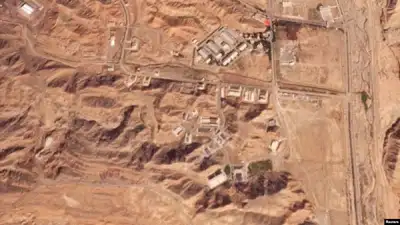
Fresh US and Israeli strikes on Iran could happen within days without a diplomatic breakthrough, The Wall Street Journal reported citing Middle East officials.

Most Viewed

The strange afterlife of Iran’s firebrand president
1
INSIGHT

The strange afterlife of Iran’s firebrand president

2
INSIGHT

Iran can build missiles but can't afford chicken

3
ANALYSIS

Why oil giant Iran struggles to supply gasoline

4
INSIGHT

Iran scrambles for Omani back channel around the Hormuz blockade

5

Inflation pushes Iranians to buy food in installments

Banner
Banner

Spotlight

  • Trump’s strongest leverage over Tehran may run through Beijing
    PODCAST

    Trump’s strongest leverage over Tehran may run through Beijing

  • Pakistan continues quiet push to stop another Iran war
    ANALYSIS

    Pakistan continues quiet push to stop another Iran war

  • Iran scrambles for Omani back channel around the Hormuz blockade
    INSIGHT

    Iran scrambles for Omani back channel around the Hormuz blockade

  • From pulpits to parliament, why Iran’s officials speak in threats
    OPINION

    From pulpits to parliament, why Iran’s officials speak in threats

  • Why oil giant Iran struggles to supply gasoline
    ANALYSIS

    Why oil giant Iran struggles to supply gasoline

  • The strange afterlife of Iran’s firebrand president
    INSIGHT

    The strange afterlife of Iran’s firebrand president

•
•
•

More Stories

Trump says won't attend son’s wedding during 'this important period of time'

May 22, 2026, 20:38 GMT+1

President Donald Trump said Friday he would remain at the White House during an “important period of time,” confirming he will miss his son Don Jr.’s wedding, one day after citing Iran and other issues as possible reasons for not attending.

"While I very much wanted to be with my son, Don Jr., and the newest member of the Trump Family, his soon to be wife, Bettina, circumstances pertaining to Government, and my love for the United States of America, do not allow me to do so," he said in a post on Truth Social.

"I feel it is important for me to remain in Washington, D.C., at the White House during this important period of time. Congratulations to Don and Bettina!"

100%

Pakistan continues quiet push to stop another Iran war

May 22, 2026, 20:07 GMT+1
•
Maryam Sinaiee

Pakistani top general Asim Munir’s trip to Tehran has fueled speculation about a possible temporary Iran-US agreement to end the war and resume broader talks, although Tehran says the high-profile visit does not necessarily mean a deal is close.

Munir’s visit on Friday follows days of lower-level negotiations that have reportedly narrowed some of the major disagreements between Tehran and Washington.

The Pakistani commander visited Tehran last month as well, where he held meetings with senior Iranian civilian and military officials.

Pakistan’s Interior Minister Mohsin Naqvi also traveled twice to Tehran and remained there on Friday as negotiations continued.

Iranian and Pakistani media reports described the visit as part of Islamabad’s broader mediation effort aimed at reducing tensions over Iran’s uranium enrichment program and the closure of the Strait of Hormuz.

Axios reported on Friday that Munir’s visit could represent a “final push” by Pakistan to secure a temporary agreement under which both sides would halt hostilities and continue negotiations for another 30 days over unresolved disputes, including Iran’s nuclear program.

Media speculation

However, expectations of an imminent breakthrough remain cautious.

An Iranian source close to the negotiations told the Arabic outlet Al-Araby Al-Jadeed that Pakistan’s interior minister had not delivered any new American proposal to Tehran and that reports about a finalized draft agreement were “media speculation.”

According to the source, “the visits by Pakistani officials to Tehran are aimed at strengthening Islamabad’s mediation role and preventing further escalation.”

Iran’s Foreign Ministry spokesman downplayed the significance of the Pakistani top general's trip to Tehran, saying, "Despite becoming more frequent, such exchanges are a continuation of the same diplomatic process. We cannot necessarily say we have reached a point where a deal is near."

“The differences between Iran and the United States are so deep and extensive that it cannot be said we must necessarily reach a result after a few rounds of visits or negotiations within a few weeks," Iran's foreign ministry spokesman Esmaeil Baghaei said on Friday.

Iranian outlet Farda News, considered close to parliament speaker Mohammad Bagher Ghalibaf who is leading Iran’s negotiating team, wrote that “Islamabad is not merely a messenger, but is playing a role beyond transmitting messages and below that of a direct negotiator.”

Pakistan, Iran’s eastern neighbor, has emerged over the past two months as the principal intermediary between Tehran and Washington.

Its mediation efforts accelerated after Islamabad helped broker a ceasefire on April 7. But the first round of direct talks between Iran and the United States failed to produce a lasting agreement, and recent weeks have shown signs of growing diplomatic deadlock.

‘Unprecedented progress’

Oman had previously served as the primary mediator. Talks between Tehran and Washington were underway in Muscat before US and Israeli strikes on Iran began on February 28.

At the time, Omani Foreign Minister Badr Albusaidi publicly said that “significant and unprecedented progress” had been achieved before diplomacy collapsed following the outbreak of war.

Unlike Oman, which largely positioned itself as a neutral intermediary, Pakistan enters the process with closer security ties to Saudi Arabia.

Some analysts argue this complicates Islamabad’s role. Pakistan signed a defense agreement with Saudi Arabia in 2025 committing both countries to support one another in the event of an attack. Iran repeatedly targeted Saudi territory during the war, raising questions among some observers about Pakistan’s neutrality.

London-based Amwaj Media wrote that the Islamabad-Riyadh defense pact demonstrates “the limits of Pakistan’s neutrality” in mediating between Iran and the United States.

Iranian state news agency IRNA described Pakistan’s primary concern as preventing the conflict from spreading beyond Iran into the wider region.

The report said Pakistan fears the war could spill into South Asia and destabilize its western border regions at a time when Islamabad is already managing tensions with India along its eastern frontier.

‘The limits of Pakistan’s neutrality’

At the same time, Pakistani officials appear to see strategic opportunities in successful mediation.

IRNA argued that if Islamabad helps secure a diplomatic settlement, it could strengthen Pakistan’s regional standing and deepen economic ties with a post-sanctions Iran.

“Honest mediation by Islamabad could elevate Pakistan’s position in a future Iran free from sanctions and transform it into an important partner,” IRNA wrote.

Pakistan’s mediation effort has also drawn support from China, one of Tehran’s closest strategic partners. Pakistani Prime Minister Shehbaz Sharif has confirmed that Islamabad’s diplomatic efforts are backed by Beijing.

Although Beijing has avoided taking on a direct mediation role, Chinese Foreign Minister Wang Yi recently said China supports Pakistan playing a “greater role” in resolving the conflict.

Senator Wicker urges Trump to abandon Iran talks and ‘finish the job’

May 22, 2026, 19:18 GMT+1

Republican Senator Roger Wicker on Friday urged President Donald Trump to abandon talks with Tehran and let US forces “finish the destruction” of Iran’s military capabilities and reopen the Strait of Hormuz.

“We are at a moment that will define President Trump’s legacy," he said in a post on X.

"His instincts have been to finish the job he started in Iran, but he is being ill advised to pursue a deal that would not be worth the paper it is written on," said Wicker who chairs the Senate Armed Services Committee.

"Our commander-in-chief needs to allow America's skilled armed forces to finish the destruction of Iran's conventional military capabilities and reopen the strait. Further pursuit of an agreement with Iran's Islamist regime risks a perception of weakness. We must finish what we started. It is past time for action."

Iran says talks not necessarily close to agreement despite Munir's visit

May 22, 2026, 18:26 GMT+1

Iran’s Foreign Ministry spokesman Esmail Baghaei, referring to the Pakistani top general's trip to Tehran, said on Friday, "Despite becoming more frequent, such exchanges are a continuation of the same diplomatic process. We cannot necessarily say we have reached a point where a deal is near."

“The differences between Iran and the United States are so deep and extensive that it cannot be said we must necessarily reach a result after a few rounds of visits or negotiations within a few weeks," he added.

"Issues such as ending the war on all fronts, the situation in the Strait of Hormuz and an end to US maritime piracy remain under discussion," Baghaei said.

"On the highly enriched uranium stocks, we have stated our positions very clearly; at this stage, if we enter into discussions on these issues, we will obviously not reach a result."

"We've already gone down this path, and the differences were so extensive that we could not reach a result. The other side destroyed the negotiating table and attacked because of its unreasonable demands," he added.

EU moves to sanction Iranian officials over Hormuz blockade

May 22, 2026, 16:00 GMT+1

EU nations moved Friday toward imposing sanctions on Iranian officials and others involved in blocking the Strait of Hormuz, calling the blockade “contrary to international law.”

The bloc took a technical step to expand its existing Iran sanctions framework, allowing more individuals to be listed under the regime.

“The EU will now be able to introduce further restrictive measures in response to Iran's actions undermining the freedom of navigation in the Strait of Hormuz,” the European Council representing EU nations said.


