Pentagon official says estimated cost of Iran war rises to $29 billion
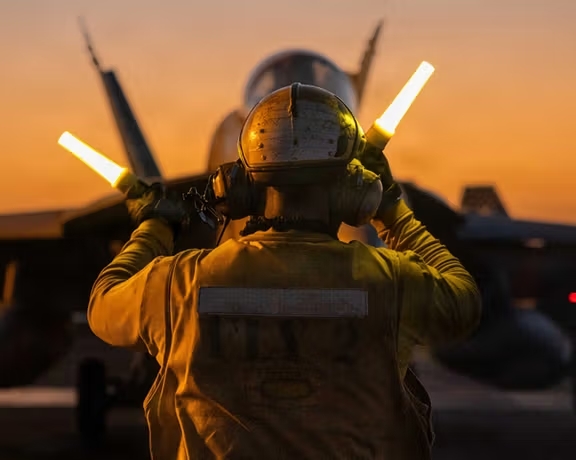
A senior Pentagon official said on Tuesday the estimated cost of US military operations linked to the war with Iran had risen to nearly $29 billion from an earlier estimate of $25 billion.
Jules W. Hurst III, performing the duties of under secretary of war (comptroller) and chief financial officer, said the revised figure reflected updated assessments.
"At the time of testimony from the ask it was $25 billion," Hurst told lawmakers during a House Armed Services Committee hearing. "But the joint staff team and the comptroller team are constantly looking at that estimate. And so now we think it's closer to 29."
"That's because of updated repair and replacement of equipment cost, and also just general operational costs," he said.
Lawmakers have pressed the administration for a fuller accounting of the costs of "Operation Epic Fury," the US campaign linked to fighting with Iran that began in late February and continues under a fragile ceasefire.






The unsigned notices asked recipients to provide personal details including home and work addresses, bank account information, images of bank cards and links to all their social media accounts.
They were also instructed to sign handwritten pledges not to publish content deemed harmful to the country’s “psychological, social or political security.”
The notices warned that users’ activities were being monitored through “smart surveillance and artificial intelligence systems” and said repeated violations could lead to judicial action and heavier punishment.
Some citizens were further instructed to publish at least 20 posts supporting the Islamic Republic on social media and send evidence that the posts had been uploaded.
Pressure campaigns expand online
The demands mark the latest effort by Iranian authorities to tighten control over online activity following waves of dissent and criticism on social media over the past year.
Recipients were told not to publish all pro-government posts in a single day “to make the activity appear natural,” according to the messages.
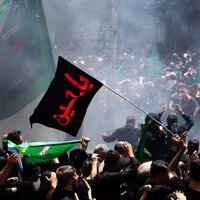
Some were also ordered to attend nighttime government rallies that began after US and Israeli attacks earlier this year and continued after a ceasefire took hold. Participants were instructed to photograph themselves carrying Islamic Republic flags or images of Supreme Leader Ali Khamenei.
In several cases, authorities requested identification documents from a guarantor who would accept responsibility for any future “criminal activity” by the targeted individual.
In August 2025, many Iranians wrote on social media that their SIM cards had been abruptly disconnected without warning or court orders after they published critical posts online, particularly in the aftermath of the 12-day war.
Some said security bodies contacted them through the domestic messaging platform Eitaa and told them to meet a series of demands or report to entities including the Prosecutor’s Office cyber division to regain access.
During those visits, citizens said they were ordered to submit copies of their national ID cards and sign written pledges promising to stop critical online activity.
Similar measures were reported in October 2024, when journalists and political activists said security bodies blocked their SIM cards, forced them to delete posts and ordered them to publish content that contradicted their views.

