Netanyahu convenes security meeting after Trump rejects Iran response
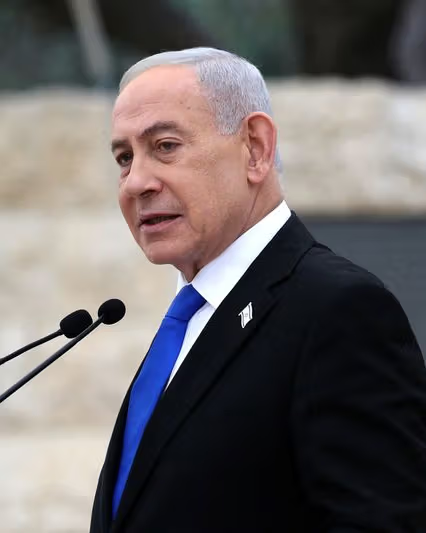
Prime Minister Benjamin Netanyahu convened a security discussion in his office in Jerusalem on Monday after US President Donald Trump rejected Iran’s response to his ceasefire proposal, Israeli media reported.
Reports said Netanyahu’s court hearing ended earlier than scheduled due to the security meeting.









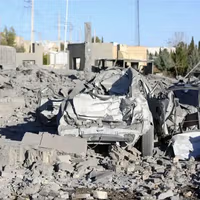
Foreign ministry spokesman Esmail Baghaei said Tehran’s proposal included ending the war in the region, lifting what he described as the US blockade, releasing frozen Iranian assets, ensuring safe passage through the Strait of Hormuz and restoring regional security.
“The Islamic Republic has proven that it is a responsible power in the region,” Baghaei said during his weekly briefing. “We are not bullies; we stand against bullies.”
He accused Washington of continuing to insist on “unreasonable” demands.
US President Donald Trump on Sunday dismissed Iran’s latest response to a US proposal as “totally unacceptable,” while Iranian state media said Tehran rejected what it described as Washington’s “excessive demands.”
The dispute appears to center on two of the war’s most contentious issues: Iran’s insistence on sovereignty over the Strait of Hormuz and Washington’s demands over Tehran’s nuclear program, particularly its stockpile of enriched uranium and enrichment infrastructure.
Tehran says focus remains on ending war
Baghaei said Iran was not currently focused on decisions related to uranium enrichment or the future of its nuclear activities.
“At the current stage, our focus is on ending the war,” he said. “Later, regarding the nuclear issue, Iran’s materials and matters related to enrichment, we will discuss those issues when the time comes.”
Several countries, particularly in the region, had contacted Tehran because of concerns over further escalation, he added.
“We have always appreciated parties that sincerely try to persuade the other sides to stop creating tensions,” Baghaei said.
Pakistan acting as ‘mediator’
Baghaei described Pakistan as an “official mediator” between Tehran and Washington and said other countries, including Qatar, were also maintaining contacts with both sides and sharing proposals with Iran’s foreign minister.
Baghaei also urged European countries not to be drawn into the conflict through what he described as pressure from the United States and Israel.
“We clearly told European countries not to allow temptations from the United States or Israel on regional issues to drag them into a crisis that will bring them no benefit,” he said.
Many European governments, he added, understood the war had been “illegal, immoral and aggressive” and had resisted pressure to openly support actions he said “undermined international peace and security.”