Germany sends minesweeper for possible Hormuz mission - Der Spiegel
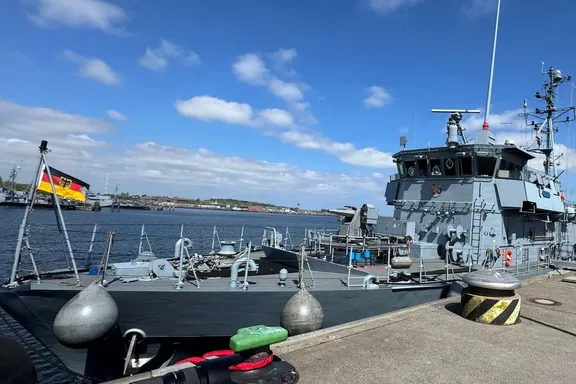

Germany is sending a naval minesweeping vessel to the Mediterranean ahead of a possible future mission to help clear the Strait of Hormuz, Der Spiegel reported, citing the German defense ministry.
The minesweeper Fulda left the Kiel-Wik naval base on Monday, breaking off a previous deployment as part of a NATO mission, the report said.
German Defense Minister Boris Pistorius said repositioning the vessel would save time if the government decided to join an international effort to clear the waterway, though any deployment would depend on an end to hostilities between Iran and the US and Israel.






UAE’s Defense Ministry said the country’s air defense systems are dealing with missile and drone attacks coming from Iran.
"The UAE's air defenses are currently dealing with missile and drone attacks originating from Iran," the ministry said in a statement.
"The Ministry of Defense confirms that the sounds heard in scattered areas of the country are the result of the UAE's air defense systems intercepting ballistic missiles, cruise missiles, and drones," the statement added.
French President Emmanuel Macron will speak with his Iranian counterpart Masoud Pezeshkian later on Tuesday as he pushes for Tehran to reopen the Strait of Hormuz, Reuters reported.
“I will be speaking with the Iranian president shortly,” Macron told reporters at a press conference in Yerevan.
He added that France has long advocated for “the restoration of freedom of navigation” in the waterway.
Tehran is negotiating with the United States in an atmosphere of deep distrust and suspicion, Iran’s foreign ministry spokesperson Esmaeil Baghaei said on Tuesday.
“We cannot forget the baseless aggressions by the United States against the Islamic Republic,” Baghaei said.
“Based on past experience, we decided not to waste time on issues that have already proven so complex that we were unable to reach agreement,” he added.
The United States and Bahrain are pushing a UN Security Council resolution that could lead to sanctions against Iran if it fails to halt threats to shipping in the Strait of Hormuz, Reuters reported, citing three Western diplomats.
The draft, discussed by council members on Tuesday, would demand Iran stop attacks, disclose the locations of sea mines and refrain from interfering with navigation through the waterway, the report said.
The text operates under Chapter VII of the UN Charter, allowing measures ranging from sanctions to possible military action, though it avoids explicitly authorizing force.
Russia and China could seek to block or alter the resolution, the report cited diplomats as saying, adding that a vote could take place early next week.
Washington has also circulated a proposal for a new multinational maritime coalition called the Maritime Freedom Construct, aimed at establishing a post-conflict security architecture for the Middle East and reopening the Strait once conditions stabilize, the report added.
The lawyer for imprisoned Iranian Nobel Peace Prize laureate Narges Mohammadi warned her client faces a sharp deterioration in health and detention conditions, calling the situation unprecedented.
Chirinne Ardakani told a press conference in Paris that Mohammadi had been transferred more than 700 km from her home to a prison without a separate ward for political detainees.
“The degradation in her condition is unprecedented,” Ardakani said, adding the transfer appeared to be carried out “for reasons of reprisal.”
She also said Iranian lawyers have been denied proper access to Mohammadi and her case files. “They do not have access to the file and are refused direct contact with her,” she said.
Ardakani described Mohammadi as both a human rights defender and a journalist targeted for documenting repression, and said her family, including her children living in France, remain deeply affected by her detention.
Mohammadi, a prominent critic of Iran’s authorities, has been jailed for years despite international calls for her release.