• العربية
  • فارسی
Brand
  • Iran Insight
  • Politics
  • Economy
  • Analysis
  • Special Report
  • Opinion
  • Podcast
  • Iran Insight
  • Politics
  • Economy
  • Analysis
  • Special Report
  • Opinion
  • Podcast
  • Theme
  • Language
    • العربية
    • فارسی
  • Iran Insight
  • Politics
  • Economy
  • Analysis
  • Special Report
  • Opinion
  • Podcast
All rights reserved for Volant Media UK Limited
volant media logo

More Iranian crude appears to evade US blockade - TankerTrackers

Apr 26, 2026, 22:39 GMT+1

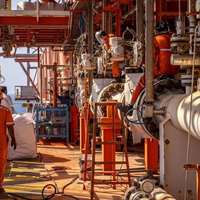
Iran has loaded at least 4.6 million barrels of crude oil at export terminals despite the ongoing US naval blockade, with an additional four million barrels appearing to have crossed the blockade line, according to satellite analysis by TankerTrackers.com.

The figures suggest Tehran retains some ability to continue oil exports despite Washington’s efforts to choke off the country’s energy revenues through maritime pressure.

Recent satellite imagery and tanker-tracking data have shown some Iranian vessels “going dark” by switching off transponders to move crude beyond the blockade zone.

Most Viewed

Iran executes protester over January uprising
1

Iran executes protester over January uprising

2
PODCAST

US should use Iran talks leverage to help Iranian people, veteran journalist says

3

Iranian national charged in US over migrant smuggling scheme

4

Three Baha’i women jailed in southeast Iran, one of them pregnant

5

UK releases man jailed for spying on Iran International in 2023 terror plot

Banner
Banner

Spotlight

  • The hidden target in US war on Iran may be China
    PODCAST

    The hidden target in US war on Iran may be China

  • Unity or fracture? Tehran battles Trump’s narrative of disarray
    INSIGHT

    Unity or fracture? Tehran battles Trump’s narrative of disarray

  • Iran’s economy after the March war: how bad can it get?
    ANALYSIS

    Iran’s economy after the March war: how bad can it get?

  • Behind Tehran’s unity show: The secret letter to the shadow king
    INSIGHT

    Behind Tehran’s unity show: The secret letter to the shadow king

  • Tehran stocks head for reopening, but it risks triggering a new crisis
    ANALYSIS

    Tehran stocks head for reopening, but it risks triggering a new crisis

  • Power vacuum in Tehran emboldens hardliners
    INSIGHT

    Power vacuum in Tehran emboldens hardliners

•
•
•

More Stories

Russian envoy says US threats, 'blackmailing' won’t work with Iran

Apr 26, 2026, 22:27 GMT+1

Russia’s envoy to international organizations in Vienna, Mikhail Mikhail Ulyanov, criticized the United States’ approach toward Iran, saying threats of military force and tighter sanctions amount to “blackmailing, ultimatums and deadlines.”

In a post on X, Ulyanov said Washington is accustomed to negotiating “from the position of strength,” but argued “this scheme doesn’t work with Iran.”

He said the best path forward for the United States would be to drop what he described as coercive elements from its position under current circumstances.

Unity or fracture? Tehran battles Trump’s narrative of disarray

Apr 26, 2026, 21:57 GMT+1
•
Maryam Sinaiee

Assertions by US President Donald Trump that Iran’s leadership is divided, and Tehran’s increasingly coordinated effort to deny it, have thrust the issue of unity to the center of the standoff between the two countries.

Trump has repeatedly cast Iran’s leadership as fractured and disorganized. In one post, he wrote: “Iran is having a very hard time figuring out who their leader is! They just don’t know!” describing “infighting” between “‘Hardliners,’ who have been losing BADLY on the battlefield, and the ‘Moderates,’ who are not very moderate at all.”

In a separate interview, he said: “They’re all messed up. They have no idea who their leader is… we took out, really, three levels of leaders.”

As speculation spread, President Masoud Masoud Pezeshkian sought to set the tone in a social media post declaring: “In Iran there are no ‘hardliners’ or ‘moderates.’ We are all Iranians and revolutionaries.”

The message was reposted verbatim by senior officials across the political and military establishment, including judiciary chief Gholam-Hossein Mohseni-Ejei, Vice President Mohammad-Reza Aref, senior advisers, and the Supreme National Security Council, underscoring the coordinated nature of the response.

Mohseni-Ejei went further in a separate post, directly attacking Trump and calling the labels “hardliner” and “moderate” “fabricated and hollow terms” borrowed from Western political literature.

The messaging blitz from Tehran followed the collapse of negotiations in Islamabad and reports that parliamentary speaker Mohammad Bagher Mohammad Bagher Ghalibaf—who led Tehran’s delegation there—may have stepped down from the negotiating team, fueling speculation over internal disagreements about talks with Washington.

Reports first circulated by Israel’s Channel 12 claimed Ghalibaf resigned following interference by the Islamic Revolutionary Guard Corps. Other reports suggested he was reprimanded for trying to include Iran’s nuclear program in discussions with the United States.

Hardline lawmaker Mahmoud Nabavian appeared to confirm tensions in a leaked audio recording, saying the team had discussed the nuclear issue “against the Supreme Leader’s position” and calling it a “strategic error.”

Saeed Saeed Jalili, widely rumored to be a possible replacement for Ghalibaf, struck a similar note while avoiding the exact phrasing, emphasizing “the unity of all segments of the nation” under the Supreme Leader.

The Supreme Leader’s official account also weighed in, warning that enemy “media operations” were aimed at undermining national unity and security.

Some analysts see Trump’s comments as deliberate pressure. Reformist journalist Ahmad Zeidabadi argued Trump was trying to “create division and conflict within the structure of the government” to present any eventual deal as “his complete victory.”

Ali Afshari, a US-based political analyst, described the remarks as “psychological warfare aimed at disrupting the cohesion of the opposing side.”

Yet even as officials insist on unity, conflicting signals from Tehran have deepened public uncertainty over negotiations and the future of the war.

Hardline lawmaker Ali Khezrian said the resumption of war was “inevitable” and claimed Iran had halted all communication with Washington.

Despite publicly dismissing reports of Ghalibaf’s resignation, parliament communications chief Iman Shamsaei said no new round of negotiations had been scheduled.

Journalist Saeed Agenji, meanwhile, insisted Ghalibaf still held “the helm of negotiations and domestic management of the country.”

Zeidabadi warned that mixed messaging over negotiations, ceasefire, agreement and even the ultimate goals of the war had left ordinary Iranians confused, risking reinforcing exactly the perception of disarray Tehran is trying to deny.

Qatar, Saudi Arabia discuss efforts to ease US-Iran tensions

Apr 26, 2026, 21:50 GMT+1

Al Jazeera reports that Qatar and Saudi Arabia have discussed efforts to ease tensions between the United States and Iran as concerns mount over a possible return to war despite a fragile ceasefire.

Qatari Prime Minister Sheikh Mohammed bin Abdulrahman bin Jassim Al Thani and Saudi Foreign Minister Prince Faisal bin Farhan bin Abdullah Al Saud discussed the ceasefire and broader regional mediation efforts, according to a statement cited by the outlet.

The two sides discussed “efforts aimed at de-escalation that contribute to enhancing security and stability in the region,” the statement said.

Ghalibaf says Iran holds key 'cards' in another cryptic message

Apr 26, 2026, 21:15 GMT+1

Iran’s parliamentary speaker Mohammad Bagher Mohammad Bagher Ghalibaf suggested Tehran still holds significant leverage in its standoff with the United States, saying the country retains key “energy and shipping cards” in a cryptic social media post.

Ghalibaf wrote on X that Iran’s “supply cards” match Washington’s “demand cards,” listing the Strait of Hormuz, Bab el-Mandeb and pipelines as potential sources of pressure, against what he described as US strategic reserve releases, demand destruction and further price adjustments.

He added that summer vacation should be counted among America’s vulnerabilities “unless they want to cancel it,” in an apparent reference to the political and economic costs of rising fuel prices.

Freedom of navigation must be ensured, Oman FM says

Apr 26, 2026, 20:55 GMT+1

Oman’s foreign minister said freedom of navigation must be ensured through sustained diplomacy after talks with his Iranian counterpart on the Strait of Hormuz.

“Much diplomacy is required and practical solutions to ensure lasting freedom of navigation,” Badr al-Busaidi wrote on X on Sunday.

Busaidi said both sides, as littoral states, share responsibility toward the international community and highlighted the need to secure the release of detained seafarers.