• العربية
  • فارسی
Brand
  • Iran Insight
  • Politics
  • Economy
  • Analysis
  • Special Report
  • Opinion
  • Podcast
  • Iran Insight
  • Politics
  • Economy
  • Analysis
  • Special Report
  • Opinion
  • Podcast
  • Theme
  • Language
    • العربية
    • فارسی
  • Iran Insight
  • Politics
  • Economy
  • Analysis
  • Special Report
  • Opinion
  • Podcast
All rights reserved for Volant Media UK Limited
volant media logo

Video shows Iraqi forces present in Tehran streets

Apr 24, 2026, 04:05 GMT+1

A video sent to Iran International by a citizen journalist shows Iraqi forces affiliated with the Islamic Republic are stationed in the streets of Tehran, displaying Iraqi flags.

Most Viewed

Iran executes protester over January uprising
1

Iran executes protester over January uprising

2
PODCAST

US should use Iran talks leverage to help Iranian people, veteran journalist says

3

Iranian national charged in US over migrant smuggling scheme

4

Starmer pledges to move on banning Iran's IRGC in next parliament session

5

Three Baha’i women jailed in southeast Iran, one of them pregnant

Banner
Banner

Spotlight

  • US should use Iran talks leverage to help Iranian people, veteran journalist says
    PODCAST

    US should use Iran talks leverage to help Iranian people, veteran journalist says

  • Iran’s economy after the March war: how bad can it get?
    ANALYSIS

    Iran’s economy after the March war: how bad can it get?

  • Behind Tehran’s unity show: The secret letter to the shadow king
    INSIGHT

    Behind Tehran’s unity show: The secret letter to the shadow king

  • Rapid deterioration of Iran-UAE ties threatens a critical trade lifeline
    ANALYSIS

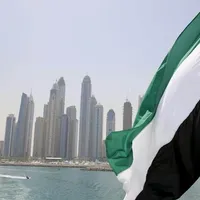
    Rapid deterioration of Iran-UAE ties threatens a critical trade lifeline

  • Tehran stocks head for reopening, but it risks triggering a new crisis
    ANALYSIS

    Tehran stocks head for reopening, but it risks triggering a new crisis

  • Power vacuum in Tehran emboldens hardliners
    INSIGHT

    Power vacuum in Tehran emboldens hardliners

  • Inflation spikes, basic goods slip out of reach for Iranians, citizens say
    VOICES FROM IRAN

    Inflation spikes, basic goods slip out of reach for Iranians, citizens say

•
•
•

More Stories

Iran risks ‘historic error’ in reading Trump, Former US envoy says

Apr 24, 2026, 03:24 GMT+1

Former US Ambassador to Israel David Friedman said on Thursday Iran is misjudging President Donald Trump’s commitment to victory, warning that expecting him to “blink” would be a mistake of “historic dimensions.”

“Iran is grossly misjudging the President of the United States’ commitment to victory against Iran. It thinks President Trump will blink because The New York Times says so. This will be an error of historic dimensions,” he posted on X.

Israeli envoy cites ‘peace, prosperity and security’ in Lebanon talks

Apr 24, 2026, 03:06 GMT+1

Israeli Ambassador to the United States Yechiel (Michael) Leiter said on Thursday a second round of talks with Lebanon focused on advancing peace, prosperity, and security, while adding concerns over Hezbollah and Iranian influence.

"Our goals remain clear: peace, prosperity, and security for our citizens from Iran and its terror proxies," Leiter posted on X.

Rapid deterioration of Iran-UAE ties threatens a critical trade lifeline

Apr 24, 2026, 03:01 GMT+1
•
Maryam Sinaiee

Iran-UAE ties have unraveled over the past two months, beginning with Iranian airstrikes on Emirati targets during the US-led war and escalating into a crisis that now threatens one of Tehran’s most vital trade and financial channels.

During the conflict, Iran struck civilian buildings, oil facilities, and sensitive infrastructure, including a data center linked to Oracle. In response, the UAE recalled its ambassador from Tehran, signaling a swift escalation in diplomatic tensions.

The diplomatic fallout deepened further this week when UAE state security authorities said they had arrested members of what they described as a “terrorist group linked to Iran’s ruling system” in Sharjah. The suspects were accused of planning attacks, undermining national security, and facilitating illicit financial transfers.

At the same time, Tehran has formally demanded compensation from several regional states, including the UAE, for allowing their airspace and bases to be used by the United States and Israel in strikes against Iran.

These developments have intensified a crisis that threatens to disrupt one of Iran’s most vital economic lifelines.

A deeply rooted economic partnership

Despite long-standing disputes, including disagreements over the islands of Abu Musa and the Greater and Lesser Tunbs, Iran and the UAE have built extensive and resilient economic ties over the past several decades.

Geographical proximity, advanced port infrastructure, and liberal trade regulations have transformed the UAE into a hub for Iranian commerce since the end of the Iran-Iraq War. Thousands of Iranian companies have established operations there, and a large share of Iran’s imports has flowed through re-export channels based in Dubai. Over time, the UAE became not just a trading partner but a critical gateway to global markets for heavily-sanctioned Iran.

For much of the past two decades, the UAE has ranked either first or second among Iran’s trading partners, often competing closely with China. Today, it remains one of the largest suppliers of goods to Iran, accounting for a significant share of its imports.

Roughly one-third of goods entering Iran—from mobile phones and electronics to auto parts, cosmetics, and clothing—have passed through the UAE, representing trade worth billions of dollars annually. The disruption of this flow is already being felt. In some sectors, such as mobile phones, prices have reportedly surged by 40 to 50 percent following the halt in imports.

With limited alternatives offering the same combination of proximity, infrastructure, and financial connectivity, any prolonged rupture could deepen Iran’s economic isolation and accelerate a costly realignment of its trade networks.

Trade imbalance and export structure

Iran’s exports to the UAE have largely consisted of oil products, petrochemicals such as fertilizers and industrial feedstocks, metals and minerals, agricultural goods including fresh produce and nuts, and construction materials like stone. However, much of this trade has been indirect, with the UAE serving as a re-export hub for Iranian goods destined for third markets.

At the same time, exports from the UAE to Iran have consistently exceeded Iran’s exports in the opposite direction, creating a significant trade imbalance. The UAE’s role as an intermediary—rather than a final destination—has been central to this asymmetry.

Sanctions and the UAE’s pivotal role

The importance of the UAE grew dramatically after the tightening of US and European sanctions on Iran, particularly following Washington’s withdrawal from the 2015 nuclear deal (JCPOA) in 2018. As direct trade routes narrowed, the UAE became the primary conduit for goods, capital, and financial flows into Iran.

Emirati exports to Iran rose from around $5.2 billion in 2018 to more than $20 billion in recent years. Dubai also became a financial hub for Iranian exchange houses, many of which played a key role in facilitating currency transfers and circumventing sanctions. Exchange rates set in Dubai’s markets often influenced the value of the Iranian rial domestically.

However, this system is now under pressure. UAE authorities have reportedly targeted Iranian exchange houses and so-called “trust companies,” freezing accounts, shutting offices, and detaining some operators. These actions could severely constrain Iran’s access to international financial channels.

Iran is no longer world’s leading state sponsor of terror, Graham says

Apr 24, 2026, 02:55 GMT+1

US Senator Lindsey Graham said on Thursday because of President Donald Trump, Iran is no longer the world’s leading state sponsor of terrorism, praising what he called Trump’s “resolve” and leadership.

"They do not have a pathway to nuclear bomb, they are no longer largest state sponsor of terrorism, they do not have missiles to terrorize the region and the world like they used to. This has been an amazing success and President Trump is right. Do not be in a hurry, get it right," Graham told Fox.

US strategy on Iran is ‘apply pressure, then negotiate’, Senator Schmitt says

Apr 24, 2026, 02:05 GMT+1

US Senator Eric Schmitt said on Thursday Washington’s strategy toward Iran is to “apply pressure, create leverage, then negotiate,” adding that the blockade is having a direct economic impact.

"The blockade is working, Iran is isolated and their economy is starved. That creates conditions for a deal but The Presidents is not going to make a deal if it is not a good deal," Schmitt told Fox.