• العربية
  • فارسی
Brand
  • Iran Insight
  • Politics
  • Economy
  • Analysis
  • Special Report
  • Opinion
  • Podcast
  • Iran Insight
  • Politics
  • Economy
  • Analysis
  • Special Report
  • Opinion
  • Podcast
  • Theme
  • Language
    • العربية
    • فارسی
  • Iran Insight
  • Politics
  • Economy
  • Analysis
  • Special Report
  • Opinion
  • Podcast
All rights reserved for Volant Media UK Limited
volant media logo

Lufthansa to cancel 20,000 short-haul flights amid Iran war fuel cost surge

Apr 22, 2026, 16:37 GMT+1

Germany’s Lufthansa Group is canceling 20,000 short-haul flights through October as it deals with soaring jet fuel costs and potential shortages in Europe linked to the war with Iran.

The company said the first 120 daily flights were canceled from Monday through the end of May.

Most Viewed

Disputes within Iran leadership blocked negotiators’ trip to Islamabad
1
EXCLUSIVE

Disputes within Iran leadership blocked negotiators’ trip to Islamabad

2
INSIGHT

As Tehran digs in, ordinary Iranians pay the price

3
INSIGHT

Who backs war now? Tehran flips the script

4
ANALYSIS

Rapid deterioration of Iran-UAE ties threatens a critical trade lifeline

5
VOICES FROM IRAN

Inflation spikes, basic goods slip out of reach for Iranians, citizens say

Banner
Banner

Spotlight

  • Behind Tehran’s unity show: The secret letter to the shadow king
    INSIGHT

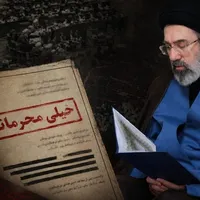
    Behind Tehran’s unity show: The secret letter to the shadow king

  • Rapid deterioration of Iran-UAE ties threatens a critical trade lifeline
    ANALYSIS

    Rapid deterioration of Iran-UAE ties threatens a critical trade lifeline

  • Tehran stocks head for reopening, but it risks triggering a new crisis
    ANALYSIS

    Tehran stocks head for reopening, but it risks triggering a new crisis

  • Power vacuum in Tehran emboldens hardliners
    INSIGHT

    Power vacuum in Tehran emboldens hardliners

  • Inflation spikes, basic goods slip out of reach for Iranians, citizens say
    VOICES FROM IRAN

    Inflation spikes, basic goods slip out of reach for Iranians, citizens say

  • Iran turns to citizenship and assets as tools of pressure beyond its borders

    Iran turns to citizenship and assets as tools of pressure beyond its borders

•
•
•

More Stories

Iran says prepared for 2026 World Cup in US

Apr 22, 2026, 16:29 GMT+1

Iran said it is fully prepared for its national football team’s participation in the 2026 FIFA World Cup co-hosted by the United States.

Government spokesperson Fatemeh Mohajerani told state broadcaster IRIB that the Ministry of Sports and Youth has ensured all necessary arrangements for the team’s participation.

In March, US President Donald Trump said Iran’s team would be welcome at the tournament, but questioned whether it would be appropriate for them to attend because of their “life and safety.”

Crew of container ship attacked in the Strait of Hormuz is safe

Apr 22, 2026, 16:26 GMT+1

The management company of a container ship fired upon in the Strait of Hormuz early Wednesday said the Liberian-registered Epaminondas was approached and fired upon by a manned gunboat while transiting the strait about 20 nautical miles off the coast of Oman.

Technomar said all crew were safe and accounted for, with no injuries reported, but preliminary inspections showed damage to the ship’s bridge.

“Our priority remains the safety and well-being of our crew,” the company said, adding it was in close contact with the crew and relevant authorities.

Internet Pro or Censor Pro? Iran rolls out a new service

Apr 22, 2026, 16:10 GMT+1
•
Negar Mojtahedi

Iran’s new “Internet Pro” rollout may tighten state control in the short term, but experts who spoke to Iran International question whether the Islamic Republic can sustain a class-based internet in one of the Middle East’s most connected societies.

Tens of millions of Iranians have been cut off from the rest of the globe since US-Israeli strikes began on Feb. 28. It has been described as the world’s longest state-imposed internet blackout to date.

Under the new plan, approved by Iran’s Supreme National Security Council, selected businesses and institutions would regain global internet access while much of the public remains restricted.

The rollout would begin with commercial card holders and later expand to sectors tied to production, industry and trade, according to officials, who present the measure as economic management.

Critics see something larger: the formalization of a two-tier digital system. Those fears have intensified after leaked material circulated in recent days suggested authorities were considering more permanent restrictions.

Iran International has not independently verified the documents.

‘War as excuse’

Neda Bolourchi, executive director of the Public Affairs Alliance of Iranian Americans, said the announcement appears less like an emergency wartime measure than the rollout of a long-prepared policy.

“What we can understand is that this has been a multi-year project,” she told Iran International. “That the war has given it the excuse to roll it out.”

She added that she does not expect a quick return even to the limited internet environment that existed before the latest shutdowns.

But Amin Sabeti, the London-based founder of CERTFA, a cybersecurity lab focused on cyberattacks linked to Iran, questioned whether Tehran could maintain such a model for long.

“They are trying to implement it, but the big question mark for me is how long they can carry on,” he told Iran International. “I don’t think they can continue the next six months as it is.”

Sabeti argued that wartime conditions may allow governments to impose extraordinary restrictions, but Iran is not North Korea and cannot easily be transformed into one.”

‘The Gen Z problem’

The economic consequences are already mounting.

For millions of Iranians, Instagram, Telegram and WhatsApp are not luxuries. They are storefronts, classrooms, advertising platforms and lifelines to clients abroad.

Bolourchi warned that while the model may be sustainable for the state, it could be punishing for ordinary households, many of whom make their living online.

Sabeti noted that this would carry political risks for the ruling elite.

“If you offer it to the Iranian people—internet, Instagram, XYZ—and suddenly you want to take it away, that’s the level of the anger. We will see huge protests,” Sabeti said.

Holly Dagres, a senior fellow at The Washington Institute who focuses on Iranian society, Gen Z and social media, said the blackout cannot be separated from the Islamic Republic’s broader information war.

“The reason they are basically not allowing Iranians access to the outside world is because the internet and social media is the only way for their voices to be heard,” Dagres said.

She also stressed that the economic damage has been particularly severe for entrepreneurs, women-led businesses and rural sellers who depend on social media income streams.

Tightening control

The system may also deepen surveillance.

Even if Iran does not become a replica of North Korea, a permission-based internet would still mean more monitoring and greater pressure on citizens to censor themselves.

Dagres argued that the government may be trying to normalize the blackout through small concessions while preserving overall control.

Direct-to-cell technology, which could one day allow ordinary smartphones to connect directly to satellites without dishes or ground terminals, is still not meaningfully available in Iran and remains more promise than practical solution.

For Tehran, “Internet Pro” may solve one immediate problem: how to keep strategic sectors online while limiting the wider public. In doing so, it may create another.

Iran is a country where tens of millions have built livelihoods, relationships and daily routines online. Restricting that access while rewarding approved groups may tighten control today, but deepen resentment tomorrow.

Iran state TV says no official response yet to Trump ceasefire claim

Apr 22, 2026, 16:05 GMT+1

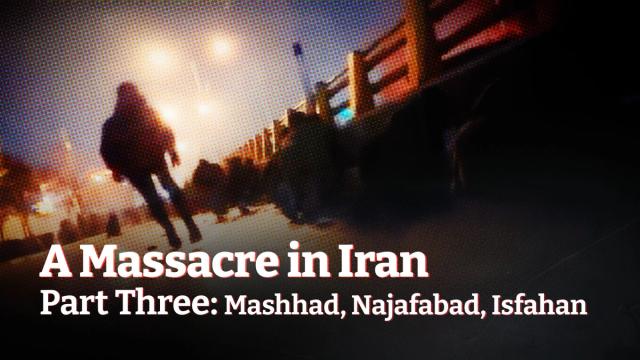
Iran’s state broadcaster IRIB said on Wednesday rejected reports that Tehran had agreed to a ceasefire extension announced by US President Donald Trump’ a day earlier.

“Iran has not yet announced an official position on Trump’s claim about extending the ceasefire,” IRIB said on Wednesday.

“Rumors about Iran’s formal agreement are not accurate, and no statement has been issued by Iranian officials,” it added.

Iran lawmaker says nuclear issue should not have been raised in Pakistan talks

Apr 22, 2026, 15:55 GMT+1

Iranian lawmaker Mahmoud Nabavian said on Wednesday that Iran made a strategic mistake by allowing the nuclear issue to be discussed in talks in Pakistan, saying it emboldened the United States to make further demands.

“In the Pakistan negotiations, we made a strategic mistake. We should not have put the nuclear issue up for negotiation,” Nabavian, a member of parliament’s National Security and Foreign Policy Committee, told state-affiliated SNN.

“By doing so, the enemy became bolder,” he added.

Nabavian said the United States demanded that Iran’s 60% enriched material be removed and blocked for 20 years, demands he said Tehran did not accept.