• العربية
  • فارسی
Brand
  • Iran Insight
  • Politics
  • Economy
  • Analysis
  • Special Report
  • Opinion
  • Podcast
  • Iran Insight
  • Politics
  • Economy
  • Analysis
  • Special Report
  • Opinion
  • Podcast
  • Theme
  • Language
    • العربية
    • فارسی
  • Iran Insight
  • Politics
  • Economy
  • Analysis
  • Special Report
  • Opinion
  • Podcast
All rights reserved for Volant Media UK Limited
volant media logo

Seized Iranian ship linked to sanctioned fleet that operated via China - WSJ

Apr 20, 2026, 13:25 GMT+1

The Iranian-flagged cargo ship seized by US forces was part of a fleet tied to a sanctioned Iranian state-owned shipping group and had recently operated via China, the Wall Street Journal reported.

The report said the vessel, MV Touska, is controlled by a subsidiary of the Islamic Republic of Iran Shipping Lines, which has been accused of transporting goods with potential military use.

The ship had sailed toward Iran after visiting China late last month, according to the report.

Most Viewed

Ghalibaf defends Iran-US talks amid hardline backlash
1
INSIGHT

Ghalibaf defends Iran-US talks amid hardline backlash

2
INSIGHT

A nation in limbo: 100 days after the massacre, has the world moved on?

3
ANALYSIS

From instability to influence: Pakistan’s pivotal role in US-Iran diplomacy

4
ANALYSIS

100 days on: why Iran’s January protests spread across social classes

5

War-hit homeowners feel abandoned as Iran’s reconstruction aid fades

Banner
Banner

Spotlight

  • War-hit homeowners feel abandoned as Iran’s reconstruction aid fades

    War-hit homeowners feel abandoned as Iran’s reconstruction aid fades

  • 100 days on: the anatomy of Iran’s January crackdown
    INSIGHT

    100 days on: the anatomy of Iran’s January crackdown

  • Ghalibaf defends Iran-US talks amid hardline backlash
    INSIGHT

    Ghalibaf defends Iran-US talks amid hardline backlash

  • 100 days on: why Iran’s January protests spread across social classes
    ANALYSIS

    100 days on: why Iran’s January protests spread across social classes

  • From instability to influence: Pakistan’s pivotal role in US-Iran diplomacy
    ANALYSIS

    From instability to influence: Pakistan’s pivotal role in US-Iran diplomacy

  • A nation in limbo: 100 days after the massacre, has the world moved on?
    INSIGHT

    A nation in limbo: 100 days after the massacre, has the world moved on?

•
•
•

More Stories

US urges contractor to evacuate workers over Iran-linked threats - Guardian

Apr 20, 2026, 12:18 GMT+1

The United States urged defense contractor V2X to evacuate its workers from Iraq and Kuwait over concerns they could be targeted by Iran-backed militias, the Guardian reported on Monday.

The report said State Department officials raised the issue with company leadership after warnings that US-linked personnel and facilities could face attacks.

According to the Guardian, workers stationed at bases in Iraq and Kuwait reported security concerns, including drone activity and inadequate protection, with one employee killed in a drone strike in March.

The US government also pressed the company on why American personnel remained at risk sites and discussed possible evacuation support, the report said.

Some staff have already been evacuated, but others remain in the region, with concerns continuing over potential attacks by Iran-aligned groups.

Iran says no decision yet on talks as Pakistan prepares to host US team

Apr 20, 2026, 12:05 GMT+1

Iran said on Monday it had not yet decided whether to join a second round of talks with the United States, even as Pakistan prepared to host a US delegation, with Tehran accusing Washington of violating the ceasefire and showing no real seriousness about diplomacy.

Foreign Ministry spokesperson Esmaeil Baghaei said Iran had no plan as of now for the next round of negotiations and said US actions had only deepened mistrust.

“As I am speaking to you now, we have no plan for the next round of negotiations,” he said.

Baghaei said Washington had undermined the process from the outset of the ceasefire.

He said the United States first tried to argue that Lebanon was not part of the truce, despite Pakistan’s mediator saying otherwise, and then continued what Iran describes as a naval blockade and other hostile actions in and around the Strait of Hormuz, including an attack on an Iranian commercial vessel.

He said such actions were clear ceasefire violations and that the blockade itself amounted to aggression under international law.

“Behavior and words are completely incompatible,” he said, adding that Iran would decide its next steps based only on national interests, not deadlines or ultimatums.

Baghaei said Iran had not started the war and had acted only in self-defense. He warned that if the United States or Israel launched any new attack, Iran’s armed forces would respond.

He also said Tehran could not forget what he called two US betrayals of diplomacy over the past year, saying Washington had twice attacked Iran during diplomatic processes.

“We cannot forget that twice America betrayed diplomacy,” he said.

Pakistan remains sole mediator

Baghaei said Pakistan remained Iran’s only formal mediator, though other countries were making efforts.

He said Iran was still reviewing the latest package conveyed through Pakistan after a US 15-point proposal, Iran’s 10-point response, discussions in Islamabad and further review during Pakistani army chief Asim Munir’s visit to Tehran.

He rejected suggestions that Iran had made a wholly new proposal, saying Tehran’s position had remained steady while the US side kept changing its demands.

“The American side keeps changing its demands, but we have remained steadfast,” he said.

He said some US demands were unacceptable and that repeated insistence on them would not change Iran’s position.

Baghaei also dismissed trust as a basis for negotiations with Washington.

“There is no trust,” he said.

Hormuz, Europe and red lines

Much of Baghaei’s remarks focused on the Strait of Hormuz. He said Iran’s actions there were lawful and defensive, arguing that before the US and Israeli attacks there had been no problem in the waterway.

“Before February 28, the Strait of Hormuz was safe and secure,” he said.

He said the international community should hold the United States and Israel responsible for the current insecurity, not Iran.

He added that Iranian authorities were still examining whether recent incidents involving Indian-linked ships had in fact been caused by Iranian forces.

Baghaei said as long as the current situation continued, it was unrealistic to speak of a full return to normal traffic through Hormuz. He said Iran had concluded that new rules or protocols would be needed to ensure safe passage in the future.

He also rejected European criticism, including comments from EU foreign policy chief Kaja Kallas, saying Europe could not invoke international law selectively.

“You cannot use international law as a convenient tool,” he said.

Baghaei said Iran would not negotiate over its defense capabilities and said the transfer of enriched uranium had never been an Iranian option in the talks.

On oil, he said Iran was using all available means to keep its oil industry functioning and maintain exports despite the blockade and wartime pressure.
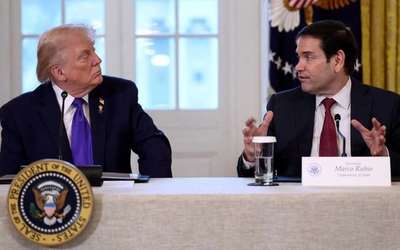

Ghalibaf lashes out at opponents of US talks

Apr 20, 2026, 11:44 GMT+1

Iranian Parliament Speaker Mohammad Bagher Ghalibaf sharply criticized opponents of a potential agreement with the United States in a meeting with advisers, Iran International has learned.

Ghalibaf, who also led Iran’s team in the latest negotiating with Washington, described figures including Saeed Jalili, a member of Iran’s National Security Council, and hardline Iranian MP Amirhossein Sabeti as extremist militia-like actors who would destroy Iran.

He said the camp was using state television and mobilizing hardline supporters to intensify opposition to negotiations and a possible deal with the United States.

Ghalibaf also voiced concern about being removed from the speakership and about Foreign Minister Abbas Araghchi being pushed out of office.

Iran currently cannot manufacture any new missiles, Israel says

Apr 20, 2026, 11:36 GMT+1

Israel says its strikes caused significant damage to Iran’s ballistic missile production industry and that Tehran currently cannot manufacture any new missiles, the Times of Israel reported.

The report, citing senior Israeli military officials, said the assessment followed strikes on key sites used to develop weapons seen as threatening Israel.

However, the officials said in a briefing on Friday that Iran was expected to move quickly to restore at least some manufacturing capacity.

According to the report, the pace of any recovery would depend on factors including possible limits on Iran’s missile program in any deal with the United States, access to materials and equipment from allies such as China, and how much money Tehran invests in rebuilding the industry.

Shipping through Strait of Hormuz largely halted, limited tanker movement seen

Apr 20, 2026, 11:29 GMT+1

Overall shipping traffic through the Strait of Hormuz remained at a standstill on Monday, according to ship tracking data cited by Reuters.

Despite the disruption, limited movements were recorded, with two tankers — a liquefied petroleum gas carrier and a chemical tanker — sailing into the Persian Gulf through the strait.

One oil products tanker was also seen leaving the Persian Gulf via the Strait of Hormuz, the data showed.