Since late February 2026, the war involving the United States, Israel, and Iran has widened, with traffic through the Strait of Hormuz becoming a major pressure point for the global economy.
Under that pressure, a temporary ceasefire was first announced with Pakistani mediation. That was followed by rare direct talks between the United States and Iran in Islamabad.
Pakistan’s role was publicly acknowledged by both Washington and Tehran, each of which described it as the “central mediator.”
The talks held in Islamabad on April 11-12 lasted more than 20 hours and ended without an immediate agreement. Even so, the channel remained open, and efforts to prepare a second round have continued.
That process has raised a central question: was Pakistan merely passing messages, or was it managing a broader peace process?
Although the direct US-Iran talks took place in Islamabad, Pakistan’s role can be seen across several parallel tracks.
Hidden channels of communication
From the beginning of the war, Pakistan helped facilitate the exchange of messages between Washington and Tehran.
A number of Pakistani politicians have openly acknowledged that US proposals – at times in the form of specific points or clauses – were conveyed to Iran through Pakistan, and that Iran’s responses were then relayed back to Washington.
That role became particularly important at a moment when some of the Persian Gulf’s traditional mediators, including Qatar, were themselves under severe security pressure and were being targeted daily by Iran.
Structuring the agenda of the talks
By hosting the talks, Islamabad took three practical steps.
First, it provided a secure environment and the necessary logistics for both sides, which trusted Pakistan’s capacity in that area.
Second, it separated the negotiations into distinct tracks: the nuclear program, sanctions, frozen assets, the Strait of Hormuz, and regional security.
Third, it pressed for a timetable and a mechanism for a “second phase” of talks and for dialogue to continue.
Although the talks ended without an immediate outcome, Pakistan succeeded on the first two fronts. That is why it did not remain passive afterward and continued its mediation efforts in preparation for a second round.
Coordination with regional partners
Pakistan has also sought to widen support for a ceasefire and renewed talks by securing broader backing – especially from Saudi Arabia, Turkey, Egypt.
That coordination matters because it allows each side to use its influence and reduces the likelihood of disruptive action by spoilers.
Why trusting Pakistan?
Although there are countries in the region more powerful than Pakistan – India being the clearest example – trust in Pakistan has not stemmed from moral authority. It has come from necessity, leverage, and calculation.
Pakistan has long-standing security ties with the United States, as well as neighborly and working relations with Iran. Together, those ties provide a minimum level of mutual trust for both sides.
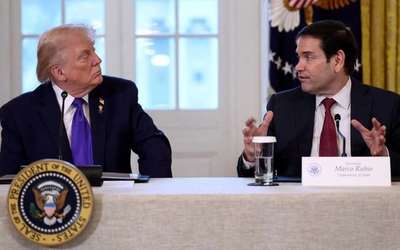
For Washington, the need was for a country able to transmit messages within a framework aligned with US interests and to provide a negotiating venue acceptable to Donald Trump’s administration.
In that context, India was not a suitable choice for the United States, because the degree of influence and leverage the Trump administration has over Pakistan does not exist in the same way over India.
At the same time, America’s Arab allies are not only under intense pressure, but are also seen by Iran as direct partners of Washington and therefore lack the credibility needed for mediation. The United States also needed an Islamic country with nuclear capability to play that role. From that perspective, Pakistan was the best available option.
Pakistan also has workable relations with Saudi Arabia, Qatar, and the United Arab Emirates, and its trust-building efforts during the talks could prove useful.
Pakistan depends on the Persian Gulf and the wider Middle East for energy, labor remittances, and regional stability. A prolonged war would therefore carry domestic economic and security costs. Those costs, in turn, increase Islamabad’s incentive to preserve the ceasefire and keep negotiations alive.
There is also a domestic political calculation. Pakistan’s government is trying to ease both internal and external pressure, particularly amid the country’s political crisis and the imprisonment of former prime minister Imran Khan. By taking part in a process in which the United States is one of the parties, Islamabad may hope to reduce pressure on Shehbaz Sharif’s government.
Economic distress is another dimension. Pakistan hopes that these talks may help it secure US economic support as well as financial aid and loans from Arab states – a need Islamabad understands well.
At the same time, Pakistan has security and defense agreements with Saudi Arabia and could, if the war dragged on, come under pressure to support Riyadh. That concern appears to have pushed Pakistan to avoid direct entry into the conflict: first by opening confrontations in Afghanistan to signal to its allies that internal instability left it unable to cooperate militarily against Iran, and then by presenting itself as a mediator for peace.
For Iran, too, Pakistan may not be the ideal mediator, but in practice there are few alternatives. Tehran has targeted many Arab countries, while Qatar – which had previously played a mediating role – has itself become a casualty of the war. That leaves Pakistan, as an Islamic country, as the remaining option. For that reason, Tehran has also welcomed Pakistani mediation.
The role of the security institutions and the army
In a crisis of this kind, guaranteeing a ceasefire and ensuring the safe passage of messages is difficult without the involvement of security institutions.
According to reports, Pakistan’s army chief is seen in Washington as a reliable channel for direct contact, and that has accelerated decision-making.
Pakistan has also previously hosted and facilitated confidential contacts between major powers, including during the period of rapprochement between China and the United States. That history suggests Islamabad has experience in closed-door diplomacy.
Reports further indicate that direct contact between the Trump administration and General Asim Munir helped smooth the decision-making process, and that Washington believes Pakistan has practical influence over security commitments, can preserve its relationship with Iran, maintain its ties to the Arab world, and is itself affected by instability in the Middle East.
Why is the army chief at the center of this diplomacy?
In this mediation effort, it has been not the prime minister or foreign minister, but Pakistan’s military chief, Field Marshal Asim Munir, who has emerged as the main figure in the negotiations.
Pakistan’s military has more than 51 years of experience dealing with US and Iranian security and military circles. Pakistani officials say responsibility for maintaining confidential channels with the political and military leadership in Tehran and Washington has been placed in Munir’s hands. In a crisis like this, security guarantees carry greater weight than purely political commitments.
Prime Minister Shehbaz Sharif said in a speech that Munir had played an especially prominent role in the talks. He added that Munir received the Iranian delegation in full field marshal dress and welcomed the American delegation in formal Western attire – a symbolic message suggesting that Pakistan was guaranteeing the process not only at the level of the civilian government, but at the level of the state and security establishment.
After the imprisonment of Imran Khan, public discontent with the army in Pakistan had risen sharply, and many came to see the military as the root of the country’s crises. Munir appears to have understood that mood clearly, and by accepting a mediating role at such a sensitive moment, he has, to a considerable extent, managed to rebuild some of the public trust that had been lost.
According to a source in the Pakistani prime minister’s office, Trump’s office contacted Munir directly 12 times after the first round of talks.
That suggests Pakistan’s army chief is effectively acting as an indirect representative of the United States while also handling the transmission of messages.
Political parties and civilian institutions in Pakistan, however, are unhappy with that role and worry that, if the talks succeed, the army’s power will grow further and the already weakened political sphere will fall more deeply under military influence.
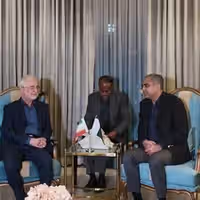
After the first round ended, Munir traveled to Tehran to prepare the ground for a second round of talks and to convey Washington’s messages and proposals to the Iranian side. The trip was directly linked to efforts to shape the next phase and extend the ceasefire.
The prospects for success in talks
Although the first round ended without a final result, the repeated trips by Pakistan’s army chief and the pressure created by the situation in the Strait of Hormuz – on both the United States and global markets – have increased the chances of at least a partial agreement.
The path ahead, however, is far from straightforward, because the disagreements are more structural than merely technical.
Several difficult but essential steps could improve the prospects for success.
- A step-by-step agreement: first, an extension of the ceasefire, a temporary mechanism for Hormuz, and limited sanctions relief; then deeper discussions on nuclear and regional issues.
- A package of guarantees: balanced guarantees – rather than automatic snapback mechanisms –in the event of a ceasefire breach, with Pakistan seeking to underpin those guarantees through security channels.
Statements by Pakistani officials suggest they are trying to lay the groundwork for those two stages and hope that Islamabad will reap what they describe as “the sweetest fruit” from both Washington and Tehran.
That expectation rests on a broader calculation. Tehran no longer has the capacity for a long war and wants relief for its weak economy from sanctions pressure, while the United States has shown signs of willingness to ease some of those sanctions.
On the other side, the Trump administration is facing rising domestic political and economic pressure, while Iran has sent positive – though conditional – signals on the nuclear file.
For those reasons, hopes for the success of the talks have increased.