Iran says Mojtaba Khamenei ‘in full health, in control of everything’ | Iran International
Iran says Mojtaba Khamenei ‘in full health, in control of everything’
Iran's deputy foreign minister Saeed Khatibzadeh said on Thursday Supreme Leader Mojtaba Khamenei "is well and in full health, is present in his office, and is in fact in control of everything."

Israel's Prime Minister Benjamin Netanyahu said he has instructed his cabinet to begin negotiations with Lebanon “as soon as possible” following repeated requests from Beirut for direct talks.
The planned discussions will focus on disarming Hezbollah and establishing peaceful relations between the two countries, Netanyahu said, welcoming the Lebanese prime minister’s call to demilitarize Beirut.
However, Axios cited an Israeli official as saying there is no ceasefire in Lebanon despite talks planned in the coming days.
With attacks on Lebanon ongoing, Iran considers negotiations “strategically meaningless and futile," a source cited by the IRGC-affiliated Fars News Agency said, ahead of peace talks slated for Friday in Pakistan.
“The issue of Lebanon and a ceasefire in that country are a firm and non-negotiable precondition of the Islamic Republic of Iran for entering any new negotiation process," the source was quoted as saying.
The source added that Tehran had refused to accept a ceasefire until the United States, including President Donald Trump, formally acknowledged the overall framework of a proposed 10-point package.
The source emphasized that senior officials of the Islamic Republic are in full agreement on the issue, signaling a unified and coordinated stance from Tehran.
According to the source, Tehran's message is clear: unless the situation in Lebanon is resolved, there will be no negotiations.
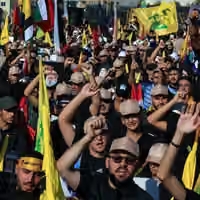
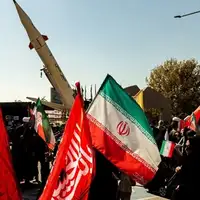
Pro-government groups protested a ceasefire with the United States and planned negotiations, accusing officials of betraying the leadership and demanding continued confrontation, according to videos circulating on social media.
Footage shared on social media showed demonstrators gathering in the capital, where a speaker warned Parliament Speaker Mohammad Bagher Ghalibaf, reported to be leading upcoming talks with the United States, not to abandon retaliation after the killing of former Supreme Leader Ali Khamenei.
“Mr. Ghalibaf, whatever you have in this country is because of our martyred leader. Damn you if you want to trample on the blood of our leader,” the speaker said.
Other clips showed crowds chanting against “compromise” and calling for continued war with the United States and Israel. Some demanded allegiance to new leader Mojtaba Khamenei, while others questioned why earlier threats, including keeping the Strait of Hormuz closed, had not been carried out.
A woman in one video said, “We have not taken revenge for our leader. We want to remain enemies with America and Israel until the last drop of our blood. We do not want to negotiate.”
Hardline media rejects ceasefire
Hossein Shariatmadari, editor-in-chief of the hardline Kayhan newspaper, wrote on Wednesday that any temporary ceasefire or negotiation with the United States would only help Washington recover and prepare for further attacks.
Shariatmadari said even if the other side accepted all of Iran’s reported conditions, there was no reason to believe the United States would honor them.
State media debate exposes divisions
Disagreements over negotiations surfaced during live broadcasts on state television, where an analyst argued over whether to continue talks or escalate.
Mehdi Khanalizadeh, a commentator, said on Wednesday attacks had undermined the basis for diplomacy. “America and Israel have attacked the negotiating table and there is no longer a foundation for talks,” Khanalizadeh said.
This was not something new. On Saturday, hardline figures targeted officials who had advocated de-escalation, including former foreign minister Mohammad Javad Zarif and former president Hassan Rouhani.
Hamid Rasaei, a lawmaker, called on the judiciary to detain both men after Rouhani urged preparations to end the war and Zarif proposed a negotiated settlement.
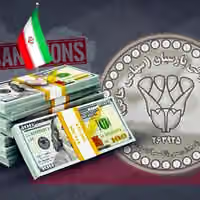
In an article in Foreign Affairs, Zarif argued Iran should use its position to “declare victory and make a deal,” proposing limits on the nuclear program and reopening the Strait of Hormuz in exchange for lifting sanctions.
Rouhani said ending the conflict in a way that protects national interests required policy changes and coordination to safeguard strategic areas.
At rallies, demonstrators burned images of Zarif and Rouhani, accusing them of serving US interests. Saeed Haddadian, a maddah (religious eulogist and chant leader) close to the establishment, issued a direct warning.
“I give Zarif three days. If he does not say he screwed up, on the fourth night we will gather and go to his house,” Haddadian said.
Iran’s President Masoud Pezeshkian said Israeli strikes on Lebanon violate the ceasefire agreement and warned that continued attacks would render negotiations meaningless.
“The repeated aggression by the Zionist entity against Lebanon is a flagrant violation of the initial ceasefire agreement and a dangerous indicator of deceit and lack of commitment to potential accords,” Pezeshkian wrote on X.
“The continuation of these aggressions will render negotiations meaningless; our hands will remain on the trigger, and Iran will never abandon its Lebanese brothers and sisters,” he added.
Iranian Parliament Speaker Mohammad Bagher Ghalibaf said on Thursday that Lebanon and what he called the “axis of resistance” must be considered part of any ceasefire agreement with the US.
In a post on X, Ghalibaf said Pakistani Prime Minister Shehbaz Sharif “publicly and clearly stressed the Lebanon issue; there is no room for denial and backtracking.”
He warned that violations of the ceasefire would carry “explicit costs” and prompt strong responses.