Israel hit Iran’s biggest petrochemical site, defense minister says


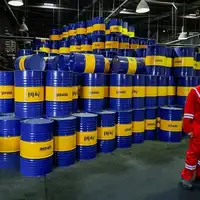
Israel struck Iran’s largest petrochemical facility in Asaluyeh on Monday, causing severe economic damage and taking a major share of the country’s export capacity offline, Defense Minister Israel Katz said.
Katz said the target was a central facility responsible for about half of Iran’s petrochemical production.
He added that the site was struck after an Israeli attack last week on Iran’s second main petrochemical facility.
According to Katz, the two sites, “which together are responsible for about 85% of Iran’s petrochemical exports, have been taken out of use and are not functioning.”
He said the damage amounted to tens of billions of dollars and described the petrochemical sector as a key source of funding for the Islamic Revolutionary Guards and Iran’s military buildup.
He added that continued attacks on Israeli civilians would bring deeper economic and strategic costs for Iran.







Majid Khademi, the IRGC intelligence chief killed in Tehran early Monday, was not a battlefield commander so much as a career security insider who rose through Iran’s secretive counterintelligence system and helped oversee repression, surveillance and anti-infiltration work.
His death matters because he sat at the junction of two of the system’s most sensitive functions: guarding the Guards from infiltration and directing the intelligence arm accused of crushing dissent.
In March, Washington’s Rewards for Justice program offered up to $10 million for information on Khademi and other senior IRGC figures, a sign that he was seen abroad not just as an internal operator but as a high-value intelligence target.
In symbolic terms, one of the men tasked with stopping penetration of the state was himself reached in the middle of Tehran.

A security man from the inner system
Khademi was one of the least public senior figures in Iran’s power structure. Iranian and regional reports have described him as being from the Fasa area in Fars province, while official and semi-official outlets have referred to him under different versions of his name, including Majid Khademi and Majid Hosseini, reflecting the opacity that surrounds senior intelligence officials.
Unlike many top IRGC commanders, he does not appear to have built his standing mainly through front-line war command. He rose instead through the quieter, more secretive world of protection, vetting and internal security.
From internal monitoring to the top intelligence job
Khademi was appointed head of the Defense Ministry’s intelligence protection organization in 2018. In 2022, after a major shake-up inside the IRGC following a series of security failures and reported Israeli penetrations, he was made head of the Guards’ Intelligence Protection Organization.
He was promoted again in June 2025, after the killing of his predecessor Mohammad Kazemi, to lead the IRGC Intelligence Organization itself.
That move put him in charge of a body the US Treasury later said had been “instrumental” in violently suppressing protests through mass violence, arbitrary detentions and intimidation.
That progression is part of what makes his killing significant. Khademi had spent years policing the system from within before ending up at the top of one of its most feared coercive institutions.
Why his role was so sensitive
The IRGC’s Intelligence Protection Organization and its Intelligence Organization do different jobs, but together they form a core part of the Islamic Republic’s security state.
The first looks inward – loyalty, secrecy, infiltration and internal discipline – while the second has been linked to domestic repression and political-security cases.
Khademi mattered because he had moved through both worlds. He was not simply another general; he was a custodian of the regime’s inner files, vulnerabilities and suspicions.
That means his loss is not only personal or symbolic, but potentially institutional, at least in the short term. This is an inference from his portfolio and the structure of the IRGC, rather than a point Iranian officials have conceded.
How Khademi framed tighter control
Khademi gave a rare interview in February to the website of former Supreme Leader Ali Khamenei, and it offered a blunt window into how he saw the country.
He framed the January uprising not as a domestic revolt against the state, but as a foreign-backed plot, and presented mass preemption as routine intelligence work.
In that interview, he said the Guard had summoned 2,735 people linked to what he called anti-security networks, “counseled” 13,000 others, seized 1,173 weapons and identified 46 people allegedly tied to foreign intelligence services. He also said authorities had received nearly 500,000 public tips and reports by the end of the month.
Those figures are important less as verified facts than as a statement of doctrine. In his telling, the answer to unrest was wider surveillance, earlier intervention and a larger dragnet.
He also recalled Khamenei telling him to “pay attention to intelligence work” because “this period is like the year 60” – a reference to the early 1980s, one of the Islamic Republic’s bloodiest and most repressive phases.
The line is revealing because it shows the regime was reading the moment through the lens of existential internal threat, not ordinary dissent.
Khademi said Khamenei had stressed “two types of infiltration”: one deliberate and one broader current of people advancing the enemy’s aims without necessarily knowing it. Read plainly, that is the language of a state that sees not only organized opponents but also ordinary social and political currents as security problems.
Another revealing part of the interview was his insistence on the “national information network,” the state-backed effort to tighten control over Iran’s internet and communications space. That linked Khademi directly to the Islamic Republic’s broader push for censorship, digital control and isolation of the domestic information sphere.
A telling figure of the post-crackdown state
Khademi’s rise after the 2022 reshuffle suggested that the Islamic Republic wanted a harder, more security-centered figure to restore trust after repeated failures. His career embodied a system trying to repair itself through tighter internal control.
His death therefore lands on two levels at once. It removes a senior official tied to repression, and it exposes the vulnerability of a security apparatus that has long defined itself through secrecy, discipline and counter-penetration.
Why the killing matters now
Khademi was not just another uniformed commander. He was a product of the Islamic Republic’s hidden architecture – the part built to monitor loyalty, protect secrets and suppress threats before they reached the street.
His killing is more than the loss of one official. It is a blow to a man who personified the Islamic Republic’s effort to defend itself from within – and a reminder that even those charged with hunting infiltration have not been beyond its reach.
The goal of continuing the war is to push the enemy toward “real regret,” said an Iranian military spokesman on Monday, describing the approach as strategically rational rather than emotional.
“The aim of continuing the war is to bring the enemy to a point of real regret; this may be seen by some as an emotional approach, but in fact it is entirely based on strategic rationality,” Mohammad Akraminia said.
He added that the objective was to prevent future conflicts by raising deterrence to a level where the adversaries would not risk further action against Iran.
The adversaries had so far failed to achieve their objectives, while Iran had responded to threats and, in some cases, carried out reciprocal actions, he said.
The Israeli military said on Monday it had killed Kamil Melhem, the artillery commander of the Imam Hussein Division, in an airstrike in Lebanon a day earlier.
The IDF said the strike on Sunday hit the division’s main fire-control headquarters and also killed several other fighters, including aides to division commander Yahya Hussein.
According to the Israeli military, Melhem oversaw artillery fire toward Israel and Israeli troops and was one of the division’s key commanders.
The military said he was also involved in weapons procurement and worked in the office of the division commander.
Israel described the Imam Hussein Division as an Iran-linked force used by the Quds Force to support the so-called Axis of Resistance and carry out attacks against Israeli soldiers and civilians.
The IDF said the strike had significantly weakened the division.
Israeli Prime Minister Benjamin Netanyahu said on Monday that Israel killed Asghar Bakeri – aka Commander Bagheri or Yazdan Mir – the head of Unit 840 in Iran’s IRGC-Quds Force, in an overnight operation, according to a post on X.
Netanyahu said Bakeri had been responsible for attacks targeting Jews and Israelis around the world.
He also said Israel killed Majid Khademi, the head of IRGC intelligence, describing him as a senior figure who had recently taken up the post after his predecessor was killed.
“Whoever acts to murder our citizens, whoever directs terror against the State of Israel, whoever builds the Iranian axis of evil, bears responsibility for his own blood,” Netanyahu said.
He said Israel would keep operating “with strength and determination” on all fronts until the threat was removed and war goals were achieved.
Majid Khademi, the head of the Revolutionary Guards’ intelligence arm killed in Tehran on Sunday, was involved in activities against Israel, the US, and Iranian dissidents, the Israeli military said on Monday.
“Khademi worked to advance terrorist activities against the State of Israel and against Jewish targets worldwide. He also took part in attempts to target American individuals and was responsible for monitoring Iranian civilians as part of the regime’s suppression of internal protests,” read the statement by Israel Defense Forces.
The IDF described him as a key figure in operations directed both abroad and inside Iran.