The comments come as U.S. President Donald Trump said Thursday he would pause planned strikes on Iran’s energy infrastructure for 10 days until April 6, saying the move followed a request from Tehran and that negotiations were continuing.
Iranian officials have confirmed receiving proposals for talks but say they are reviewing them while insisting Iran will not accept ultimatums.
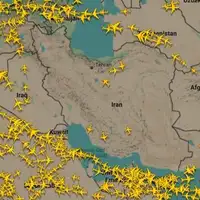
The war, now entering its fourth week, has already drawn in multiple regional actors and heightened tensions around strategic chokepoints such as the Strait of Hormuz, raising concerns that a wider confrontation could disrupt global energy flows and destabilize the region further.
Saba Zanganeh, a former diplomat close to the office of Iran’s Supreme Leader, told the moderate outlet Fararu on March 25 that the conflict should prompt regional governments to reconsider their security policies and alliances.
He said regional governments have often acted as secondary players under foreign influence, worsening conflicts rather than resolving them. The current war, he added, offers a stark lesson that continuing the existing model will deepen regional crises.
He argued that decades of instability stem from what he described as “a flawed strategic paradigm shared by regional states and external powers,” which he said has repeatedly produced destruction and fragmentation in countries including Iraq, Syria, Lebanon, Libya, Sudan, Somalia and Yemen.
Hossein Mousavian, Iran’s former ambassador to Germany, offered a more confrontational assessment.
Speaking to Etemad Online, he said Iranian officials increasingly view Persian Gulf Arab states as partners in the conflict, sharing what he described as a common objective of the “complete destruction of Iran.”
Mousavian said Tehran is preparing for the possibility of a broader confrontation involving the United States and its regional allies.
Another former diplomat, Kourosh Ahmadi, suggested the conflict may last far longer than initially expected.
Speaking to Fararu, he noted that both Trump and Israeli Prime Minister Benjamin Netanyahu first suggested the war might last only four to seven days before revising their estimates to several weeks. Even those expectations may prove unrealistic, he said.
Ahmadi pointed to Iran’s ability to restrict or control shipping in the Strait of Hormuz as a decisive factor in prolonging the conflict. As long as Tehran maintains that leverage over one of the world’s most critical energy chokepoints, he argued, the war is unlikely to end quickly.
“Israel seeks the collapse and incapacitation of Iran, not merely political concessions,” he said, arguing that Washington’s goals were more limited and often diverged from that of Israel.
Despite their different emphases, the three former diplomats share a similar underlying assessment: the current conflict risks evolving into a prolonged regional crisis whose consequences could reshape the Middle East for years.