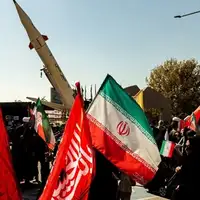
Exchanging threats—sometimes several times a day—has become the dominant mode of communication between Tehran and Washington.
The IRGC-linked Fars News Agency denied that any contact had taken place between the two sides, while a senior commander escalated the rhetoric live on Iran’s state broadcaster.
“We will hit you so hard that your dentures will be knocked out of your mouth.”
Major General Abdollahi of the IRGC’s Khatam al-Anbia Headquarters also vowed to deploy “a new secret weapon that will bring an end to the enemy’s operations.”
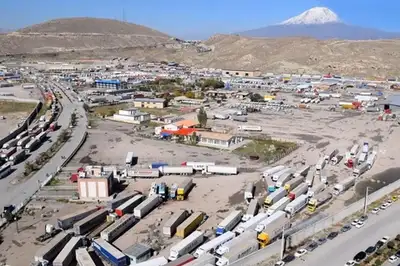
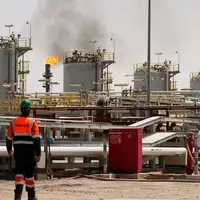
Over the past two days, following Trump’s threat to strike Iran’s power-generation infrastructure unless Tehran unconditionally opens the Strait of Hormuz, several Iranian commanders and officials have issued counter-threats.
The core message was captured in an IRGC statement quoted by Entekhab on March 23: “We will respond to any attack immediately and at the same level.”
Entekhab also cited an IRGC spokesperson elaborating on Tehran’s position: “They hit schools and hospitals, but we did not reciprocate. If they attack power plants, we will strike power plants in countries that host US bases.” That would include much of the Middle East.
In a March 22 post on X, Esmail Saghab Esfahani, Iran’s vice president for energy optimization and strategic management, responded to Trump’s ultimatum.
“The Strait of Hormuz game has put so much pressure on Trump that he has issued a 48-hour ultimatum—unaware that the next move, which is the destruction of the most important electricity and water infrastructure of the Zionist regime and the United States in the region, will put even more pressure on him,” he wrote.
Saghab Esfahani also suggested that residents of Israel and people in countries hosting Iran’s adversaries would be wise to store water and charge their phones during those 48 hours.
Nour News, an outlet close to Iran’s Supreme National Security Council, responded with a mix of defiance and warning.
“Trump’s threat to destroy Iran’s electrical infrastructure is an explicit admission of a war crime and a sign of desperation,” it said.
In the hours before Trump’s deadline, a different narrative was circulating among many Iranian social-media users—particularly within opposition circles.
Rather than targeting infrastructure that ultimately serves the Iranian public, they urged the United States and Israel to focus on dismantling the security apparatus that underpins the state’s repressive machinery.
The tension was heightened further by an IRGC statement announcing what it described as a shift in Iran’s military doctrine—from a defensive posture to an offensive one.
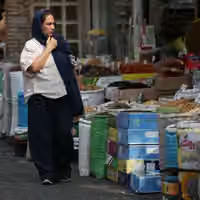
As for ordinary Iranians, many appear increasingly anxious about how attacks on infrastructure might affect their already strained daily lives.
In Tehran—unlike in US markets—there has been no calm after Trump’s announcements. The drums of war are growing louder.