Tehran consolidating power amid war - Washington Post


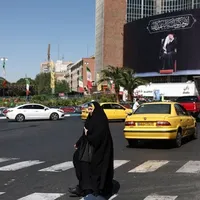
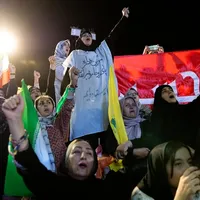
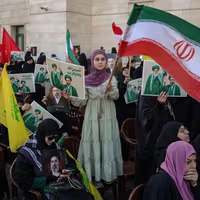
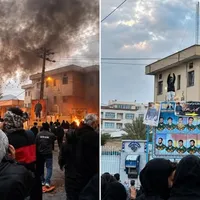
US intelligence assessments indicate Iran’s leadership is consolidating power and is likely to remain intact despite the US-Israeli military campaign, according to people familiar with the findings cited by The Washington Post.
The report said analysts have seen no evidence of large-scale defections or popular uprisings since the war began.
Iran’s leadership may even emerge emboldened, believing it has withstood the campaign and maintained control at home, according to the assessments.
The report comes as US officials continue to review the trajectory of the war and its consequences, amid broader skepticism within intelligence circles that military pressure alone would lead to regime collapse.


An investigation by Amnesty International has concluded that a deadly strike on a school in southern Iran last month may have violated international humanitarian law, adding to mounting scrutiny of one of the war’s deadliest incidents.
The rights group said the February 28 attack on a girls’ elementary school in Minab killed scores of civilians, including many children, and raised concerns that US forces failed to take adequate precautions to avoid civilian harm.
“This harrowing attack on a school… is a sickening illustration of the catastrophic… price civilians are paying,” a senior Amnesty official said, adding that the strike appeared to be “strictly prohibited under international humanitarian law.”
Read the full story here.
An investigation by Amnesty International has concluded that a deadly strike on a school in southern Iran last month may have violated international humanitarian law, adding to mounting scrutiny of one of the war’s deadliest incidents.
The rights group said the February 28 attack on a girls’ elementary school in Minab killed scores of civilians, including many children, and raised concerns that US forces failed to take adequate precautions to avoid civilian harm.
“This harrowing attack on a school… is a sickening illustration of the catastrophic… price civilians are paying,” a senior Amnesty official said, adding that the strike appeared to be “strictly prohibited under international humanitarian law.”
The attack took place on the first day of the US-Israeli campaign against Iran, when a missile struck the Shajareh Tayyebeh school in the southern city of Minab. The blast destroyed much of the building and killed scores inside, in what has become the deadliest single civilian incident of the war.
Amnesty called for an independent and transparent investigation into the strike.
Analyses by multiple media organizations, including the The New York Times, have pointed to evidence suggesting the strike was likely carried out by US forces, though a final determination has not been publicly confirmed.
US officials have said they are investigating the incident. Defense Secretary Pete Hegseth said the military was reviewing the strike and insisted that “we… never target civilian targets.”
President Donald Trump has denied that the United States was responsible, suggesting instead that Iran may have been behind the attack.
A report by Reuters cited officials as saying the United States was examining the circumstances of the strike as part of a broader review of civilian harm during the campaign, amid growing international pressure for accountability.
Human rights groups and United Nations officials have warned that the attack underscores the widening civilian toll of the conflict and have called for a prompt, impartial investigation into whether the laws of war were violated.
US Senate Minority Leader Chuck Schumer criticized President Donald Trump after he suggested China could help ensure shipping security in the Strait of Hormuz during the US-Israeli war on Iran.
“Donald Trump says he’s hoping China will help us clear the Strait of Hormuz. Are you kidding me?” Schumer wrote on X.
"Donald Trump created a mess in the Middle East, and he clearly has no plan for how to end it."
Reports received by Iran International indicate that at least 5,000 members of Iran’s military and security forces have been killed and more than 15,000 wounded so far in the US-Israeli attack on the country.
Many were killed in airstrikes on missile and drone units, the reports suggest, with the Revolutionary Guards, Basij forces and anti-riot police units sustaining the heaviest casualties.
No official figure on armed forces casualties has been released.
The information also suggests authorities have sought to limit public awareness of the losses by restricting public funeral and burial ceremonies. Families have reportedly been told to hold mourning services privately.
The reported toll comes as signs of dissatisfaction, declining morale, financial strain and desertions are said to be spreading among parts of Iran’s security and military forces.
Members of police special units received a notice on Friday indicating that salary payments for some units had been disrupted, according to information obtained and reviewed by Iran International.
In response to the announcement—said to be the third such delay in recent months—some personnel declined to attend pro-government rallies, and sources said deployments in some major cities were affected.
Reports received by Iran International also indicate that retirees and some army personnel have not received salaries for a second consecutive month.
Some senior commanders are said to accuse the IRGC of exploiting the financial crisis at Bank Sepah to weaken the police while strengthening other institutions, particularly those linked to the clerical establishment.
Additional reports suggest the IRGC has sought to address manpower shortages by recalling certain retirees to active duty and encouraging some prisoners to cooperate with security forces with promises of amnesty.
In the air force, according to the reports, morale and operational readiness are low. Many pilots—particularly after the reported downing of a Yak-130 aircraft in an encounter with an Israeli F-35—are said to be reluctant to fly combat missions against Israeli or US forces.
Readiness levels are also reported to have declined.
At the same time, desertions within the police have emerged as a serious challenge for the authorities.
Some reports indicate that about 350 personnel left their posts at one base, while in some units the rate of absence or desertion has reportedly approached 90 percent.
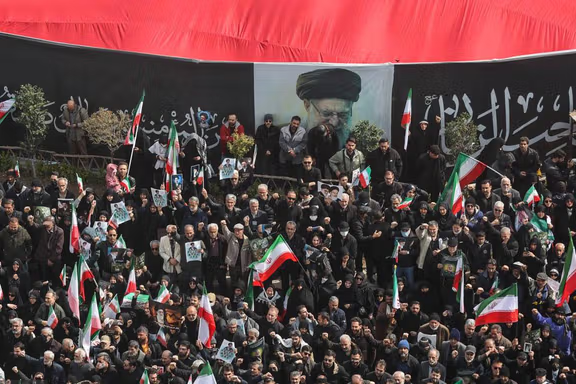
Several Arab states along the Persian Gulf are urging the United States not to halt its military campaign against Iran before significantly weakening the country’s military capabilities, Reuters reported Monday, citing regional officials.
Those governments did not press Washington to launch the war, the report said, but fear that ending the campaign prematurely could leave Iran able to threaten the shipping lanes, oil infrastructure and commercial hubs that underpin their economies.
The conversations come as the war enters its third week, with US and Israeli airstrikes intensifying while Iran has fired missiles and drones at American bases in the region and disrupted traffic through the Persian Gulf’s strategic oil gateway, the Strait of Hormuz.
On Monday, Iran’s top security official, Ali Larijani, accused Islamic countries of abandoning Tehran during the war and criticized those that described Iran as an enemy after attacks on their territory.
“Is Iran expected to sit idly by while American bases in your countries are used to attack it?” he said. “These are weak excuses.”
Reuters reported that US officials have been pressing Iran’s Arab neighbours to publicly back the US-Israeli campaign, citing Western and Arab diplomats who said President Donald Trump is seeking visible regional support to strengthen the operation’s international legitimacy.
The sources added that unilateral military action by any single Arab state is considered unlikely because it would expose that country to Iranian retaliation.
The six members of the Gulf Cooperation Council — Bahrain, Kuwait, Qatar, Saudi Arabia, Oman and the United Arab Emirates — have held only limited consultations since the war began, according to officials familiar with the talks.
Regional officials told Reuters the recent attacks have reinforced a longstanding fear: that leaving Iran with significant missile forces or weapons production capacity would allow it to threaten the region’s energy lifeline whenever tensions escalate.
For many leaders in the region, officials said, the calculation is increasingly stark. Unless Iran’s military capabilities are severely degraded, they fear the country will continue to hold the region’s energy infrastructure and shipping routes at risk.