Citing four sources familiar with the effort, Axios reported that Trump hopes to announce the coalition later this week and is pressing several allies to join what the White House is calling a potential “Hormuz coalition.”
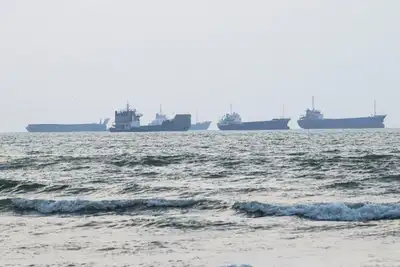
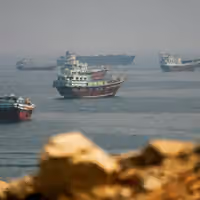
The initiative comes as oil and gas prices rise amid the prolonged disruption of shipping through the narrow strait, through which roughly a fifth of the world’s oil supply normally passes.
According to Axios, US officials are also weighing the possibility of seizing Iran’s key oil export terminal on Kharg Island if tanker traffic remains restricted in the Persian Gulf. Such a move would require American troops on the ground and could mark a major escalation in the conflict.
Kharg Island, located about 15 miles off Iran’s coast, handles roughly 90% of the country’s crude oil exports and has been the focus of recent US strikes on nearby military installations.
In a post on Truth Social, Trump said the United States and several other countries could send warships to the Persian Gulf to reopen commercial shipping routes and urged China, France, Japan, South Korea and the United Kingdom to participate.
“We are talking to other countries about policing the straits. It will be nice to have other countries policing with us. We will help. We are getting a good response,” Trump told reporters aboard Air Force One on Sunday.
He added that the United States is in talks with seven countries about the effort and argued that nations dependent on Persian Gulf oil should contribute to securing the waterway.
“Most of this oil isn’t our oil – it goes to other countries. So if they want it and they want the price to come down, they need to help out,” a senior administration official told Axios.
Trump also warned that NATO allies could face consequences if they declined to assist the effort, telling the Financial Times that a lack of support could be “very bad for the future of NATO.”
Behind the scenes, Trump and senior officials spent the weekend speaking with leaders in Europe, Asia and the Persian Gulf to build political support for the initiative, Axios reported.
The primary focus for now is securing commitments from allies, with decisions about which countries would send warships, drones or other military assets to be worked out later.
Asian market
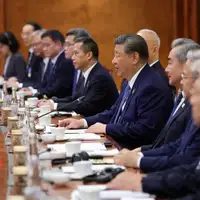
Trump is expected to discuss the issue with Japanese Prime Minister Sanae Takaichi during her visit to the White House on Thursday and is also pressing China to take part before a planned summit with President Xi Jinping later this month.
China’s foreign ministry said on Monday that they are in contact with all sides of the conflict about the situation in the Strait of Hormuz.
"We are in communication with all parties on the current situation and are committed to promoting the easing and cooling down of the situation," ministry spokesperson Lin Jian told reporters.
The US-Israeli war with Iran has entered its third week amid escalating tensions around the Strait of Hormuz, where Tehran has largely restricted tanker traffic while allowing ships carrying Iranian crude to continue operating.
While the United States has already carried out strikes on Iranian military facilities linked to Kharg Island, the White House has said no decision has been made about seizing the oil terminal itself.
“The president has made no decisions on Kharg Island,” a senior White House official told Axios. “But that could change if the effort to clear the strait drags on.”
EU mulling Black Sea model
EU foreign policy chief Kaja Kallas said she had discussed with UN Secretary-General Antonio Guterres whether a wartime arrangement similar to the Black Sea grain deal could help reopen oil and gas transport through the Strait of Hormuz.
Kallas said the closure of Hormuz was “really dangerous” not only for Asian energy supplies but also for fertilizer production, and added that EU ministers would discuss whether the bloc’s Aspides naval mission could play a role, though any change would require member-state backing.
Arriving at a meeting of EU foreign ministers in Brussels, Kallas said, "It is in our interest to keep the Strait of Hormuz open and that's why we are also discussing what we can do in this regard from the European side."