• Iran Insight
  • Politics
  • Economy
  • Analysis
  • Special Report
  • Opinion
  • Podcast
All rights reserved for Volant Media UK Limited
volant media logo
  • العربية
  • فارسی
Brand
  • Iran Insight
  • Politics
  • Economy
  • Analysis
  • Special Report
  • Opinion
  • Podcast
  • Iran Insight
  • Politics
  • Economy
  • Analysis
  • Special Report
  • Opinion
  • Podcast
  • Theme
  • Language
    • العربية
    • فارسی

Iran says regional ports would be 'legitimate targets' if its own threatened

Mar 11, 2026, 16:37 GMT

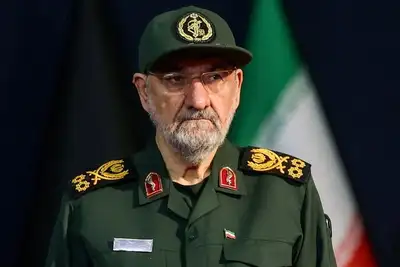
All ports and docks in the region would become legitimate targets if Iran’s ports and docks are threatened, a senior spokesperson for Iran’s armed forces told state media on Wednesday.

“I deny the CENTCOM (US Central Command) statement claiming that naval vessels of Iran’s Revolutionary Guards have hidden in commercial ports,” Abolfazl Shekarchi added.

Earlier in the day, CENTCOM said that Iran was using civilian ports along the Strait of Hormuz to conduct military operations that threaten international shipping.

CENTCOM warned Iranian dockworkers, administrative personnel and commercial vessel crews to avoid Iranian naval vessels and military equipment.

Most Viewed

A leader no one has seen: The unusual debut of Mojtaba Khamenei
1
ANALYSIS

A leader no one has seen: The unusual debut of Mojtaba Khamenei

2

Australia grants asylum to five players of Iran women’s football team

3
INSIGHT

Satire spreads online as Iranians await new leader unveiling

4
INSIGHT

The mood inside Iran as Khamenei's son takes power

5
INSIGHT

Inside Iran’s wartime information blackout

Banner
Banner
•
•
•

Spotlight

  • Power vs piety: Khamenei Jr inherits legitimacy dilemma of Iran's theocracy
    ANALYSIS

    Power vs piety: Khamenei Jr inherits legitimacy dilemma of Iran's theocracy

  • System over leader: Tehran broadcasts stability in wartime
    INSIGHT

    System over leader: Tehran broadcasts stability in wartime

  • Can widening the war save Iran’s rulers?
    ANALYSIS

    Can widening the war save Iran’s rulers?

  • Hormuz disruption tests limits of global energy markets
    ANALYSIS

    Hormuz disruption tests limits of global energy markets

  • Inside the dramatic escape of Iranian women footballers seeking asylum
    INSIGHT

    Inside the dramatic escape of Iranian women footballers seeking asylum

  • A leader no one has seen: The unusual debut of Mojtaba Khamenei
    ANALYSIS

    A leader no one has seen: The unusual debut of Mojtaba Khamenei

More Stories

EU president urges sanctions resolve as Iran war continues

Mar 11, 2026, 16:30 GMT

European Commission President Ursula von der Leyen said capping oil prices would help limit Russia’s revenues and warned that now was not the time to ease sanctions, after joining a call with G7 leaders on the Iran war’s impact on oil and gas markets.

“This is not the moment to relax sanctions on Russia,” she wrote on X.

Von der Leyen added that she and European Council President Antonio Costa stressed the need to keep energy flows moving, particularly through the Strait of Hormuz, and backed the International Energy Agency’s decision to release 400 million barrels of oil.

Iran lays mines in Strait of Hormuz - Reuters

Mar 11, 2026, 16:06 GMT

Iran has deployed about a dozen naval mines in the Strait of Hormuz, Reuters reported Wednesday citing two sources familiar with the matter.

One source said the locations of most of the mines were known but declined to say how the United States planned to address them. CNN first reported the mining of the strait on Tuesday.

Exports through the chokepoint along Iran’s coast have effectively halted since the war launched 12 days ago by the United States and Israel, helping drive a surge in global energy prices. Iran’s military command said Wednesday the world should be prepared for oil to hit $200 a barrel.

UNESCO warns of rising risks to Iran’s historic sites

Mar 11, 2026, 15:56 GMT

UNESCO has warned that intensifying hostilities are already damaging cultural landmarks in Iran and the broader region, saying it has communicated with all parties to the conflict to coordinate protections for heritage sites.

“We are deeply concerned by the first impact that the hostilities are already having in the many World Heritage sites, for instance in Iran, where already four World Heritage sites have suffered from the consequence of the hostilities,” Lazare Eloundou Assomo, director of the agency’s World Heritage Centre, said in an interview.

The organization said it was continuing to assess damage and urged restraint as fighting escalates.

President Donald Trump wrote on social media this week that the United States would “take out easily destroyable targets that will make it virtually impossible for Iran to ever be built back, as a Nation, again.”

The comments were widely interpreted as a threat against infrastructure and other soft targets.

Iran is home to 29 UNESCO World Heritage sites. Assomo said early assessments confirmed damage to four of them, though the full extent remains unclear.

“We don’t know the extent for the moment because we need to continue to check and verify,” he said. “But clearly, with the images that we have been able to receive, we can confirm the damage.”

Golestan Palace: 'Iranian Versailles'

Among the affected sites is Tehran’s Golestan Palace, which Assomo described as “a very important and outstanding palace” reflecting “the grandeur of Iran’s civilization in the 19th century.”

He noted its elaborate decorative features, including mirrored glasswork, and said it is sometimes compared with the Palace of Versailles in France.

The palace served as the Qajar dynasty’s royal residence and seat of power and illustrates the introduction of European styles into Persian arts. Mohammad Reza Pahlavi, Iran’s last monarch, held his coronation ceremony there in 1969.

Video images circulating online appear to show damage inside the palace, with piles of shattered glass, broken woodwork and debris scattered across its interior.

Elsewhere in Iran, Isfahan—once one of Central Asia’s most important cities and a major Silk Road hub—is home to the Masjed-e Jame, a mosque more than 1,000 years old that reflects the evolution of Islamic architecture across 12 centuries.

Assomo said UNESCO was also concerned about broader risks to cultural heritage across the region.

“Everything that tells the history of all the civilization of the 18 countries in the region—we’re talking about Iran but there are many, many others even in the Gulf countries—and we are calling for the protection of all of the sites and their importance,” he said.

Iran says it will not play in 2026 World Cup after US strikes

Mar 11, 2026, 15:53 GMT

Iran will not participate in the 2026 World Cup after co-host the United States launched airstrikes alongside Israel that killed Iran’s Supreme Leader Ali Khamenei and triggered a wider regional conflict, the country’s sports minister said on Wednesday.

“Considering that this corrupt regime has assassinated our leader, under no circumstances can we participate in the World Cup,” Sports Minister Ahmad Donyamali said on state television.

“Our children are not safe and, fundamentally, such conditions for participation do not exist,” the minister said.

“Given the malicious actions they have carried out against Iran, they have forced two wars on us over eight or nine months and have killed and martyred thousands of our people,” he added.

The expanded 48-team 2026 FIFA World Cup is scheduled to be held in the United States, Mexico and Canada from June 11 to July 19.

Iran’s UN ambassador, Amir Saeid Iravani, said more than 1,300 Iranian civilians have been killed since US and Israeli airstrikes began on February 28.

Iran were drawn in Group G alongside Belgium, Egypt and New Zealand, with all three of their group matches scheduled to take place in the United States, two in Los Angeles and one in Seattle.

FIFA regulations say any team that withdraws from the tournament “no later than 30 days before the first match” will be fined at least 250,000 Swiss francs ($320,800).

The rules add that disciplinary sanctions may include expelling the member association from future FIFA competitions or replacing it with another association, with a decision to be taken by the FIFA Council or a relevant committee.

Iran had selected Tucson’s Kino Sports Complex as its base camp for the tournament, and preparations stretching back 18 months now face uncertainty, with potential economic consequences in Arizona.

Earlier, FIFA President Gianni Infantino said he had met US President Donald Trump, who told him the Iranian team would be welcome to compete in the tournament.

Trump had previously said "I really don't care" if Iran participated or not.

Trump hails G7 oil move amid Iran war

Mar 11, 2026, 15:40 GMT

US President Donald Trump hailed G7 plans to release oil reserves amid the war in Iran, saying the move would have a “tremendous impact,” according to video shared by the French presidency.

He spoke after French President Emmanuel Macron, who chaired the meeting, gave him the floor during talks focused on the conflict and its economic fallout.

Earlier, the International Energy Agency recommended releasing 400 million barrels of oil—the largest move in its history—in an effort to contain surging crude prices triggered by the US-Israeli war with Iran.