Two Iranian vessels depart Chinese port with suspected rocket fuel precursor - WP | Iran International
Two Iranian vessels depart Chinese port with suspected rocket fuel precursor - WP
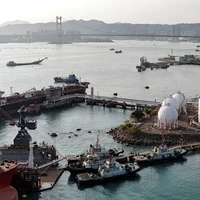
A cargo ship carrying containers approaches towards the Yantian port in Shenzhen, Guangdong province, China April 17, 2025.
Two cargo ships owned by a sanctioned Iranian shipping company have departed a Chinese chemical-storage port carrying cargo and are heading toward Iran, the Washington Post reported citing an analysis of ship-tracking data, satellite imagery and sanctions records.
The vessels – the Shabdis and the Barzin – are operated by the Islamic Republic of Iran Shipping Lines (IRISL), a state-owned carrier under sanctions by the United States, Britain and the European Union. Washington has accused IRISL of transporting materials used in Iran’s ballistic missile program.
The ships recently docked at Gaolan port in Zhuhai on China’s southeastern coast, a facility experts say handles large volumes of industrial chemicals, including sodium perchlorate, a key precursor used to produce solid rocket fuel.
Experts tracking the vessels said the cargo likely includes sodium perchlorate, which Iran requires for missile propellants.
“Given the track record, the most parsimonious explanation is that they’re loading the same commodity they’ve been shuttling for the past year-plus,” Isaac Kardon, a senior fellow at the Carnegie Endowment for International Peace, said.
Kardon said Beijing could have delayed the ships’ departure using administrative or customs procedures but did not do so.
“China could have held these vessels at port, imposed an administrative delay, invented a customs hold – any number of bureaucratic tools, but didn’t,” he said, calling the decision notable at a time when the United States and Iran are engaged in direct military confrontation.
As of Saturday, both ships were in the South China Sea. The Barzin had anchored off the coast of Malaysia while en route to Iran’s Bandar Abbas port, about 4,000 miles away, where it is expected to arrive next week. The Shabdis is sailing toward Iran’s Chabahar port, with an estimated arrival of March 16.
Both destinations lie along the Strait of Hormuz and host major Iranian naval facilities.
US sanctions announced last year targeted the transfer of sodium perchlorate and other chemicals from China to Iran, citing their use in solid propellants for ballistic missiles. Sodium perchlorate is used to produce ammonium perchlorate, a core component in missile fuel.
U.S. officials have long accused China of allowing transfers of missile-related materials to Iran, allegations Beijing has denied, saying the United States exaggerates commercial or dual-use trade.
Since the start of the year, at least a dozen other IRISL vessels have visited Gaolan port, with draft data suggesting most departed carrying cargo. Some of those ships later unloaded at Iran’s Shahid Rajaee port near Bandar Abbas, the country’s main container terminal.
The latest departures come days after US and Israeli strikes targeted Iranian missile facilities and other military infrastructure.
Analysts say that damage may have increased Iran’s need for rocket fuel components.
“Tehran’s need for propellant precursors just went from urgent to existential,” Kardon said.
Iranian political and media figures criticized President Masoud Pezeshkian on Saturday after he apologized for what he called “fire at will” attacks by the country’s armed forces on neighboring countries and instructed them to stop such attacks.
In a video message published earlier in the day, Pezeshkian said authorities had ordered the armed forces to halt missile strikes on neighboring countries unless attacks originate from their territory.
“The temporary leadership council approved yesterday that neighboring countries should no longer be targeted and missiles should not be fired unless an attack on Iran originates from those countries,” Pezeshkian said.
“The armed forces have so far acted with a kind of ‘fire at will’ authority, but they have now been notified that from now on they must not attack neighboring countries or target them with missiles,” he said, adding that he “apologizes personally” over the matter.
Lawmakers push back
Mohammad Manan Raeisi, a lawmaker representing Qom, described the remarks as “humiliating” and said they showed the Assembly of Experts should quickly move to select a new leader.
“Did neighboring countries not place their land, assets and hotels at the disposal of our enemies? Should our military not have struck those bases and assets of the enemy that you are now apologizing for so humbly?” Raeisi wrote.
Ebrahim Azizi, head of the parliament’s national security and foreign policy committee, wrote on X that all US and Israeli bases in the region were “legitimate and lawful targets” in the ongoing conflict.
“The Islamic Republic has no red line in defending national interests. This battle continues,” Azizi wrote.
Media figures question message
Ezzatollah Zarghami, a former culture minister and ex-head of state broadcasting, wrote that the remarks created confusion about the conduct of the war.
“We did not understand what happened. But neither did the armed forces act on a fire at will basis, nor can the regional war mentioned by the ‘martyred imam’ be interpreted in different ways,” Zarghami wrote.
Meisam Nili, a conservative media activist, also criticized the comments.
“Why retreat from the military strategy of the ‘martyred imam’ when we are on the verge of selecting a new leader? Any ceasefire is treason,” Nili wrote.
Former lawmaker Jalal Rashidi Koochi also criticized the president’s message, saying it showed weakness.
“An apology happens when a mistake has occurred. We made no mistake. Your message showed no sign of authority,” Rashidi Koochi wrote.
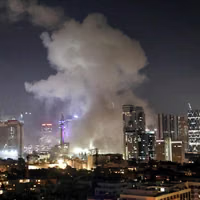
Pezeshkian’s remarks came as explosions were reported on Saturday at Dubai International Airport and loud blasts were heard in Abu Dhabi, according to multiple reports.
Trump comments
US President Donald Trump said after Pezeshkian remarks that Iran had apologized to its Middle East neighbors and promised it would not fire missiles at them anymore.
In a post on Truth Social, Trump said Iran made that promise only because of what he called relentless US and Israeli attacks.
“Iran, which is being beat to HELL, has apologized and surrendered to its Middle East neighbors, and promised that it will not shoot at them anymore. This promise was only made because of the relentless U.S. and Israeli attack. They were looking to take over and rule the Middle East,” Trump wrote.
Trump also warned that Iran could face further strikes.
Iran, he added, would be “hit very hard” on Saturday and said additional areas and groups of people were under consideration for targeting, citing what he described as Iran’s “bad behavior.”
Azerbaijani media reported that the country’s security service has placed several operatives of Iran’s Islamic Revolutionary Guard Corps (IRGC) under pursuit for allegedly preparing “terrorist acts” and has foiled their plots.
According to the report, published Friday, March 5, the targets included the strategic Baku–Tbilisi–Ceyhan oil pipeline, Israel’s embassy in Azerbaijan, a leader of the Jewish religious community and the Ashkenazi synagogue in Baku.
Azerbaijani outlets said the operatives’ ultimate aim was to spread fear and damage the country’s international reputation.
Reports said the group had smuggled three explosive devices into Azerbaijan, which security forces later neutralized.
The report was published one day after an Iranian drone strike on Azerbaijan’s Nakhchivan region left four people wounded. According to official statements from Baku, one drone struck the terminal building of Nakhchivan Airport, while another crashed near a school building in the village of Shakarabad.
Iranian officials denied responsibility for the attack and instead blamed Israel.
Since the current war began, Iran has targeted at least 12 countries in the region, according to the report.
Azerbaijani media further reported that two Iranian citizens, Behnam Sahebali Rostamzadeh and Yaser Rahim Zandekian, established criminal contacts with Azerbaijani citizen Tarkhan Tarlanoglu Guliyev to smuggle an explosive device into the country.
Investigators later discovered a container abandoned on Zandekian’s instructions in Baku’s Sabail district. A search found 7.73 kilograms of C-4 explosive, intended for destroying infrastructure and concrete structures.
Guliyev and another man, Nijat Zamanoglu Aghayev, later retrieved the container and concealed the explosives in a military district of Baku.
Authorities said additional Iranian and Azerbaijani nationals were also identified as participants in the alleged plots.
Following the recent drone strike on Nakhchivan, relations between Baku and Tehran have again grown tense. Azerbaijan’s Defense Ministry described Iran’s denial of responsibility as “unacceptable” and demanded accountability and an official apology.
President Ilham Aliyev also warned that “the dishonorable individuals who carried out this terrorist act will regret it.”
Security investigators said Iranian nationals linked to Azerbaijani citizens in the case had direct ties to the IRGC, in addition to involvement in drug trafficking networks.
According to Azerbaijani media, an Iranian citizen identified as Sajjad Moghadam Sheikhzadeh had received assignments from the IRGC to prepare assassination plots targeting Jewish residents of Azerbaijan.
Investigators named Ali-Asghar Bardbar Sharamini, a senior IRGC intelligence officer, as the planner and coordinator of the operations. Another Iranian national, Hafez Tavassoli, was said to have coordinated activities on the ground.
Azerbaijani media reported that several Iranian nationals, including Zandekian, Rostamzadeh and Sheikhzadeh, have been placed on international wanted lists for their alleged roles in gathering intelligence and organizing sabotage aimed at destabilizing society and spreading fear.
Several Azerbaijani citizens have also been sentenced to prison in connection with the case.
Former Iranian foreign minister Mohammad Javad Zarif said in a leaked message the United Arab Emirates is equal to Israel and Tehran must focus on attacking the UAE while striking US and Israeli interests, according to screenshots of his remarks in a private Telegram group.
In the messages attributed to Zarif, the former top diplomat outlined a series of proposals related to Iran’s confrontation with the United States and Israel, including military pressure, diplomatic steps and measures he said could help stabilize the situation.
Zarif wrote that Iran should focus on striking “American and Israeli targets,” including US naval vessels and what he described as vital interests linked to Israel.
"We should focus on destroying the bridge between Saudi Arabia and Bahrain in order to create real deterrence against mischief in the islands, and on striking the UAE (despite all the damage it might cause Iran)."
"The UAE and Israel are one and the same," he said.
The remarks also included a recommendation that Iran avoid attacks across the wider region “as much as possible,” while concentrating on specific targets that he said would have strategic impact.
Alongside military proposals, Zarif also suggested diplomatic and political steps. He wrote that mediation proposals should not be rejected and that Washington should be given an opportunity for what he described as an “honorable exit.”
He added that, despite his personal discomfort in saying so, the only move that might calm Trump would be an official declaration ending the “47-year hostility” between Iran and the United States and its allies.
Zarif wrote that US President Donald Trump “does not have the patience for long and technical plans” and that symbolic gestures might be more effective.
"To prevent war, I proposed several symbolic steps aimed at giving Trump a sense of victory, accompanied by a text that was very dignified for Iran. However, it was not even reviewed, and no explanation was requested."
He criticized what he described as a lack of engagement from incumbent Iranian officials, saying that since the start of the war he had not received any calls from his former colleagues at the foreign ministry regarding his proposals.
From Chinese fortune teller to quantum effect
Zarif, a US-educated university professor in Tehran, also mixed religious appeals with conspiracy claims, suggesting that prayers and repeated calls to prayer could help defeat what he called the “satanic schemes” of Donald Trump and Benjamin Netanyahu.
"Without joking, we should pray for the realization of the prediction that Trump will be defeated (as foretold by a Chinese fortune teller). Belief in God’s support has a situational (quantum) effect."
"At the suggestion of one of the saints, the call to prayer should be recited repeatedly so that the satanic schemes of Trump and Netanyahu — which, according to him, began by sacrificing 200 little girls (in the Epstein method) to achieve their evil goals — may be nullified," he said.
In the same message, Zarif emphasized the importance of public opinion inside Iran, urging officials to avoid actions that would anger different segments of society.
“We must win the people’s hearts through action, not words,” he wrote, adding that authorities should avoid provoking the public to satisfy the demands of a particular group.
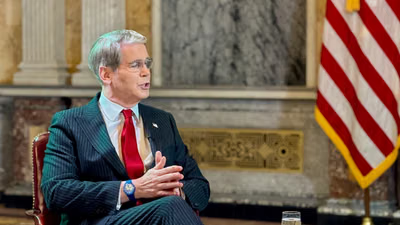
US Senator Ted Cruz told Iran International this week that the US-Israel military campaign aims to remove the Islamic Republic from power and diminish Tehran’s ability to “terrorize” or harm its neighbors.
“It is not simply enough to degrade part of their arsenal,” Cruz told Eye for Iran podcast, adding that strikes have weakened Iran’s military capabilities and limited its ability to project force abroad.
Asked whether victory would mean regime change, he said: “Yeah, I believe this regime needs to be removed from power,” and argued that doing so would serve US national security interests and support Iranians seeking freedom.
Cruz said the United States and Israel had acted in coordination in recent days.
"We've seen the United States working hand in hand with Israel taking out, number one, the Ayatollah, number two, the senior military leaders of the regime, number three, a great percentage of the missile reserves of the drones,” he said.
“We have seen steadily the regime's ability to project force, to terrorize the Iranian people, to murder their neighbors, to murder Americans, all of those have been reduced dramatically.”
His comments come as the Trump administration signals the campaign could intensify. US Defense Secretary Pete Hegseth said this week the United States has “only just begun to fight,” while Iran’s Revolutionary Guards warned attacks across the region would escalate.
Freedom “on the doorstep”
Cruz argued that removing Iran’s ruling regime would serve both US national security interests and the aspirations of Iranians living under the tyrinical government.
“Removing from power a government that is seeking to kill Americans is overwhelmingly in America's interest,” he said, adding that it was also “overwhelmingly in the interest of the people of Iran of 92 million people who have suffered under tyranny and oppression for 47 years… and I believe freedom is on the doorstep and it is in sight before us.”
More than 36,500 Iranians were killed by security forces during the January 8-9 crackdown on nationwide protests, making it the deadliest two-day protest massacre in history.
The Republican Senator also suggested Iran’s military response across the region is backfiring and strengthening opposition to the regime.
“Well, Iran is doing a great job of building a coalition against this regime,” Cruz said. “You look at their military strategy, their military strategy appears to be try to murder as many people as possible and in as many countries as possible.”
Iran’s missile and drone attacks have spread across the region in recent days, with projectiles reported over or targeting Israel, the United Arab Emirates, Qatar, Bahrain, Kuwait, Jordan, Iraq, Saudi Arabia, Syria and Cyprus.
Some strikes and falling debris have also hit residential areas, highlighting how the conflict is spilling beyond military targets and affecting civilians across the region.
Limited ground engagement possible
Cruz also addressed speculation about whether the United States could deploy ground troops, saying he does not foresee an Iraq-style invasion but did not rule out limited ground action.
“Look, what we're not going to see is an extended presence of American troops on the ground. We're not going see a replay of what happened in the war in Iraq. That is not on the table,” he said.
“The president has been clear he has not ruled out some limited ground engagement… I could envision it is possible the president will order some sort of limited ground engagements, but I would expect the overwhelming majority of the American engagement on this to be in the air through bombs and missiles and other means.”
Iran’s leadership question
The question of Iran’s leadership has taken on new urgency following the death of Supreme Leader Ali Khamenei.
Iran’s clerical body, the Assembly of Experts, has elected Mojtaba Khamenei — the son of the late supreme leader Ali Khamenei — as the Islamic Republic’s new Supreme Leader, according to informed sources who spoke to Iran International.
The decision would keep power firmly within the ruling system of the Islamic Republic and extend the authority of the clerical establishment that has governed Iran since 1979.
President Donald Trump signaled strong opposition to Mojtaba Khamenei assuming power.
“Khamenei's son is a lightweight. I have to be involved in the appointment, like with Delcy Rodriguez in Venezuela,” Trump said.
“We want someone that will bring harmony and peace to Iran.”
Asked during his interview about who should lead Iran next, Cruz said he would not speculate about specific figures but noted there were multiple possible contenders.
“Look, I don't know, and I think that's a decision for the people of Iran to make. And so there are various contenders,” Cruz said.
Cruz said he believes Iran’s current ruling system should ultimately be replaced by leadership chosen by the Iranian people.
“Yeah, I believe this regime needs to be removed from power,” he said.
“What I would like to see is a free and fair election, let the people of Iran choose their leaders.”
Message to the Iranian people
Cruz also spoke about his personal connection to people who have lived under authoritarian rule.
“My father was born and grew up in Cuba. My father fought in the Cuban revolution. My father was imprisoned and tortured in Cuba,” he said. “My family knows suffering the people of Iran have experienced.”
He ended with a message to Iranians protesting the government.
“My message to the Iranian people is your courage is inspiring… You have a moment to reclaim your country, to reclaim your future and to move into an era of prosperity.”
UNICEF called on all parties in the Iran conflict to protect civilians, warning that children were increasingly bearing the toll of the fighting with reports of rising casualties.
“UNICEF is deeply concerned about the deadly impact the ongoing military escalation in Iran is having on children,” the agency said in a statement. “Approximately 180 children have reportedly been killed and many more injured.”
The organization said 168 girls were killed when a strike hit the Shajareh Tayyebeh girls’ elementary school in Minab, in southern Iran, on Feb. 28 while classes were in session.
Reports indicated that most of those killed were between 7 and 12 years old.
UNICEF also said 12 other children were killed in separate incidents at schools across five locations in Iran and warned that at least 20 schools and 10 hospitals had reportedly been damaged.
Reuters reported Thursday evening that US military investigators believe it is likely that US forces were responsible for the strike.
The report cited two officials who said the investigation was not completed and "new evidence could emerge that absolves the U.S. of responsibility and points to another responsible party in the incident."
The New York Times also said on Thursday that it had verified video footage and satellite imagery showing the Minab school was struck during US-led attacks near an Iranian naval facility, making it one of the deadliest incidents of the campaign.
It said the building had long functioned as a clearly defined civilian school despite its proximity to a former military complex.
US officials have said the War Department is investigating reports of civilian casualties but have neither confirmed nor denied responsibility for the Minab strike.
Strikes began last week as US and Israeli forces targeted sites across Iran, with Tehran retaliating with missile and drone attacks across the region.
“These child casualties are a stark reminder of the brutality of war and violence on children, which impacts families and communities for generations,” UNICEF said, adding that schools and children are protected under international humanitarian law and must remain places of safety.