• العربية
  • فارسی
Brand
  • Iran Insight
  • Politics
  • Economy
  • Analysis
  • Special Report
  • Opinion
  • Podcast
  • Iran Insight
  • Politics
  • Economy
  • Analysis
  • Special Report
  • Opinion
  • Podcast
  • Theme
  • Language
    • العربية
    • فارسی
  • Iran Insight
  • Politics
  • Economy
  • Analysis
  • Special Report
  • Opinion
  • Podcast
All rights reserved for Volant Media UK Limited
volant media logo

Trump urges Iran diplomats around the world to seek asylum

Mar 5, 2026, 21:48 GMT+0Updated: 01:20 GMT+0

President Donald Trump called on members of Iran’s Revolutionary Guards, military and police to lay down their arms or face death, offering immunity to those who defect and urging Iranian diplomats abroad to seek asylum.

Trump also said Iran was “calling” for negotiations while appearing to praise Iran's fight back.

"They have no air defense. All of their airplanes are gone. Their communications are gone. Missiles are gone. Launches are gone. About 60% and 64%, respectively. Other than that, they're doing quite well. I said, what's left? But they're tough, and they want to fight." he said.

"And they're calling. They're saying, how do we make a deal? I said, you're being a little bit late, and we want to fight now more than they do.

Trump added that Washington would ensure whoever leads Iran next “will not threaten America or its neighbors.”

Most Viewed

Ghalibaf defends Iran-US talks amid hardline backlash
1
INSIGHT

Ghalibaf defends Iran-US talks amid hardline backlash

2
ANALYSIS

From instability to influence: Pakistan’s pivotal role in US-Iran diplomacy

3
ANALYSIS

100 days on: why Iran’s January protests spread across social classes

4

War-hit homeowners feel abandoned as Iran’s reconstruction aid fades

5
INSIGHT

100 days on: the anatomy of Iran’s January crackdown

Banner
Banner

Spotlight

  • The politics of pink: how Iran uses cuteness to rebrand violence
    ANALYSIS

    The politics of pink: how Iran uses cuteness to rebrand violence

  • Bread shortages, soaring prices strain households in Iran, residents say
    VOICES FROM IRAN

    Bread shortages, soaring prices strain households in Iran, residents say

  • War-hit homeowners feel abandoned as Iran’s reconstruction aid fades

    War-hit homeowners feel abandoned as Iran’s reconstruction aid fades

  • 100 days on: the anatomy of Iran’s January crackdown
    INSIGHT

    100 days on: the anatomy of Iran’s January crackdown

  • Ghalibaf defends Iran-US talks amid hardline backlash
    INSIGHT

    Ghalibaf defends Iran-US talks amid hardline backlash

  • From instability to influence: Pakistan’s pivotal role in US-Iran diplomacy
    ANALYSIS

    From instability to influence: Pakistan’s pivotal role in US-Iran diplomacy

•
•
•

More Stories

Fears grow for Iranian prisoners as war raises risk of another Evin disaster

Mar 5, 2026, 20:13 GMT+0

Human rights groups and families of detainees warn that wartime conditions inside Iranian prisons could trigger another tragedy like the June strike on Tehran’s Evin prison.

Activists say the situation inside prisons has become increasingly chaotic. While some non-political detainees have reportedly been released on bail and many staff have reportedly left their posts for safer locations, authorities have refused to grant furlough to political prisoners or people detained during recent protests or accept bail.

The volunteer lawyers’ website Dadban also warned that periods of intense political or military tension in Iran often lead to harsher treatment of political prisoners.

“In the Islamic Republic, during times of severe political or military tension, the risk of intensified repression and even retaliation against political prisoners increases,” the group said. In such circumstances, detainees may face greater restrictions, violence or additional pressure.

Continue reading

100%

Fears grow for Iranian prisoners as war raises risk of another Evin disaster

Mar 5, 2026, 19:47 GMT+0
•
Maryam Sinaiee

Human rights groups and families of detainees warn that wartime conditions inside Iranian prisons could trigger another tragedy like the June strike on Tehran’s Evin prison.

Activists say the situation inside prisons has become increasingly chaotic. While some non-political detainees have reportedly been released on bail and many staff have reportedly left their posts for safer locations, authorities have refused to grant furlough to political prisoners or people detained during recent protests or accept bail.

The volunteer lawyers’ website Dadban also warned that periods of intense political or military tension in Iran often lead to harsher treatment of political prisoners.

“In the Islamic Republic, during times of severe political or military tension, the risk of intensified repression and even retaliation against political prisoners increases,” the group said. In such circumstances, detainees may face greater restrictions, violence or additional pressure.

Warnings of a humanitarian crisis

Several human rights organizations — including the Committee for the Freedom of Political Prisoners and a foundation linked to imprisoned Nobel Peace Prize laureate Narges Mohammadi— have warned of an impending humanitarian crisis in Iranian prisons.

In their statements, the groups said administrative order inside Evin has effectively collapsed, guards have abandoned their posts and cell doors have been locked, leaving prisoners confined inside.

According to these reports, food distribution and medical care have largely been suspended, while the prison shop — a key source of food and drinking water for inmates — has also closed.

In some cases, activists say, political prisoners have been transferred to unknown locations without informing their families. Family members of detainees say they have been given little information about the prisoners’ fate.

Reports from rights groups and relatives who have managed to contact inmates suggest that Iran’s special police unit (NOPO) has taken control of Evin prison.

The wife of political prisoner Mostafa Mohammad-Hassan wrote on social media that authorities plan to transfer political prisoners and foreign nationals held in Evin to a prison in the city of Qom.

Fears of another Evin tragedy

Reza Khandan, a political prisoner in Evin and the husband of prominent human rights lawyer Nasrin Sotoudeh, has also raised the alarm in a letter to Iran’s judiciary chief, Gholamhossein Mohseni-Ejei.

Khandan warned that authorities had ignored repeated warnings from prisoners, as they did during the 12-day war in June when an Israeli missile attack on Evin prison destroyed parts of the complex and killed dozens of prisoners, visiting relatives and prison staff.

“This time no excuse will be acceptable,” Khandan wrote. “The direct responsibility for the lives of prisoners lies with the judiciary and the prison organization — prisoners who are still mourning their cellmates and families who mourn their loved ones.”

After the June attack, political prisoners were reportedly placed in shackles and temporarily transferred to other facilities, including Tehran Greater Prison (Fashafouyeh), Qezel Hesar prison and Qarchak women’s prison.

Conditions worsening in other prisons

Activists say the situation is deteriorating in other prisons as well.

Dadban reported worsening conditions at Qarchak women’s prison, south of Tehran — widely considered one of Iran’s harshest detention facilities.

According to the report, medical staff, administrative workers and guards have left their posts, leaving prison operations in disarray. Water shortages, already common at the facility, have worsened, and the prison shop is no longer operating.

At The Tehran Greater Prison blast waves from nearby explosions on March 2 reportedly shattered windows and damaged several walls. While no casualty figures have been confirmed, reports say prison guards beat inmates and fired tear gas inside the facility.

“My brother is in Tehran Greater Prison. For four days they have had neither water nor food,” a viewer wrote in a message to Iran International. “Officials have even welded the prison doors shut and the facility is now under the control of the Revolutionary Guards,” he added.

Similar incidents have been reported elsewhere. Kurdish news outlet Kurdpa said anti-riot guards attacked prisoners in Mahabad prison after inmates protested being held in dangerous wartime conditions following a strike on a nearby Revolutionary Guards (IRGC) base.

According to the report, guards fired tear gas, injuring at least two prisoners. Food rations were reduced to one meal a day, and phone calls were restricted, according to the report.

'Netanyahu set goal of killing Khamenei in November, protests sped up plans'

Mar 5, 2026, 19:31 GMT+0

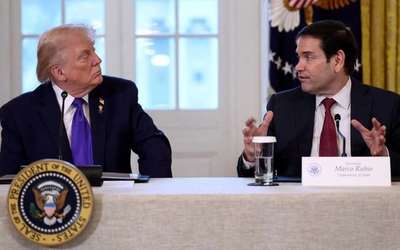
Israeli Prime Minister Benjamin Netanyahu set the goal of assassinating Iran’s supreme leader Ali Khamenei in November, and protests inside Iran later accelerated Israeli and US planning for the strike, Defense Minister Israel Katz said in an interview.

“Already in November, we held discussions with the prime minister in a very small forum. The prime minister set the objective: to eliminate Khamenei,” Katz said in remarks aired by Israel’s Channel 12 television.

Katz said the operation had initially been planned for around mid-2026 and that Israel first prepared to carry it out alone before discussions began with US President Donald Trump.

He added that protests that erupted across Iran late last year accelerated considerations in the US and Israel about striking Iran, amid concerns the pressure on the Iranian government could prompt a preemptive missile attack on Israel or US forces in the region.

US suspends operations at embassy in Kuwait

Mar 5, 2026, 19:21 GMT+0

The United States has suspended operations at its embassy in Kuwait, the State Department said in a statement on Thursday.

“While there have been no reported injuries to US personnel, the safety of Americans abroad remains the highest priority of the US Department of State,” the statement said.

“US citizens in Kuwait should depart the country, if they can do so safely, using commercial or other available transportation options,” the statement added.

Araghchi says Iran not afraid of US ground troops, is 'waiting' for them

Mar 5, 2026, 18:25 GMT+0

Iran’s Foreign Minister Abbas Araghchi said Tehran is prepared to confront a potential US ground invasion and is not afraid of American troops entering the country.

Asked in an interview with NBC News whether he feared a US ground invasion, Araghchi replied: “No, we are waiting for them.”

“We are ready for this war,” he added.