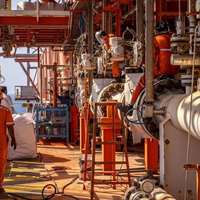
Tehran Revolutionary Court bombed, its building destroyed - state media
The Tehran Revolutionary Court was bombed on Sunday and its building was destroyed, state media reported as airstrikes by the US and Israel continue.




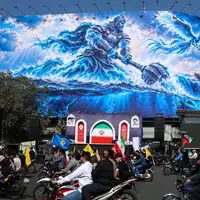

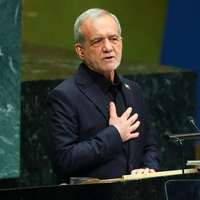
The CIA helped identify a Saturday morning gathering of Iran’s top leaders in Tehran, including Supreme Leader Ali Khamenei, before Israel carried out a strike that killed him and other senior officials, The New York Times reported.
Citing people familiar with the operation and officials briefed on the intelligence, the newspaper said the agency had tracked Khamenei for months and passed “high fidelity” intelligence on his location to Israel ahead of the attack.
According to the report, US and Israeli officials adjusted the timing of their planned strike to take advantage of intelligence that senior political and military figures would gather Saturday morning at a leadership compound housing the offices of the supreme leader, the presidency and the Supreme National Security Council.
Israel had assessed that those present would include Mohammad Pakpour, commander in chief of the Islamic Revolutionary Guard Corps; Defense Minister Aziz Nasirzadeh; Admiral Ali Shamkhani, head of the Military Council; Majid Mousavi, commander of the IRGC Aerospace Force; and Deputy Intelligence Minister Mohammad Shirazi, among others.
The operation began around 8 a.m. Tehran time, when fighter jets took off armed with long-range precision munitions. About two hours later, in Tehran, missiles struck the compound.
Senior national security officials were in one building, while Khamenei was in another nearby structure, the report said.
An Israeli defense official said in a message reviewed by the newspaper that the strike was “carried out simultaneously at several locations in Tehran,” adding that Israel achieved “tactical surprise” despite Iranian preparations for war.
Iran’s state news agency IRNA confirmed on Sunday the deaths of some of the senior military figures Israel said it had killed, including Shamkhani, Pakpour, and Nasirzadeh.
Last June, as plans were underway to strike Iran’s nuclear facilities, President Trump said the United States knew where Khamenei was hiding and could have killed him.
Iraq’s top Shiite cleric Ali Sistani offered condolences on Sunday over the death of Iran’s Supreme Leader Ali Khamenei, according to a statement from his office.
Sistani described Khamenei’s senior position and long role in leading the Islamic Republic as “clear to everyone.”
“There is no doubt that the enemies intended, by his martyrdom and by launching the wide military aggression on Iran, to inflict severe harm on this dear country,” the statement said.
It added that Sistani called on Iranians to maintain unity and not allow “the aggressors” to achieve their aims.
Several people were killed on Sunday after hundreds of protesters stormed the US consulate in the Pakistani port city of Karachi, authorities said.
The violence followed attacks by the United States and Israel on Iran that killed Supreme Leader Ali Khamenei. Police said the protesters were later dispersed and that the situation was under control.
Police and hospital officials in Karachi said at least eight other people were wounded in clashes between protesters and security forces near the consulate compound.
Multiple powerful explosions shook Tehran on Sunday, said Nour News, an outlet affiliated with Iran’s Supreme National Security Council.
Israel’s military also said it launched a broad wave of strikes in the heart of Tehran for the first time since the start of the attacks.
The military said the Israeli Air Force, guided by intelligence, began targeting sites belonging to the “Iranian terror regime” in the capital.
It said that over the past day the air force had carried out large-scale strikes aimed at establishing aerial superiority and paving the way to Tehran.
Iran appointed Ahmad Vahidi, a former defense and interior minister, as the new commander of the Islamic Revolutionary Guard Corps on Sunday, state media reported on Sunday.
Vahidi is under US sanctions for his role in Iran’s suppression of protests, including the use of lethal force by security services during the 2022 nationwide protests.
The announcement followed the Saturday killing of several senior Iranian military commanders, including Mohammad Pakpour, the previous head of the Guards.