Iran outlet warns 'warmongers' could drag US into 'miscalculation' | Iran International
Iran outlet warns 'warmongers' could drag US into 'miscalculation'
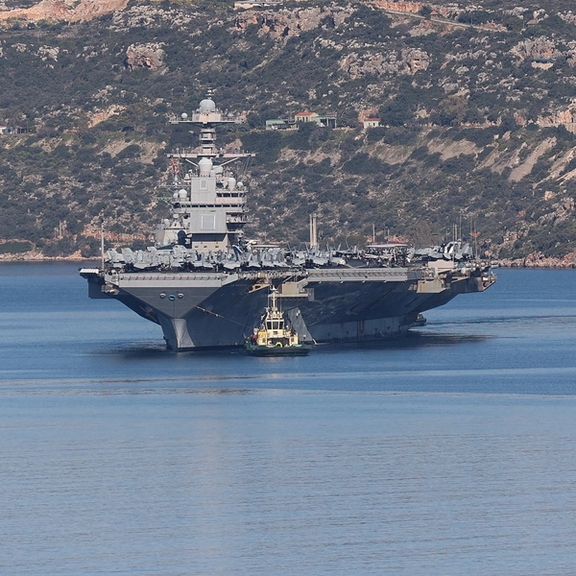
Nour News, an outlet affiliated with Iran’s Supreme National Security Council, warned that “warmongers” feeding “misinformation” to President Donald Trump could drag the United States into a dangerous miscalculation over Iran.
In a commentary published on Friday, the outlet pointed to remarks by US Vice President JD Vance that there was “no chance” Washington would become entangled in a prolonged Middle East war, and said such statements sought to downplay the risks of military action.
It added that any limited US attack could push the region toward a wider war and said Washington faces domestic constraints.
Senior Iranian clerics on Friday framed nuclear negotiations with Washington as conditional and cautioning that war remains an option if talks fail, as the United States and Britain began drawing down personnel in the region.
Lotfollah Dezhkam, Supreme Leader Ali Khamenei’s representative in Fars province, said indirect negotiations do not guarantee results and warned that “if negotiations do not succeed, the next option, which is war, is on our table,” according to state media. Iran speaks “from a position of power,” he added, arguing that talks only make sense if the other side understands the consequences of conflict.
Dezhkam’s remarks were echoed by other senior religious figures, suggesting a coordinated hardening of tone from the clerical establishment.
Rasoul Falahati, Khamenei’s representative in Gilan province, said the United States fears Iran’s cyber, drone and missile capabilities and warned that any action would draw a tougher response. “If the enemy makes a mistake, we will give them a lesson harsher than the 12-day war,” he said, adding that Israel understands it would face “difficult conditions” in any confrontation.
In northern Iran, Kazem Nourmofidi, Friday prayer leader of Gorgan, dismissed US military threats as political maneuvering. “These threats are more a show of power and a political bluff than reality,” he said. “They have no choice but to negotiate with Iran.” Nourmofidi pointed to Iran’s military strength and its strategic position over the Strait of Hormuz, warning that closing the waterway could send oil prices soaring and trigger global economic disruption.
Tehran’s Friday prayer leader Ahmad Khatami reinforced the red lines on the nuclear file itself, ruling out any suspension of uranium enrichment. “The Islamic Republic has never accepted suspension of enrichment and will not accept it,” he said, rejecting what remains a central US demand.
Military echoes clerical warnings
The religious rhetoric was mirrored by the armed forces. Iran’s military spokesperson Abolfazl Shekarchi warned that in the event of conflict, “American soldiers and their equipment will be destroyed,” cautioning that any “foolish action” could ignite wider regional escalation.
Even as the tone sharpened, Foreign Minister Abbas Araghchi said progress in talks requires the United States to avoid “miscalculation and excessive demands,” state media reported after a call with Egyptian Foreign Minister Badr Abdelatty. Araghchi briefed him on the latest round of indirect negotiations in Geneva.
US and region brace for fallout
The clerical warnings coincided with precautionary moves by Washington. The US State Department authorized the departure of non-emergency personnel and their families from Israel, citing security concerns. US Ambassador to Israel Mike Huckabee urged embassy staff who wished to leave to do so immediately.
Hospitals across Israel began preparing contingency measures in case of war, while China advised its citizens to leave Iran while commercial routes remain open.
The simultaneous escalation in rhetoric and precautionary actions abroad showed the volatility of the moment: negotiations might continue, but Iran’s religious leadership is publicly signaling that compromise has limits – and that confrontation remains firmly within view.
A senior Iranian cleric said on Friday that war would be the next option if negotiations fail, as indirect talks with the United States continue.
Lotfollah Dezhkam, Supreme Leader Ali Khamenei’s representative in Fars province, said “not every negotiation necessarily leads to a result. If negotiations do not succeed, the next option, which is war, is on our table,” according to Iranian state media.
He said Iran speaks “from a position of power” and that negotiations only make sense if the other side understands the consequences of war.
“No one says we want to solve the issue only through negotiation, but talks are held to complete the argument,” he added.
The United Nations human rights chief called for an immediate moratorium on executions in Iran on Friday after the first death sentence linked to January’s mass protests was issued and dozens more people were reported at risk.
“I am horrified by reports that at least eight people, including two children, have been sentenced to death in connection with the protests,” Volker Turk told the UN Human Rights Council in Geneva. Another 30 people appeared to face the same risk, he added.
Amnesty International said last week that at least 30 people connected to the protests face possible execution. Eight of them – Saleh Mohammadi, 18, Mohammad Amin Biglari, 19, Ali Fahim, Abolfazl Salehi Siavashani, Amirhossein Hatami, Shahin Vahedparast Kolor, Shahab Zohdi and Yaser Rajaifar – were sentenced to death in February within weeks of their arrests.
At least 22 others, including two 17-year-olds, are awaiting trial or remain in legal proceedings, the rights group said. Amnesty reported that defendants had been subjected to “torture-tainted confessions” and other serious due process violations, including denial of access to lawyers during investigations and rejection of independent counsel chosen by families.
The organization called for an immediate halt to executions and the quashing of protest-related death sentences.
Human rights reports say tens of thousands of people have been detained in recent weeks, with some independent sources estimating the true number of summonses and arrests at close to 100,000 or even higher.
A significant portion of those detained are teenagers, young adults and citizens under the age of 30 – a generation that often has no prior experience of security interrogations or expedited court proceedings.
“I am extremely alarmed about the potential for regional military escalation and its impact on civilians, and I hope the voice of reason prevails,” Turk said in the same address.
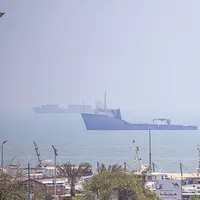
An Iranian navy flotilla returned to territorial waters after a 100-day mission that covered about 13,000 nautical miles, state media reported.
Flotilla 103, made up of the Makran forward base ship and the Bayandor-class corvette IRIS Naghdi of the regular navy, as well as the Shahid Mahdavi warship of the Revolutionary Guards navy, docked in the southeastern port area of Konarak, the report said.
The flotilla began its mission in early December to take part in the international “Exercise for Peace” drill in South Africa, according to state media.
Flotilla commander Captain Emad nejad Moridi said nine countries took part in the drill and that despite what he described as efforts to prevent Iran’s participation, the group maintained an “effective and strong presence” through active naval diplomacy.
He said the main goal was to raise Iran’s flag in international waters and deliver a message of peace and friendship.
Moridi added that Iran’s navy personnel would defend the country’s maritime interests and borders “to the last drop of blood.”
A senior Iranian cleric said on Friday that Iran will never accept a suspension of uranium enrichment, as indirect talks with the United States continue.
Ahmad Khatami, Tehran’s Friday prayer leader, referred to US President Donald Trump as the “contemporary Pharaoh” and said he seeks to impose his views by force, according to state media.
“But the Iranian nation will not bow to force. The Islamic Republic has never accepted suspension of enrichment and will not accept it. Raising the issue of suspending enrichment is impossible,” Khatami said.
He added that in the event of a conflict, “the result will be in favor of the side of truth,” and said Iranians would prefer “death with dignity” over “life with humiliation.”