As Donald Trump’s 10-to-15-day deadline for a “meaningful” deal with Iran enters its decisive phase, Iranian officials appear to be reframing diplomacy as a commercial opportunity rather than a strategic concession.
The Financial Times reported on February 26—as talks were underway in Geneva—that Tehran had offered access to major energy and mineral resources in an effort to steer Washington away from military escalation.
This is a shrewd pitch to the current White House. Trump has long favored foreign-policy outcomes he can present as concrete transactions, and Iran appears to be speaking directly to that instinct.
By holding out the prospect of access to one of the world’s largest underdeveloped energy systems, Tehran is trying to make de-escalation look like a win for American business rather than a concession to an adversary. It is hoping that profit would help create a future constituency for restraint in the United States.
In that sense, the proposal is about more than upstream contracts. It is an effort to reshape Washington’s political calculus.
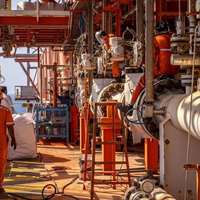
Iran can make such a pitch because the underlying resource base is genuinely exceptional.
According to the US Energy Information Administration, Iran holds the world’s third-largest proven crude oil reserves and the second-largest proven natural gas reserves. The agency’s most recent country brief notes that full sanctions relief could raise output significantly within months.
Most of Iran’s crude and condensate exports already go to China, underscoring both the scale of the prize and the distortions created by sanctions. Tehran is trying to turn geological weight into diplomatic leverage at a moment of vulnerability.
That is also why the offer should be treated with caution. A regime confident that time is on its side does not place strategic sectors in front of an American president who is openly threatening it.
Trump has warned that “bad things” will happen if no meaningful deal is reached within roughly two weeks. The third round of talks ended without agreement, and major gaps remain over the terms of any settlement. The offer is being made because the central dispute remains unresolved, not because it is close to resolution.
On February 25, the US Treasury sanctioned more than 30 individuals, entities, and vessels tied to Iran’s shadow fleet and networks supporting ballistic-missile and advanced weapons procurement.
That is not the legal environment in which American firms begin planning long-term upstream projects. Even if some restrictions were waived, companies would still face compliance risks, financing obstacles, insurance complications, and the danger that any opening could be reversed by the next administration.
For corporate boards, Iran is not simply a market with upside. It is a sanctions minefield. American firms may also remember how quickly Iranian openings can collapse.
During the JCPOA window, Boeing signed a $16.6 billion agreement to sell 80 aircraft to IranAir, widely seen as a symbol of potential commercial normalization. The reimposition of sanctions after Washington left the nuclear deal turned that optimism into a lesson in sovereign and political risk.
Nor is the Venezuela analogy reassuring. Exxon chief Darren Woods was reported to have called the country “uninvestable” without major legal reforms even after Washington encouraged US companies to return.
If Venezuela appears risky even with direct US political backing, Iran looks far more uncertain.
Iranian officials have said they did not offer to suspend enrichment and that the United States did not explicitly demand zero enrichment in earlier exchanges. Yet Washington’s broader position remains that any agreement must prevent Iran from moving toward a nuclear weapon.
Reuters reported on February 26 that the United States is still seeking strict caps on enrichment and stockpiles, while the Associated Press said Iran remains resistant to shipping enriched uranium abroad.
This is not a minor technical disagreement. No serious US company is likely to regard Iran as bankable while that gulf exists. Investors move when the political architecture is credible, not when it is still being contested in Geneva hotel rooms.
That is why Iran’s “commercial bonanza” matters as leverage but not yet as policy. It is a sophisticated attempt to buy time, flatter Trump’s instincts, and raise the perceived cost of escalation by dangling future profits before Washington.
It may help preserve diplomacy for another round and give the White House an off-ramp it can market as commercially rational rather than strategically soft. But it is not a breakthrough. Oil and mining rights alone cannot override sanctions law, congressional hostility, nuclear mistrust, or the coercive logic that still governs US policy toward Iran.
Tehran is offering treasure. The problem is that the minefield around it remains fully intact.