• العربية
  • فارسی
Brand
  • Iran Insight
  • Politics
  • Economy
  • Analysis
  • Special Report
  • Opinion
  • Podcast
  • Iran Insight
  • Politics
  • Economy
  • Analysis
  • Special Report
  • Opinion
  • Podcast
  • Theme
  • Language
    • العربية
    • فارسی
  • Iran Insight
  • Politics
  • Economy
  • Analysis
  • Special Report
  • Opinion
  • Podcast
All rights reserved for Volant Media UK Limited
volant media logo

Family receives body of protester missing 50 days with signs of violence

Feb 27, 2026, 22:29 GMT+0Updated: 00:57 GMT+0

The body of a protester who disappeared during the demonstrations in Tehran last month has been returned to his family nearly fifty days later, according to information collected by Iran International from relatives and witnesses.

The victim, Vahid Lazer Monouchehri, had gone missing since widespread protests on January 8,9.

His body was handed over to relatives on Thursday with marks of gunfire and blows from a butcher’s cleaver, the family said.

Continue reading

Most Viewed

Iran negotiators ordered to return after internal rift over Islamabad talks
1
EXCLUSIVE

Iran negotiators ordered to return after internal rift over Islamabad talks

2
EXCLUSIVE

Iran’s central bank warns economy may take 12 years to rebuild after war

3
INSIGHT

Iran's digital economy battered by prolonged blackout

4
ANALYSIS

US blockade enters murky phase as tankers spoof signals and buyers hesitate

5
ANALYSIS

Why the $100 billion Hormuz toll revenue is a myth

Banner
Banner

Spotlight

  • Hardliners push Hormuz ‘red line’ as US blockade tests Iran’s leverage
    INSIGHT

    Hardliners push Hormuz ‘red line’ as US blockade tests Iran’s leverage

  • Ideology may be fading in Iran, but not in Kashmir's ‘Mini Iran'
    INSIGHT

    Ideology may be fading in Iran, but not in Kashmir's ‘Mini Iran'

  • War damage amounts to $3,000 per Iranian, with blockade set to add to losses
    INSIGHT

    War damage amounts to $3,000 per Iranian, with blockade set to add to losses

  • Why the $100 billion Hormuz toll revenue is a myth
    ANALYSIS

    Why the $100 billion Hormuz toll revenue is a myth

  • US blockade targets Iran oil boom amid regional disruption
    ANALYSIS

    US blockade targets Iran oil boom amid regional disruption

  • Iran's digital economy battered by prolonged blackout
    INSIGHT

    Iran's digital economy battered by prolonged blackout

•
•
•

More Stories

Senator Risch praises Iran's wrongful detention designation

Feb 27, 2026, 22:04 GMT+0

Senator Jim Risch, Senate Foreign Relations Committee Chairman on Friday welcomed Secretary Rubio's designation of Iran as the first State Sponsor of Wrongful Detention, highlighting its deserved status.

"Iran is the first ever country to be designated a State Sponsor of Wrongful Detention — and no nation is more deserving of that grim title," Risch said. "Too many Americans have suffered at the hands of the regime, and I'm glad to see the Administration use the authorities given to them by my Countering Wrongful Detention Act."

We have a very big decision to make on Iran, Trump says

Feb 27, 2026, 22:04 GMT+0

President Trump speaking in Texas on Friday said the US faces a major decision on Iran amid ongoing nuclear talks, emphasizing the need for a "meaningful" deal rather than a weak one.

"We have a very big decision to make," Trump said. "We have a country that's in 47 years blowing people's legs off, arms off the face. They've been knocking out ships, killing people, lots of people, not only Americans, lots of people been terrible. 32,000 people killed over the last two, three months, protesters, 32,000."

"They want to make a deal, but make a deal that's meaningful. I spoke with Ted Cruz, John, all of them on the way here. I said, we got to make a deal that's meaningful," he added.

"We hit him real hard, as you know, with those beautiful B-2 bombers recently knocked out their nuclear capability, but I'd rather do it the peaceful way. But they're very difficult people. I want to tell you that they're very dangerous people, very difficult people," Trump said.

Trump wants deal but his patience is running thin

Feb 27, 2026, 22:03 GMT+0
•
Ahmad Samadi

A potential nuclear deal with Iran that leaves even symbolic uranium enrichment intact would be seen by US adversaries as a sign of retreat rather than a decisive strategic outcome.

Even at one percent, the capacity to enrich uranium would carry significant strategic implications, when viewed against the backdrop of a large US military deployment at a moment when Iran is in its weakest position for a long time.
Such an agreement could raise broader questions about American deterrence and regional influence. It risks projecting hesitation rather than strength.

At home, it might weaken President Trump’s leverage with Congress and embolden political rivals during the remainder of his presidency.

Regionally, it could unsettle Washington’s preferred strategic order and potentially give geopolitical competitors, including China, greater room to maneuver.
Rather than embodying the doctrine of “peace through strength,” it could resemble something closer to “peace through fear.”

The longer decisive action is delayed and deadlines pass without enforcement, the more the balance may shift in Tehran’s favor.

There is little reason to rely on the optimistic rhetoric of Iran’s foreign minister Abbas Araghchi. His tone and posture remain broadly consistent with the period before the twelve-day war.

The Omani foreign minister’s visit to Washington—coming just a day after talks that both he and his Iranian counterpart publicly described in positive terms—also deserves attention.
Muscat has long played a quiet mediating role between Tehran and Washington, and such diplomatic movements may signal that negotiations remain fluid despite public messaging on both sides.

Taken together, the signals pointing toward confrontation appear stronger than those pointing toward a durable agreement.

Family receives body of protester missing 50 days with signs of violence

Feb 27, 2026, 21:47 GMT+0

The body of a protester who disappeared during the demonstrations in Tehran last month has been returned to his family nearly fifty days later, according to information collected by Iran International from relatives and witnesses.

The victim, Vahid Lazer Monouchehri, had gone missing since widespread protests on January 8,9.

His body was handed over to relatives on Thursday with marks of gunfire and blows from a butcher’s cleaver, the family said.

Manouchehri was buried the following day under tight security in the village of Lazerban near Tonekabon, in Iran’s northern Mazandaran province.

Born on April 14, 1985, Monouchehri was a father of one and originally from Lazerban but had been living alone in Tehran. His family says they were unaware that he had taken part in the protests.

“There was no idea exactly when, where, or under what circumstances Vahid was killed,” the family said.

On Thursday, the Kahrizak forensic medical center contacted the family and asked them to travel to Tehran to collect their son’s body.

When they asked about the cause of death and why they were being contacted only after such a long delay, they say they were told: “There are many bodies here and we don’t know; just come and take the corpse.”

After arriving at Kahrizak, the family received the body along with a death certificate stating that the cause of death was “respiratory failure.”

Before handing it over, however, security officials required them to sign a written pledge not to present any account of his death other than the explanation given in the certificate.

The family then transported the body to his hometown. As it was being washed and prepared for burial, they say they discovered clear signs of severe violence: bullet wounds on his back, deep cuts to his side and a head riddled with shotgun pellets.

“It seems he was shot in the back, fell to the ground, and then officers shot him in the head at close range and hacked his body with a butcher’s cleaver,” a source close to the family said.

“The injuries make clear that the cause of death was not respiratory failure, but a state-ordered killing.”

The family also reported that the heart and kidney areas had been surgically opened and crudely stitched with large sutures. It remains unclear by whom or under what circumstances the procedure was carried out.
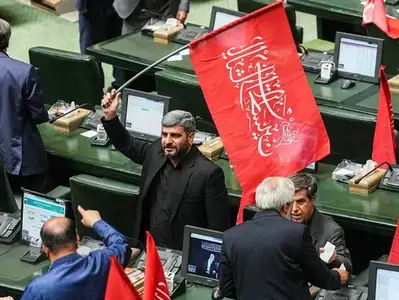

'That's too bad': Trump says Iran does not want to go far enough

Feb 27, 2026, 21:33 GMT+0

US President Donald Trump says Iran does not want to go far enough in negotiations, shortly after Oman's foreign minister said Tehran was ready to give up its uranium stockpiles and allow IAEA verification.

"They should make a deal, but they don’t want to quite go far enough, and it’s too bad," Trump told reporters in Texas.

"Look, we’ve been playing with them for 47 years, and that’s a long time. They’ve been blowing the legs off our people, blowing the face off our people, the arms. They’ve been knocking out ships one by one. And every month, there’s something else."

"You can’t put up with it too long. We’re not happy with the negotiation. They just don’t want to, they don’t want to say the key words 'we’re not going to have a nuclear weapon'. They have to say 'we’re not going to have a nuclear weapon' and they just can’t quite get there."

Trump said Iran wants "to enrich a little bit. You don’t have to enrich when you have that much oil. So, so I’m not happy with the negotiation. I say no enrichment, not 20%, 30%. They always want 20%, 30%. They want it for civilian, you know, for civil, civil. I think it’s uncivil. So I’m not happy with it."

"But they’re not getting to the right answer. And we’re not gonna see people... 47 years we’ve been doing this with them," he added.