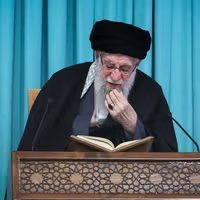
Ali Shamkhani, a veteran security figure and long-time adviser to Iran’s Supreme Leader, has returned to a central role in shaping Tehran’s military and diplomatic strategy after surviving an Israeli strike last year, Reuters reported in a profile.
Reuters said Shamkhani, 70, was confirmed as secretary of Iran’s newly established Defence Council following the 2025 12-day war, placing him back at the core of security decision-making as tensions with the United States rise.
A former commander in the Islamic Revolutionary Guard Corps and ex-head of the Supreme National Security Council, Shamkhani has played roles in nuclear negotiations and regional diplomacy. In January, he warned on X that any US military action would be treated as the start of war and would draw what he called an “all out” response.
Reuters also noted that Shamkhani has been sanctioned by the United States over alleged links to networks moving sanctioned oil, allegations he has not publicly addressed.
Turkey is reviewing possible actions should tensions between neighboring Iran and the United States escalate into conflict, a Turkish diplomatic source told Reuters.
The source said Ankara was assessing different scenarios to protect its citizens in the event of a “negative development,” but stressed that any move that would breach Iran’s sovereignty was not being considered.
Turkey, which borders Iran and is a member of NATO, has said it opposes military intervention and favors a diplomatic solution. The Turkish presidency’s office for countering disinformation earlier rejected reports that Ankara was preparing to enter Iranian territory to prevent a possible refugee influx.
Tehran’s political commentariat continues to issue warnings about social fragmentation, economic collapse and recurring unrest, despite little sign that such appeals are influencing decision-makers at the top.
Weeks after the January 2026 protests, Supreme Leader Ali Khamenei has shown no indication that he intends to open dialogue with a restless public or adjust course in response to mounting domestic criticism.
On Tuesday, February 24, prominent moderate figure Saeed Hajjarian—long regarded as a key strategist of Iran’s reform movement—warned that the political system “has lost the ability to predict and prevent the waves of protest that continue to emerge one after another.”
He added that since 2021, Iranian presidents have effectively functioned as “chief executives for Khamenei.”
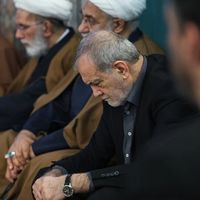
Former President Ebrahim Raisi described himself as the Supreme Leader’s “soldier,” while President Massoud Pezeshkian has repeatedly said he is in office to implement Khamenei’s policies.
According to Hajjarian, protest waves will persist “as long as the system remains incapable of tolerating reforms, even those emerging from within.” His remarks pointed to a deeper concern: not simply public anger, but institutional rigidity.
That rigidity, critics argue, extends beyond politics. Khamenei’s resistance to reform has long been evident, but more striking to some observers is the continued dismissal of economic warnings amid a worsening financial crisis.
Earlier in the week, the news website Fararu warned leaders about the growing fragmentation and polarization of Iranian society.
Rather than easing tensions, authorities deployed Basij forces to suppress student protests on university campuses, effectively placing groups of young Iranians in confrontation with one another.
Fararu cautioned that “polarization reduces the chances for dialogue and increases violence in society.” Without meaningful dialogue, it argued, opposing groups increasingly view one another as “enemies,” making disputes far more difficult to resolve.
Economic concerns have followed a similar pattern.
One of the latest warnings came from economist Hossein Raghfar. In an interview with Khabar Online, Raghfar argued that although the January protests had political dimensions, they were primarily driven by deepening economic hardship and government inefficiency.
Without naming Khamenei directly, he said: “The government is certainly responsible, but major decisions are made elsewhere,” referring to the Supreme Leader’s office. While acknowledging the government’s role, he added that “it is obvious that the entire responsibility does not rest with the government.”
Like many Iranian economists, Raghfar warned that removing subsidies on essential goods—and the unrest that followed—has left Iran weakened at a moment of heightened external pressure. Economic mismanagement, he argued, has pushed the country “to the brink of war” while fueling public dissent to unprecedented levels.
Despite earlier warnings going unheeded, Raghfar again urged authorities to avoid inflicting another shock on society by cutting subsidies on staples such as gasoline and bread to offset chronic budget deficits.
Taken together, the cautions from reformists and economists suggest a political system increasingly confronted with recurring unrest yet reluctant to recalibrate—even as social polarization deepens and economic strain intensifies.
New Zealand imposed further sanctions on Iran on Wednesday, placing travel bans on 40 Iranian officials and others accused of involvement in suppression of protests, Foreign Minister Winston Peters said.
The bans target Interior Minister Eskandar Momeni, Intelligence Minister Esmail Khatib and Prosecutor-General Mohammad Movahedi-Azad, as well as members of the Islamic Revolutionary Guard Corps among others.
“It has been horrifying to witness the brutal killing of thousands of protestors in Iran,” Peters said, adding that Iranians’ rights to peaceful protest and freedom of expression had been “ruthlessly violated.”
Peters said the measures align Wellington with Australia, Britain, the European Union, Canada and the United States.
A stuffed rat hung by protesting students at Tehran’s Sharif University and removed by a Basij-affiliated student signaled that supporters of Supreme Leader Ali Khamenei have effectively acknowledged and amplified a mocking nickname that chips away at his authority.
Students at several Iranian universities held a third consecutive day of protests on Monday, chanting against Ali Khamenei. At Amir Kabir, Tehran and Alzahra universities, students set fire to the flag of the Islamic Republic. At some of these universities, including Tehran University, Basij forces attacked students.
The image – a Basij-aligned student climbing up to pull down a stuffed animal – spread quickly online. More than a campus scuffle, it suggested a phrase that began on social media is now being contested in the physical arena of protest and counter-mobilization.
From meme to material symbol
The nickname Rat-Ali gained traction during the June war with Israel, when Khamenei largely disappeared from public view and state media aired only prerecorded video messages. Reports that he had taken shelter in fortified underground facilities during military escalation and later unrest fueled the metaphor.
In Persian, “moush” connotes hiding and evasion. By pairing it with the Supreme Leader’s name, critics flip the state’s image of firm leadership.
On Monday, that inversion took tangible form. The rat was not only an online meme but an object displayed and physically removed.
Political satire often loses force when ignored. Authority can neutralize insult through indifference. The decision by a Basiji student to climb the tree and take down the toy had the opposite effect: it signaled that the symbol was perceived as threatening enough to confront.
Precedent in protest language
Iran’s protest culture has repeatedly transformed ridicule into durable shorthand. After the 2020 US drone strike that killed IRGC Quds Force commander Qasem Soleimani, some Iranians referred to him as “cutlet,” a darkly comic reference to the condition of his remains. The term proved difficult to suppress despite official efforts to preserve Soleimani’s image as a national icon.
However, Moush-Ali carries sharper political implications because it targets the apex of the system. Khamenei’s authority rests not only on constitutional powers but also on cultivated distance – a blend of religious stature and institutional control.
Mockery compresses that distance. A rat hanging from a tree reduces a figure positioned as untouchable into a repeatable visual punchline.
Authoritarian systems rely in part on aura – an impression of inevitability and psychological dominance. When that aura becomes vulnerable to parody, the cost of reaction rises. Suppression can amplify visibility; indifference can appear weak.
The scene at Sharif involved a toy, a tree and a handful of students. Yet the rapid spread of the image suggested a broader recalibration of political language.