A group of students and graduates from Iranian art universities announced the formation of what they called the “National Lion and Sun Art Association of Iran,” expressing support for exiled prince Reza Pahlavi.
In a joint statement, the signatories said they sought a return to Iran’s pre-1979 cultural prominence through a peaceful transition and a free referendum.
The statement praised the flourishing of the arts during the Pahlavi era, citing institutions such as the Shiraz Arts Festival and the Tehran Museum of Contemporary Art, and said Iranian art had faced “silence, destruction and censorship” after the 1979 Islamic Revolution.
The signatories included students and alumni from art universities in Tehran, Isfahan, Tabriz and Shiraz, among others.
The United States and Israel have a historic opportunity to bring about the collapse of Iran’s current government rather than extend its life through negotiations, retired General Jack Keane told Fox News on Monday.
“In my judgment, we should do nothing to extend the life of this regime when we have an historic opportunity right now, given it's so weak and fragile, to set the conditions for a regime collapse. We have never been in this position in 46 years,” said the former vice chief of staff of the US Army and senior strategic analyst.
Iran has lied to the United States for decades and negotiating with Tehran only “throws them a lifeline,” he argued, adding that Tehran’s government is weak and fragile, making now the right moment to set conditions for its collapse.
He said that if Tehran-Washington negotiations failed to produce a substantive deal, Iran should be added to a comprehensive list of targets in a possible military operation, which he believes is likely.
Keane suggested that should Iran’s government fall and be replaced with one more aligned with US interests — citing Venezuela as a model — the region could see enduring peace and stability.
He acknowledged Iran retains some capacity for retaliation and said the United States is positioning resources in the region to protect its bases and Israel.

A 16-year-old Iranian schoolgirl was arrested at her home in Karaj last month and could face the death penalty, a source close to her family told Iran International, as concerns mount over the treatment of minors detained in connection with unrest.
Diana Taherabadi was detained on January 25 after five officers in police uniforms entered the family’s home at around 8 a.m., the source said. One of the officers was described as holding a senior rank.
Upon entering, officers confiscated the mobile phones of family members to prevent contact with others, the source said. Taherabadi was asleep at the time and was awakened by officers who told her to get up before arresting her.
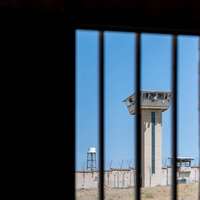
She was handcuffed, taken to a van and transferred to Kachoui prison (Fardis Prison), the source added.
Taherabadi has since been taken to a court in Karaj and informed she could face a death sentence, but authorities have not provided further details to the family, including the identity of the presiding judge, the source said.
According to the source, the teenager has been referred to the state forensic medical organization for an assessment of her “mental competence,” a procedure sometimes carried out in capital cases involving minors.

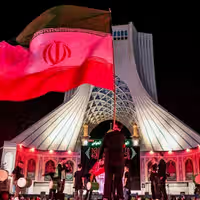
Iran’s government warned on Tuesday that burning or insulting the national flag during student protests would not be tolerated, even as it said students have the right to demonstrate.
The comments came after videos circulated on social media showing protesters burning or trampling the flag of the Islamic Republic at university rallies.
Government spokesperson Fatemeh Mohajerani told a news conference that students have a “right to protest,” but added that crossing red lines, including actions involving “sanctities and the flag,” is “not acceptable.”
“We must show that, contrary to what the enemy says, life in Iran is not disrupted and continues,” she said.

Sharif University of Technology said a cyber attack briefly restored its website to the name “Aryamehr,” the title the institution held before the 1979 revolution.
Established in 1966 under Mohammad Reza Shah Pahlavi as Aryamehr University of Technology, the university later changed its name to Sharif University of Technology. Images shared online showed the old name and logo displayed on the homepage late on Monday before the site went offline.
The university’s public relations office said technical teams worked to resolve the issue, and the website was later restored. Some students said protest messages were sent through the university’s online system and that a group of students took responsibility.
An Iranian transit workers’ group called for unity among different factions against the government’s “crackdown and massacre” in a statement on Tuesday.
The Syndicate of Workers of Tehran and Suburbs Bus Company said protecting the lives and livelihoods of workers and their families must be the top priority in the current situation.
It said any major social or political change should begin with defending freedom, equality, living standards, human dignity and workers’ right to independent organization.
The syndicate urged labor, student and women’s organizations to take clear positions and coordinate together so that decades of social struggle are not undermined or exploited.