Iran says oil cooperation with US possible as nuclear talks continue


Iran’s oil minister said on Friday cooperation with the United States in the oil and gas sector is possible as the two countries continue nuclear negotiations.
“Everything is possible,” Oil Minister Mohsen Paknejad said, according to state media, when asked about potential energy cooperation between Tehran and Washington.
Hamid Qanbari, deputy foreign minister for economic diplomacy, said this week that mutual interests in oil and gas, shared fields, mining investment and even aircraft purchases had been included in talks with the United States.





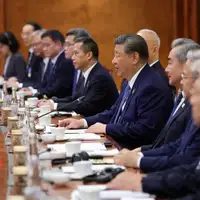
US President Donald Trump on Thursday warned Iran it must reach a meaningful nuclear agreement with the United States within two weeks or face consequences, as reports indicate Washington is considering limited strikes to force a deal.
Speaking at the inaugural meeting of his Board of Peace initiative in Washington, Trump hinted at a narrow timeframe for progress and reiterated US demands on Tehran’s nuclear program.
“It’s proven to be, over the years, not easy to make a meaningful deal with Iran. We have to make a meaningful deal; otherwise, bad things happen,” Trump said. “And you’re going to be finding out over the next probably 10 days.”
He added that Iran “cannot have a nuclear weapon” and must halt actions Washington views as threatening to regional stability, suggesting that military measures could follow if diplomacy fails.
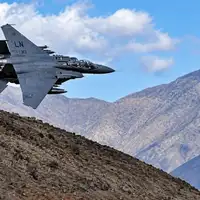
The Wall Street Journal reported that Trump is weighing an initial, limited strike on Iran as leverage to compel Tehran to accept US conditions in nuclear talks.
The report said Trump is reviewing targeted military options that could be executed within days if Iran refuses to halt enrichment activity, with the aim of strengthening US negotiating leverage without immediately triggering a broader conflict.
Also on Thursday, US Ambassador to the United Nations Michael Waltz doubled down on Washington’s pressure campaign in media appearances, accusing Tehran of stalling negotiations and saying that economic sanctions have strained the Iranian leadership.
“Even in the face of world condemnation over the killing of somewhere between 18,000 and 40,000 of their own people — an industrial-sized massacre,” Waltz said in an interview with Fox News.
Waltz said sustained pressure would continue even as diplomatic engagement moves forward.
'Obvious gap remains'
The head of the UN nuclear watchdog, IAEA Director General Rafael Grossi, said on Thursday that an “obvious” gap remains between the United States and Iran over uranium enrichment after attending talks in Geneva on Tuesday.
“It is clear that there is, there is this gap which is, which is obvious, between the position of the United States, which is demanding… no enrichment at all, and what Iran would like to continue to be doing,” Grossi told CNN. He added that while the agency has been allowed back into Iran, inspectors have not been granted access to the nuclear sites targeted in US-Israeli airstrikes in June.
Grossi said he believes the 400 kg of enriched uranium remains “where it was” before the bombings and has not been moved.
US Senator John Fetterman said Thursday that Tehran should be confronted with military force over its nuclear program, adding that the Islamic Republic can only be dealt with through “strength and power.”
“I think I clearly… how could you allow Iran to acquire a nuclear bomb?” Fetterman said in an interview on Fox News. “Now we’ve demonstrated that the only thing Iran ever responds to is strength and power… you can’t negotiate with cancer. You have to attack it and go right at it with superior force.”
Fetterman, who was the only Democrat last year to publicly advocate for stronger action, questioned why the US has not struck Iran’s stockpiles of near weapons-grade uranium. “If they have 900 pounds of near weapons-grade uranium, why wouldn’t you strike that? Why wouldn’t you hold them accountable that way?” he said.
Iran’s Revolutionary Guards intelligence chief has confirmed he is driving efforts to tighten restrictions on social media, linking the initiative directly to the country’s security apparatus and the expansion of the so-called “national internet.”
Majid Khademi, head of intelligence for the Islamic Revolutionary Guard Corps (IRGC), said in an interview published on February 19 that a total ban on foreign social media platforms is intended to “prevent enemy plots and immunize Iranians against them.”
He also revealed that Supreme Leader Ali Khamenei had tasked him with overseeing the expansion of Iran’s domestic intranet, often referred to as the “national internet,” and stressed the importance of what he described as “proper governance of the Internet.”
“Sianat”—meaning protection—is the term Iranian officials use to describe legislation aimed at restricting social media under the stated goal of shielding citizens from perceived dangers.
The original proposal, often referred to as Sianat-1, was approved by parliament in March 2022 but implementation was halted shortly afterward amid concerns among senior officials that sweeping restrictions could provoke public backlash.
Since then, the bill has remained under discussion among parliament, the Guardian Council and the Supreme National Security Council.
Targeting platforms
Despite the absence of a comprehensive ban, access to major platforms remains restricted, with most users relying on virtual private networks (VPNs). Recent media reports suggest that WhatsApp, which had previously been accessible, has faced renewed restrictions, while authorities continue expanding policies granting limited access to selected users.
In recent weeks, Iranian media outlets have reported renewed efforts to advance what has been informally described as “Sianat-2,” a broader initiative aimed at strengthening state oversight of online activity and expanding domestic internet infrastructure.
Leaked information cited by Iranian media suggests audiovisual content on platforms such as Instagram, YouTube and Telegram could face tighter regulation, potentially placing greater authority in the hands of state institutions including the Islamic Republic of Iran Broadcasting (IRIB), which holds a legal monopoly over broadcasting.
‘Urban terrorism’
Authorities imposed a near-total internet blackout during the widespread protests of January 8 and 9, cutting off access to global platforms and isolating much of the country digitally.
The shutdown coincided with a violent crackdown in which human rights organizations and independent media reported large numbers of protesters killed, injured and detained.
Khademi framed such measures as necessary to counter foreign threats. He accused outside actors of attempting to spread instability, encourage “urban terrorism,” and undermine public trust in the government, though he did not provide evidence.
“These platforms are used to organize and guide hostile activities,” he said, adding that Khamenei had instructed him: “Do not forget the proper governance of the Internet.”
The blackout in January highlighted the central role of internet controls in Iran’s response to political unrest—a strategy that officials have increasingly framed as a matter of national security.
Khademi’s confirmation of the IRGC’s leadership role underscores the extent to which internet governance has become integrated into Iran’s broader security strategy.
The United States on Thursday signaled that it will maintain maximum pressure on Iran until Tehran meets US demands on its nuclear program, ballistic missiles, and support for armed groups in the region.
Tommy Pigott, a State Department spokesman, said the administration’s approach is designed to cut off revenue Tehran uses to fund “malign activities.”
“The message from this President has been very clear from the beginning of this administration, even before,” Piggott said. “We have a maximum pressure policy on the Iranian regime to deny them the revenue they need to fund their malign activities, including their nuclear weapons program, including their ballistic missile program, including the funding of terrorist proxies across the region."
“This President has been very clear about what he wants to see. He’s also been very clear he wants to see a deal. He’s a peacemaker. He’s a deal maker. That’s what he wants to see. But no one can doubt, based on the last time that the Iranian regime refused the deal, that the President means what he says — Operation Midnight Hammer proved that," he added.
Iran sent a formal letter to the United Nations on Thursday, condemning threats from the United States under President Donald Trump and warning of potential retaliation against American assets.
"The United States would bear full and direct responsibility for any unpredictable and uncontrolled consequences," the letter said.