A senior official in the political arm of Supreme Leader Ali Khamenei’s office said on Tuesday that a US strike on Iran could spiral into a broader regional conflict.
“Perhaps the enemy thinks it can launch a limited and controlled war, but this war could turn into an unlimited, destructive and regional war,” said Rasul Sanaeirad, the deputy for political affairs in Khamenei’s ideological-political office.
Citing what he called “the enemy’s record of bad faith and deception,” he said Iran was conducting negotiations with Washington while maintaining full preparedness for war.
Iran is prepared for a possible attack and has no trust in the United States or in negotiations with it, an Iranian lawmaker said on Tuesday.
“We are fully ready for a possible attack, because we have no trust at all in the United States and negotiations with them,” Mohammadreza Mohseni Sani, a member of parliament’s national security and foreign policy committee said.
He added that the agenda of the negotiations with the US had been limited to the nuclear issue and no other topics had been discussed.
Israeli Prime Minister Benjamin Netanyahu said on Tuesday that negotiations between Iran and the United States would be the top priority during his visit to Washington.
Speaking before his departure, Netanyahu said he planned to present President Donald Trump with essential principles for negotiations with Iran.
“On this trip, we will discuss a range of issues: Gaza, the region, but of course, first and foremost, negotiations with Iran,” Netanyahu said.

The Islamic Revolutionary Guards Corps’ intelligence organization and Iran’s Intelligence Ministry pressured families of some detainees linked to nationwide protests to attend a pro-state rally marking the anniversary of the 1979 revolution, sources told Iran International.
Security officials informed the families their presence at the February 11 pro-state march must be “verifiable,” including by taking photos and videos of themselves at the rally and sending the material to security bodies, informed sources said.
The officials, according to the sources, coupled the demand with threats and sustained psychological pressure, telling families that only if they comply might their detained relatives be released, spared execution, or see their sentences reduced.
The pressure coincided with a message delivered on Monday by Ali Khamenei, who in a short recorded video urged Iranians to demonstrate loyalty to the Islamic Republic and emphasized the need to stand firm against opponents of the system.
Pressure amid widening crackdown
The reported coercion comes as Iran International has previously documented an intensifying crackdown following nationwide protests, including mass arrests and a rise in reported deaths in custody. Observers have warned the pattern may point to a broader phase aimed at consolidating control and removing evidence linked to the violent suppression of dissent.
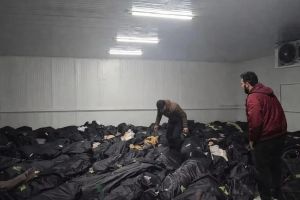
According to a statement by Iran International’s editorial board, at least 36,500 protesters have been killed during the unrest. Many viewers of the outlet have also reported widespread arrests, critical conditions for detainees, and, in numerous cases, families being left without information about the whereabouts or treatment of their relatives.
Statements attributed to detainees’ families
Separately, websites affiliated with the Islamic Revolutionary Guards Corps published a text on Monday attributed to Mohammad Ali Saeedi-Nia, an entrepreneur and founder of the Saeedi-Nia Real Estate and Industries Group, alleging that he would take part in the February 11 pro-state rally.
Sources told Iran International that the publication was part of the same pressure campaign and aimed at extracting forced declarations of loyalty from families of detainees, using pro-government media to signal compliance.
Sadegh Saeedi-Nia, the son of Mohammad Ali Saeedi-Nia and chief executive of the family business, was arrested following the protests and subsequent killings and remains in prison.
Meanwhile, reports indicate a new wave of government-ordered closures of cafés and restaurants in Tehran, accompanied by the suspension of their social media accounts. Officials have not announced the reasons for the closures, which follow similar actions in recent months and appear to have intensified after the mass killings of protesters in January.

Iran’s Foreign Minister Abbas Araghchi said on Tuesday that Tehran would pursue its diplomatic track with the US without trusting the other side while relying on armed forces.
“We will go down this path with eyes open, considering all past experiences, without trust in the other side, and with confidence in the armed forces,” Araghchi said during a meeting with army commanders.
Major General Amir Hatami, commander-in-chief of Iran's army also warned in the meeting that Iran’s adversaries would face an unprecedented response if they miscalculated.
“If the enemies make a mistake, they will certainly receive a response they have neither seen nor experienced until today,” Hatami said.

The possibility of additional military action against Iran is expected to be discussed when President Donald Trump meets Israeli Prime Minister Benjamin Netanyahu in Washington, the Associated Press reported.
Netanyahu is is expected to press Trump during his visit to expand the scope of ongoing high-stakes nuclear talks with Iran, the report said.