200 school students killed in Iran protest crackdown, teachers union says


An Iranian teachers’ union said it had documented the deaths of 200 school students during a crackdown on protesters in Iran and published a list of their names.
“The society must know that as long as the death of a child has no cost, no political order is legitimate,” said the Coordination Council of Iranian Teachers’ Trade Associations, a national umbrella union linking teachers’ trade associations across multiple provinces.
The council said the 200 names were meant as a constant reminder of “a simple and horrifying reality: a system that kills the future,” calling for accountability.
Iranian authorities have not released an official list of minors killed during protest crackdowns.

Israeli Prime Minister Benjamin Netanyahu is expected to meet US President Donald Trump on Wednesday in Washington to discuss negotiations with Iran, Netanyahu’s office said on Saturday.
“The Prime Minister believes any negotiations must include limitations on ballistic missiles and a halting of the support for the Iranian axis,” Netanyahu's office said.
The visit, which was previously supposed to be held on February 18 but was brought forward, would be Netanyahu’s seventh meeting with the US president since Trump returned to office in January last year.
Head of Iran’s Strategic Council on Foreign Relations said on Sunday that the United States had been hostile toward Iran from day one and that Tehran must respond in kind.
Senior diplomat Kamal Kharrazi said Iran should deal severely with adversaries he said seek to attack the country and undermine its independence.
“America has been hostile to us from the first day, and we must respond proportionately,” he said.
“With enemies who want to violate our country and disrupt our independence, one must deal severely, and this is not about extremism or non-extremism.”
Iran’s Foreign Minister Abbas Araghchi said that if Washington attacks Iran, Tehran would not be able to strike US territory but would target American military bases in the region.
“If Washington attacks us, there is no possibility of attacking US soil, but we will attack their bases in the region,” Araghchi said.
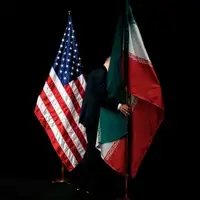
Araghchi said Iran’s nuclear file could only be resolved through negotiations and that the recent talks with Washington were held indirectly and focused solely on the nuclear issue.
He said the United States returned to negotiations after pressuring Iran with threats of military strikes, adding that Iran considers enrichment its inalienable right and that zero enrichment was outside the framework of talks.
Araghchi said Iran’s level of uranium enrichment depends on its needs and that enriched uranium would not be transferred out of the country.
He also ruled out negotiations over Iran’s missile program “now or in the future,” and said the path of talks must be free of threats or pressure.
Araghchi said no date had yet been set for a second round of negotiations, adding that while the talks were indirect, there was an opportunity for a brief handshake with the US delegation.
Iranian President Masoud Pezeshkian said on Sunday that talks between Iran and the United States marked a step forward.
“Dialogue has always been our strategy for a peaceful resolution,” he wrote on X. “The Iran-US talks that were held with the follow-up of friendly governments in the region were a step forward,” he said.
Pezeshkian said dialogue remained Tehran’s approach to achieving a peaceful settlement of disputes.
Middle East analyst Elizabeth Tsurkov says people close to President Trump believe he is likely to strike Iran, arguing the Islamic Republic’s failure against Israel revealed a “paper tiger” abroad — even as it remains ruthlessly lethal toward its own citizens.
Speaking to Iran International in Washington, Tsurkov, a senior non-resident fellow at the New Lines Institute, said the recent US military buildup in the region is the largest since the 2003 invasion of Iraq and has raised expectations that force may ultimately be used.
“People who know the president personally have told me they believe he will attack,” she said, adding that talks are unlikely to succeed because “the maximum that the Iranian regime is willing to offer is less than what the US is willing to accept.”