Middle East analyst Elizabeth Tsurkov says people close to President Trump believe he is likely to strike Iran, arguing the Islamic Republic’s failure against Israel revealed a “paper tiger” abroad — even as it remains ruthlessly lethal toward its own citizens.
Speaking to Iran International in Washington, Tsurkov, a senior non-resident fellow at the New Lines Institute, said the recent US military buildup in the region is the largest since the 2003 invasion of Iraq and has raised expectations that force may ultimately be used.
“People who know the president personally have told me they believe he will attack,” she said, adding that talks are unlikely to succeed because “the maximum that the Iranian regime is willing to offer is less than what the US is willing to accept.”

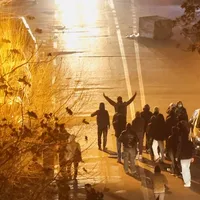
Human rights activists are sounding the alarm over reports of secret and extrajudicial executions in Iran, warning that the authorities may be moving toward retaliating against detainees after the deadly crackdown on protests in January.
Domestic accounts—fragmentary and difficult to verify under heavy censorship—suggest that killings may be continuing beyond those reported during the nationwide unrest of January 8 and 9, when security forces opened fire on demonstrators in cities across the country.
One case frequently cited by rights activists involves Mohammad-Amin Aghilizadeh, a teenager detained in Fooladshahr in central Iran.
According to activists who followed the case, judicial authorities initially demanded bail for his release. Days later, his family was instead given his body, bearing signs of a gunshot wound to the head.
In another case, Javad Molaverdi was wounded by pellet fire during protests in Karaj, detained by security forces, and transferred to Ghezel Hesar Prison. His family later discovered his body in a cemetery, rights activists said.
Such cases have prompted warnings from international monitors. The United Nations special rapporteur on Iran, Mai Sato, has said she is closely following reports suggesting that executions and deaths in custody may be used to instill fear.
‘Doesn’t add up’
One of the most striking accounts received recently by Iran International comes from a journalist inside the country who described a conversation with a ritual washer working at a cemetery in Tehran province.
The journalist met the worker on January 27 and described him as visibly shaken, despite years of professional exposure to death. The washer told the journalist that the official reports “didn’t add up” for some bodies delivered to the cemetery.
“They bring a body that was clearly killed less than two days ago,” the worker said, “but say it has been in storage for 15 days because it was unidentified.”
“We have seen every kind of body for years—traffic accidents, heart attacks,” the worker added. “We can tell the difference. We know.”
Professionals working in forensic medicine and cemetery washing facilities often develop, over time, the ability to estimate time of death based on physical signs, even without laboratory tools.
Worrying precedents
The significance of the testimony lies not only in its emotional impact but in what it suggests about discrepancies between official explanations and physical evidence.
Such accounts cannot, on their own, establish a nationwide pattern. But taken together with reported cases of deaths in custody, they have intensified fears among activists that the authorities may be sending a broader message to protesters: that survival is no longer assured once dissent reaches detention centers.
Those fears are shaped in part by historical precedent.
Documented cases of extrajudicial killings in Iranian prisons—most notably in the early years after the 1979 revolution and during the 1988 mass executions—have heightened sensitivity to any signs that repression may again be moving out of public view.
The evidence gathered so far remains incomplete and uneven. But rights activists say it is sufficient to raise serious concern that deaths in custody and quiet executions may be occurring after protests have been suppressed.

Tehran’s frequently invoked threat of closing the Strait of Hormuz may be far easier to signal than to carry out, not least because it would harm allied China more than the hostile West.
For now, the threat is muted as Iran and the United States have returned to the negotiating table. But the shadow of war has not lifted.
Hardline and influential voices in both capitals continue to push a confrontational line, and the presence of the US aircraft carrier Abraham Lincoln near Iranian waters is a reminder of how quickly tensions could escalate.
Earlier this week, units from the Islamic Revolutionary Guard Corps approached and boarded a commercial vessel flying a US flag in the strait, while a US F-35 fighter jet shot down an Iranian drone that had approached the carrier strike group.
On the same day, amid a diplomatic scramble across the region to keep talks alive, hardline lawmakers in Tehran publicly revived calls to close the strait.
Yet the economic constraints on any serious disruption are severe.
The China factor
According to data from commodities intelligence provider Kpler seen by Iran International, nearly 95 percent of Iran’s crude oil exports in 2025 were loaded at Kharg Island and shipped through the Strait of Hormuz, primarily to China.
Estimates from the US Energy Information Administration show that roughly 20 million barrels per day of crude oil and petroleum products—about one-fifth of global consumption—pass through the strait each day.
Only about 6 percent of that volume is destined for Europe and the United States. Asian buyers dominate, absorbing 84 percent of oil and petroleum products transiting Hormuz, as well as more than 80 percent of liquefied natural gas shipments.
China alone imports around 5 million barrels of oil per day via the route. Any sustained disruption would therefore strike directly at Beijing’s energy security.
That vulnerability has grown in recent months as Venezuelan oil exports to China have effectively halted following stepped-up US enforcement. Venezuela exported about 850,000 barrels per day in January—volumes sufficient to replace most of the oil consumed in Europe and the United States that transits Hormuz.
Reuters reported that the United States last month reclaimed its position as the largest individual destination for Venezuelan crude, receiving about 284,000 barrels per day.
China, by contrast, has stepped back. PetroChina recently halted purchases of Venezuelan crude, signaling that Beijing no longer expects access to discounted supplies once available under sanctions-era arrangements.
A narrowing margin
With sanctions also complicating imports from Russia and Iran, China’s reliance on Persian Gulf oil—and on uninterrupted traffic through Hormuz—is set to deepen further.
From a Western perspective, these shifts have quietly altered the risk calculus. While any disruption in Hormuz would still push global oil prices higher, Europe and the United States are now better positioned than in the past to absorb short-term shocks. China is not.
For Iran, the costs would be higher still. Roughly 80 percent of its foreign trade, oil and non-oil alike, moves through ports along the Persian Gulf. Closing Hormuz would not only jeopardize China’s energy supplies but effectively paralyze Iran’s own external commerce.
There is also a broader cushion in the system. The International Energy Agency estimates that global spare production capacity will remain near 4 million barrels per day through 2026, helping to limit the impact of any temporary disruption.
All of this helps explain why Iran’s recurring threats to close the Strait of Hormuz—raised repeatedly over more than two decades—have never been carried out.

Iran’s leadership is edging toward a war scenario not because diplomacy is necessarily collapsing, but because confrontation is increasingly seen as the least damaging option for a ruling system under intense internal and external pressure.
While Iran’s foreign minister is right now visiting Oman for bilateral talks with the United States, in Tehran’s calculus, negotiations now promise steady erosion. War, by contrast, offers a chance – however risky – to reset the balance.
This marks a shift from the Islamic Republic’s long-standing view of war as an existential threat. Today, senior decision-makers appear to believe that controlled confrontation may preserve the system in ways diplomacy no longer can.
That belief explains why war is no longer unthinkable in Tehran, but increasingly framed as a viable instrument of rule.
At the core of this shift lies a stark assessment: the negotiating table has become a losing field.
This is not because an agreement with Washington is impossible. It is because the framework imposed by the United States and its allies has turned diplomacy into a process of cumulative concession.
When nuclear limits, missile restrictions, regional influence, and even domestic conduct are treated as interlinked files, Iranian leaders see talks not as pressure relief, but as strategic retreat without credible guarantees of survival.
From Tehran’s perspective, diplomacy no longer buys time. It entrenches vulnerability.
In that context, confrontation begins to look less like recklessness and more like a way out of a narrowing corridor.
War as a domestic instrument of control
Why war? Because war is the one scenario in which the Islamic Republic believes it does not necessarily lose.
Domestically, the regime faces its most severe legitimacy crisis in decades.
Widespread repression, the killing of protesters, economic collapse, and a society increasingly resistant to fear-based governance have eroded the state’s traditional tools of control.
Under these conditions, war serves a powerful political function. It rewrites the rules of governance.
In wartime, dissent can be reframed as collaboration with the enemy. Protest becomes sabotage. Opposition becomes a national security threat.
Emergency logic compresses public space and legitimizes measures that would provoke backlash in peacetime.
For the Islamic Republic, war is not primarily imagined as a catastrophe imposed from outside. It is a mechanism that restores hierarchy, discipline, and fear at home.
This logic is not unique to Iran, but it has taken on renewed urgency as the Islamic Republic confronts a society it can no longer reliably intimidate into submission.
Externally, Tehran’s calculations rest on another assumption – that the United States wants to avoid a prolonged war.
The experiences of Afghanistan and Iraq, combined with Washington’s cautious posture toward the war in Ukraine, have reinforced the belief that the US lacks the political appetite for a long, grinding conflict.
From Tehran’s vantage point, even a military strike would likely be limited.
Airstrikes, cyber operations, or narrowly defined attacks are forms of pressure the Islamic Republic believes it can absorb.
This feeds into a core element of Iran’s survival doctrine: without foreign ground forces, the system is not collapsible.
Military action that stops short of sustained ground involvement is therefore seen as manageable.
More than that, Iranian leaders believe escalation can be shaped by exporting costs across the region.
By threatening US allies and regional partners, Tehran calculates that a drawn-out confrontation would quickly become politically and economically unattractive for Washington.
In this reading, a limited war could push human rights concerns off the global agenda, expose divisions among Western allies, unsettle energy markets, and ultimately force a return to narrower negotiations.
This strategy, however, rests on a dangerous assumption: control.
Wars that begin with expectations of containment rarely remain contained.
In a volatile and heavily armed region, escalation chains are hard to manage, and actions Tehran defines as deterrence may be read in Washington as crossing red lines.
Still, the trajectory is clear.
The Islamic Republic has concluded that it loses at the negotiating table, but may endure – or even regain leverage – in sustained tension.
That belief explains why war is no longer treated as a last resort, but increasingly as a calculated, if perilous, component of its survival strategy.


The reappearance of diplomacy between Washington and Tehran is being shadowed by limited but dangerous military showdowns, revealing how narrow the space for negotiation has become in the absence of trust.
As talks expected later this week faltered over venue and format,tensions in the Persian Gulf continued to rise.
On Tuesday, US forces shot down an Iranian Shahed-139 drone approaching a US aircraft carrier in the Arabian Sea, while armed Iranian boats attempted to stop a US-flagged oil tanker in the Strait of Hormuz.
White House spokeswoman Karoline Leavitt said hours later that talks between US envoy Steve Witkoff and Iran’s foreign minister Abbas Araghchi were “still scheduled” despite the escalatory events. “For diplomacy to work, of course, it takes two to tango,” she added, warning that a military option remained on the table.
Together, these developments capture the defining contradiction of the moment: diplomacy is being pursued, but the conditions that might allow it to succeed remain elusive.
Familiar pattern
Iran’s leadership enters this phase struggling with military setbacks, economic collapse and mass protest that have narrowed its strategic options. The Islamic Republic’s capacity to absorb pressure—long central to its survival—has markedly diminished.
It is against this backdrop that diplomacy has resurfaced, haltingly. The pattern is familiar: engagement paired with coercive signalling, compromise floated even as escalation continues.
The analytical question, then, is not whether a negotiated outcome is possible. It is whether any agreement reached under such conditions can resolve the underlying conflict without accelerating regime destabilisation.
Washington’s publicly articulated demands extend well beyond nuclear fuel cycles. They include eliminating domestic enrichment, constraining Iran’s ballistic missile programme, and ending support for armed groups across the region.
Tehran’s dilemma
Taken together, these demands strike at the institutional and ideological foundations of the Islamic Republic, while implicitly challenging its reliance on internal repression to maintain control.
Compliance would generate a strategic paradox. Nuclear rollback would weaken deterrence; missile constraints would erode Iran’s asymmetric posture; proxy disengagement would dismantle its regional influence architecture; and ideological retreat would hollow out the revolutionary legitimacy that sustains clerical authority.
No historical precedent suggests the Islamic Republic can survive such cumulative disarmament intact. The more fully Tehran complies, the less viable the regime becomes.
The protests of late 2025 and early 2026—unfolding as the rial fell to historic lows—rapidly evolved into demonstrations rejecting clerical rule and calling for systemic change.
Wary neighbours
Regional reactions, particularly among Persian Gulf states, remain ambivalent. Some governments privately fear that an Iranian transition could introduce instability or renewed competition.
Yet history suggests a more complex picture. During the 1970s, within the Cold War security framework of the period, Iran functioned as a stabilising pillar of regional order rather than a source of disruption—an approach sharply at odds with the Islamic Republic’s subsequent reliance on proxy warfare.
For the United States, the strategic dilemma is increasingly constrained. Sustaining a large forward military posture—carrier strike groups, advanced air assets, missile defence systems, and logistics—carries steep financial and opportunity costs.
Conservative estimates place the monthly expense well above one billion dollars, at a time when Washington faces mounting pressures in East Asia, renewed instability in the Western Hemisphere, and competing domestic priorities.
Interactable problem?
These constraints are sharpened by signals from the White House, where. President Donald Trump has repeatedly asserted that the United States would come to the aid of Iranian demonstrators if violent repression continued.
Such statements are not cost-free. Repeated often, they risk transforming intervention from a contingency into an expectation, narrowing Washington’s room for manoeuvre should events move faster than policy can adapt.
A negotiated settlement that leaves Iran’s coercive capabilities partially intact risks repeating earlier cycles of temporary de-escalation followed by strategic relapse. Yet comprehensive Iranian compliance would likely accelerate regime fragmentation by stripping away the pillars that sustain clerical authority. Indefinite military pressure, meanwhile, is fiscally and strategically unsustainable.
President Trump therefore confronts not a binary choice, but a narrowing decision space shaped by volatility and exhaustion. Each available pathway carries consequences that extend beyond Iran itself, affecting US credibility, regional security, and the broader balance of power.
What distinguishes the present moment is not diplomatic momentum but strategic fatigue.
Negotiation still holds the possibility of de-escalation, but it no longer offers an obvious route to durable equilibrium. Instead, it points toward competing trajectories of erosion or escalation. How Washington manages this unstable phase will shape not only Iran’s future, but the strategic contours of the Middle East for years to come.

Iran’s currency has lost half its value in just six months and is now at risk of losing its role as both a store of value and a functioning currency, as households and businesses increasingly shift prices, savings, and expectations toward the US dollar.
Just before the 12-day war with Israel in June 2025, one dollar traded for around 800,000 rials on Iran’s open market. It now trades at roughly 1,620,000.
The exchange rate has become a blunt signal of economic breakdown, turning the rial into a symbol of dysfunction and accelerating a broader retreat from it as a viable unit for planning daily life.
Policymakers routinely attribute currency surges in Iran to speculation and short-term panic. In reality, the collapse reflects deeper structural imbalances that have pushed the market into a state of chronic disequilibrium.
These pressures fall into two broad categories: chronic domestic problems—persistent budget deficits and a banking system plagued by structural imbalances and quasi-fiscal money creation that drive inflationary pressures—and external shocks, including tightened sanctions, recurring political crises, and the constant threat of war.
Together, these forces transform pessimistic expectations into self-fulfilling inflation.
A failing playbook
Faced with yet another currency crisis, the government has reverted to familiar, largely ineffective tools that may offer brief relief but ultimately deepen instability.
One tactic is “news therapy”—attempts to manage inflationary expectations through signaling and narrative control. Such signals only work when backed by consistent policy, institutional credibility, and public trust.
In Iran, years of broken promises and contradictory actions have eroded that trust, leaving each new round of reassurance less effective than the last.
Officials seek to suppress demand, urging people to “refrain from buying dollars” and insisting that “everything is under control.” But such messages often reinforce pessimism, as an already skeptical public reads them as a warning of further depreciation.
Currency injections—flooding the market to push prices down—have increasingly become a channel for rent distribution and corruption. At best, they buy time at enormous cost. Without addressing root causes, they intensify the recession-inflation cycle and pave the way for sharper future devaluations.
Millions left behind
These currency shocks have devastated daily life for ordinary Iranians, eroding purchasing power and making normal economic planning nearly impossible.
High inflation hits fixed-income households hardest—roughly half of Iran’s workforce—whose wages lag far behind rising prices. Each jump in the dollar translates into lower living standards, pushing millions deeper into economic precarity.
Business owners and large investors, by contrast, are often able to convert assets into more portable stores of value.
Official data point to massive capital flight—around $20 billion in 2024. In the few months prior to the June 2025 war, net outflows reached roughly $9 billion. Given the succession of shocks and Iran’s semi-shutdown state this year, a figure approaching $40 billion for the rest of 2025 appears plausible.
That exodus, in turn, feeds further instability and pushes the dollar higher. In this environment, those lacking the knowledge, access, or means to protect their assets face a growing risk of being left behind.
The specter of dollarization
The rial’s free fall is not merely a temporary crisis; it reflects deep structural failures in Iran’s economy.
Sustainable currency stability would require reforms spanning foreign policy, fiscal discipline, and the restoration of public trust. Instead, Iran’s central bank has shifted away from monetary discipline toward currency-market arbitrage and large-scale gold auctions.
These measures may buy time or temporarily suppress prices, but they contradict basic principles of monetary governance and expose the extent to which the central bank has been reduced to a tool for managing budgetary and political failures.
As trust in the rial as a store of value and unit of account erodes, economic actors will increasingly rely on foreign currencies, further hollowing out the national currency’s role. Without fundamental change, the trajectory points toward dollarization.
For now, the rial’s free fall continues—and Iranian society, especially those least able to adapt, is paying the price of today’s instability and tomorrow’s risk of collapse.