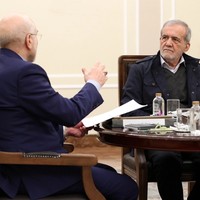
A meeting between Iran’s Foreign Minister Abbas Araghchi and President Donald Trump’s envoy Steve Witkoff, which had been expected to take place in Istanbul on Friday, may now be held outside Turkey, Middle East Eye reported, citing Turkish officials.
“The exact location of the meeting has not yet been finalized,” Middle East Eye quoted an unnamed Turkish official as saying. “What is important for us is the establishment of a peace table. We are ready to contribute wherever the diplomatic table is established.”

The United States has deployed dozens of aircraft to bases near Iran and assembled about a dozen warships in or around the Middle East over the past month, moves that could set the stage for possible US strikes against Iran within weeks, The Washington Post reported on Tuesday, citing US defense officials, satellite imagery and tracking data.
The report, citing unnamed current and former US officials, said the buildup falls short of preparations seen ahead of last year’s strikes on Iran’s nuclear program, but provides President Donald Trump with a credible military option as his administration seeks to pressure Tehran back into nuclear talks.
The report said the aircraft carrier USS Abraham Lincoln, accompanied by three guided-missile destroyers, entered US Central Command’s area of responsibility on Jan. 26 and is operating in the north Arabian Sea.
At least eight other US warships are in the region, including destroyers near the Strait of Hormuz, according to US defense officials and satellite imagery cited in the report.
Iran has also increased activity in the area, the report said, citing flight tracking data and satellite imagery showing Iranian drones operating near the Strait of Hormuz and what analysts identified as an Iranian drone carrier, the Shahid Bagheri, in the same waters.
More than three dozen US aircraft, including fighter jets, drones, and refueling, reconnaissance and transport planes, have moved through or into the region since mid-January, with many landing at al-Udeid Air Base in Qatar, according to the report.
Additional US aircraft were observed at bases in Jordan, including fighter jets and search-and-rescue aircraft, analysts told the newspaper.

A newly announced grassroots network of Iranian doctors, nurses, paramedics and volunteers says it will provide safe medical relief and neighborhood support amid what it describes as a deepening humanitarian emergency after the crackdown that followed nationwide protests.
The group, calling itself the “People’s Red Lion and Sun Groups of Iran,” issued its founding statement on Tuesday, nearly a month after demonstrations erupted across the country and the subsequent violence that has left more than 36,500 people dead, with tens of thousands more suffering physical injuries and profound psychological trauma.
“We speak in days when Iran is wounded,” the statement said. “The people of Iran are mourning and angry because of losing at least thirty thousand of their best sons and daughters.”
The initiative says many of the wounded have been pushed into hiding, unable to seek treatment openly for fear of arrest or retaliation.
“Reports show that many of the wounded are forced to be treated at home and in hiding,” it said, warning that others have been deprived of medical care altogether because they cannot safely access trusted doctors or secure facilities. The statement adds that some remain in critical condition.
The group also raised alarm over reports of security forces entering hospitals and detaining injured people. “Reports indicate that Revolutionary Guard suppression forces have gone to hospitals, taken the wounded with them, or arrested citizens at home by reviewing patient lists,” it said.
According to the organizers, attacks on medical centers, intimidation of healthcare workers, and the removal of patients from hospitals have created what they describe as “a national humanitarian and emergency crisis.”
Many, they warned, are now at risk behind closed doors. “If urgent help does not arrive, some will die, and others will face irreversible physical and psychological consequences,” the statement said.
The founders present the network as a strictly humanitarian effort rather than a political organization, emphasizing that its purpose is to protect lives and reduce suffering.
“Our identity is human and relief-based, not political,” the statement declared. “We have been formed to save human lives and reduce the suffering of families.”
“We are not a political organization, not an instrument of power competition,” it added. “We are a grassroots network of relief and resilience.”
The group’s name and symbol deliberately revive the Red Lion and Sun, a historic emblem associated with humanitarian aid in Iran before the 1979 Islamic Revolution.
By restoring it, the organizers say they seek to highlight “heritage, humanity, and collective responsibility,” while committing themselves to what they call non-negotiable principles centered on saving lives.
“Saving human lives is our absolute priority,” the statement said, adding that citizen safety and privacy would be treated as red lines.
“The safety of citizens and their privacy are our red lines. We will have no mechanism for registration, list-making, or traceable recruitment.”
Instead, the initiative describes itself as an educational and resilience-based network built around decentralized neighborhood cells rather than centralized leadership.
“Our work is education, not organization,” it said. “All local cells will be independent and self-governed.”
The structure, according to the statement, is designed to allow rapid and secure assistance under conditions of surveillance and insecurity. Each unit would consist of only three to five people, formed exclusively among long-time friends, family members or trusted neighbors.
“There is no headquarters and no internal hierarchy,” the group explained. “Each cell is an island of resilience.”
The organizers say the model draws on international crisis-preparedness approaches focused on empowering communities when trust in official institutions collapses or when access to formal emergency services becomes impossible.
The mission of the Red Lion and Sun Groups, they said, is practical and urgent: ensuring safe medical treatment for wounded citizens, connecting patients with volunteer doctors and nurses, and preventing injuries from going untreated because of fear or blocked access.
“No wounded person should remain untreated because of fear or lack of access,” the statement said, outlining a vision of neighborhood-based first response so that vital hours are not lost in moments of crisis.
Beyond medical care, the group said it aims to provide emergency support to families facing severe shortages, supply disruptions, or siege-like conditions, including food, medicine, and essential goods.
It also plans to publish short educational materials that can be stored and used even during communication blackouts, covering first aid, trauma care, psychological support, and basic crisis survival.
The statement places particular emphasis on psychological first aid, including reducing panic, supporting children and the elderly, and strengthening social resilience alongside physical rescue and safety measures.
The announcement comes as the group describes a volatile national environment, warning that the scale of violence and the Iranian authorities’ confrontational posture internationally have heightened fears of further escalation and instability.
In closing, the organizers framed their initiative as a covenant of solidarity with ordinary people, urging citizens to form small trusted neighborhood circles to help one another when institutions fail.
“We make a covenant with the people that, within our capacity, knowledge, and means, we will stand beside them,” the statement said.
“If an incident happens in your area, if an injured person seeks help, if treatment arrives too late… this time, the people will not be alone.”
The group ended with a call for readiness and mutual support. “Be ready,” it said. “To save Iranian lives. To save Iran.”

US investigators are examining whether cryptocurrency platforms were used to help Iranian officials and state-linked actors evade sanctions, a blockchain researcher told Reuters, as crypto use rose sharply in Iran amid currency weakness and political unrest.
Ari Redbord, global head of policy at TRM Labs, said the US Treasury is reviewing whether platforms allowed state-linked players to move money abroad, access hard currency or buy restricted goods.
Estimates of Iran’s crypto activity vary. TRM Labs estimated roughly $10 billion in Iran-linked crypto activity in 2025, compared with $11.4 billion in 2024. Chainalysis said Iranian wallets received a record $7.8 billion in 2025, up from $7.4 billion in 2024 and $3.17 billion in 2023. Researchers cautioned that crypto’s pseudonymous nature makes precise attribution difficult and limits the ability to form a complete picture.
Chainalysis estimated that about half of Iran’s 2025 crypto activity was linked to the Islamic Revolutionary Guard Corps (IRGC). TRM Labs said it has identified more than 5,000 addresses it labels as IRGC-linked and estimates the Guards have moved about $3 billion worth of crypto since 2023.
Iran’s largest exchange, Nobitex, told Reuters that around 15 million people in Iran have some crypto exposure, with many using digital assets as a store of value as the rial depreciates. Analysts said funds can be moved off Iranian exchanges to wallets and platforms elsewhere, complicating enforcement for US authorities.
In September, the US Treasury Department’s Office of Foreign Assets Control (OFAC) sanctioned two Iranian financial facilitators and more than a dozen individuals and entities based in Hong Kong and the United Arab Emirates for helping coordinate money transfers — including proceeds from Iranian oil sales — that it said benefited the IRGC-Quds Force and Iran’s ministry of defense.
“Iranian ‘shadow banking’ networks like these—run by trusted illicit financial facilitators—abuse the international financial system, and evade sanctions by laundering money through overseas front companies and cryptocurrency,” read the statement.

Regional powers including Saudi Arabia, Qatar, Egypt and Oman are trying to bring Iran and the United States to talks in Istanbul on Friday, officials say, to stave off war – starting with Tehran’s nuclear file despite a wide gap over US demands on missiles and allied militias.
What is new this week is not simply another round of nuclear diplomacy, but the intensity of the regional effort behind it.
Officials say the priority of the Istanbul meeting is to prevent conflict, with countries including Saudi Arabia, Qatar, Egypt, Oman, Pakistan and the UAE invited at foreign-minister level as part of a broader attempt to start dialogue before tensions spiral.
The meeting is expected to bring US special envoy Steve Witkoff and Iran’s Foreign Minister Abbas Araghchi together, with regional mediators hoping the presence of Arab and Turkish ministers can help bridge gaps that have widened since talks collapsed last summer after Israeli and US strikes on Iranian nuclear facilities.
One regional official, speaking on condition of anonymity, said that US President Donald Trump’s son-in-law Jared Kushner will also attend alongside Witkoff if the meeting goes ahead.
According to Qatar's Foreign Ministry spokesperson, Majed Al-Ansari, on Tuesday, there is regional collaboration and ongoing efforts aimed at ensuring the de-escalation.
The UAE president's adviser Anwar Gargash told a panel at the World Governments Summit in Dubai on Tuesday, "I think that the region has gone through various calamitous confrontations. I don't think we need another one, but I would like to see direct Iranian-American negotiations leading to understandings so that we don't have these issues every other day."
Public rhetoric on both sides remains extreme, making it harder to judge where compromise lies.
Trump warned this week that with big US warships heading to Iran, "bad things" would likely happen without an agreement, while Iran’s leadership continues to insist it will not negotiate under threats.
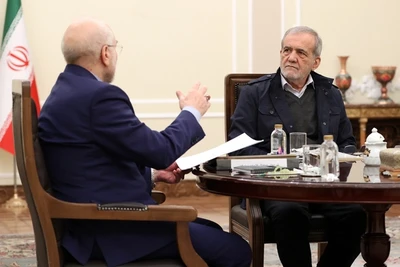
Iranian President Masoud Pezeshkian said on Tuesday that he had instructed foreign minister to prepare the ground for talks with the United States.
“Given requests from friendly governments in the region for a response to the US president’s proposal for talks, I instructed the foreign minister to, if conditions are suitable – free of threats and unrealistic expectations – create the groundwork for fair and equitable negotiations, guided by the principle of dignity, wisdom, and expediency, within the framework of the national interest,” Pezeshkian said.
The existence of an Istanbul channel – and the involvement of multiple regional capitals – suggests both sides are still testing whether a deal is possible.
Where talks could bog down
The central diplomatic battle is over scope. Regional officials involved in the effort say mediators are trying to limit the talks to Iran’s nuclear program as the most realistic path to getting Tehran to “yes,” with one official describing the strategy as addressing Washington’s non-nuclear demands only later through innovative ways.
“If the talks happen, they will stay focused on Iran’s nuclear program. And then we will try to find innovative ways to address Washington’s nonnuclear demands,” the Washington Post cited a US official as saying.
The Trump administration, however, has been explicit that it wants more than nuclear limits – including constraints on Iran’s missile development and its support for allied militia groups across Iraq, Lebanon, Yemen and elsewhere.
That mismatch is likely to define the talks: Iran wants the file narrow, Washington wants it comprehensive.
Uranium stockpile and enrichment: the urgent nuclear core
At the heart of the talks is Iran’s uranium stockpile and enrichment capability.
The Trump administration has demanded that Tehran remove or transfer 400 kilograms (more than 900 pounds) of uranium enriched to 60% purity and curb enrichment activity it says is edging toward weapons capability.
Iran denies it intends to weaponize its program, but the question of what happens to existing stockpiles – whether moved abroad, frozen, or placed under tighter monitoring – remains one of the most immediate pressure points.
Analysts say one possible compromise could be suspending further enrichment without Iran explicitly renouncing what it claims as a right to enrich under the Non-Proliferation Treaty.
Missile program: Tehran’s red line
Iran has consistently signaled that its missile program is not up for negotiation.
That creates an early ceiling on what can be achieved if Washington insists on missile curbs as part of any package, reinforcing the mediator strategy of keeping the first phase focused tightly on the nuclear file.
Regional militias: the hardest unresolved layer
The US has also demanded that Iran reduce support for allied non-state groups across the region.
Iran is unlikely to publicly abandon those relationships, but experts suggest the sides could explore narrower understandings – such as a nonaggression framework that extends to both countries’ respective partners – rather than an explicit proxy rollback.
This is where the talks could either expand into a broader security negotiation or fracture under maximalist expectations.
What happens next
Officials caution that details of the Istanbul format remain unclear, but the “main meeting” is expected on Friday.
The immediate goal may be modest: establish a channel, prevent escalation, and see whether nuclear-focused diplomacy can restart – with missiles and regional militias left as the more difficult second-stage questions.
In that sense, Istanbul seems less about a final agreement than about whether the sides can still find a negotiating floor before confrontation becomes the default.
According to an Iranian diplomatic source cited by Reuters on Tuesday, Iran is "neither optimistic nor pessimistic" over the talks.

An Iranian lawmaker said on Tuesday that security forces were authorized to use weapons against protesters after a decision by Iran’s top security body, acknowledging a tougher response to nationwide unrest.
Esmail Kowsari, a lawmaker and former Islamic Revolutionary Guard Corps general, told the Rouydad24 website that police had not used weapons until late Friday, but that the Supreme National Security Council later approved armed deployment by police, the Basij and the Guards.
“Until Friday night and even Friday morning, the police did not use weapons,” Kowsari said. “After the attacks escalated, the Supreme National Security Council decided that the police, the Basij and the IRGC should enter the scene armed.”
The MP made the comments despite earlier remarks by Iran’s Prosecutor General Mohammad Movahedi, who praised police forces on Sunday for what he called their role in containing recent unrest, saying officers acted “empty-handed” because they were not permitted to use weapons.
More than 36,500 Iranians were killed by security forces during the January 8-9 crackdown on nationwide protests, making it the deadliest two-day protest massacre in history, according to documents reviewed by Iran International.