Saudi Arabia, UAE, Oman, Egypt to attend Iran-US talks in Istanbul - Reuters


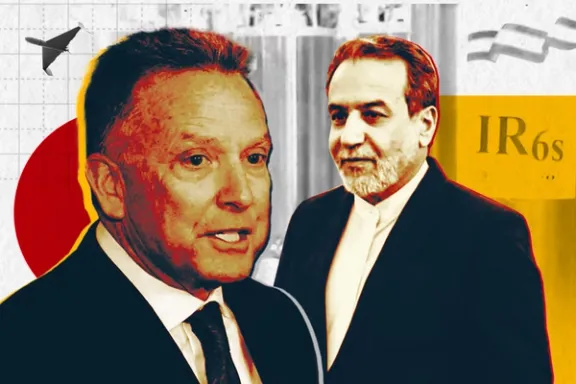
Officials from some regional countries, including Saudi Arabia, the United Arab Emirates, Oman and Egypt, are expected to attend a meeting in Istanbul on Friday, where Iran’s Foreign Minister Abbas Araghchi is set to meet US envoy Steve Witkoff, Reuters reported, citing a senior regional diplomat.
Axios earlier reported that the meeting between Araghchi and Witkoff was expected to take place as part of efforts to explore a possible nuclear deal.
Reuters separately confirmed the meeting, citing a senior Iranian official.
“The president’s been calling for them to make a deal. The meeting is to hear what they have to say,” Reuters quoted a US official as saying.

Britain on Monday imposed a new round of sanctions on Iranian officials and a state security body, targeting those it said were responsible for violent crackdowns on peaceful protests.
The British Foreign Office said it had sanctioned 10 individuals and the Law Enforcement Forces of the Islamic Republic for what it described as serious human rights violations, including the killing of protesters, torture, sexual violence, and sweeping restrictions on freedom of expression and peaceful assembly.
The measures include asset freezes, travel bans and director disqualification sanctions, which prevent those listed from holding senior positions in British companies.
Among those designated was Eskandar Momeni, who oversees Iran’s domestic security apparatus, provincial police chiefs Mohammad Reza Hashemifar and Ahmed Amini, senior IRGC commander Mohammad Zamani, judges Ahmad Darvish Goftar and Mehdi Rasakhi, and the businessman Babak Zanjani.
“The Iranian people have shown extreme courage in the face of brutality and repression over recent weeks simply for exercising their right to peaceful protest,” Foreign Secretary Yvette Cooper said in a statement. “
The reports and shocking scenes of violence that have been seen around the world are horrific,” she added.
British officials said the action followed similar measures imposed by the European Union and the United States as part of a coordinated effort to hold Iranian authorities accountable.
Last week, EU foreign ministers formally designated the Islamic Revolutionary Guard Corps as a terrorist organization, a move that prompted sharp retaliation from Tehran.
Iranian officials have routinely dismissed Western sanctions as politically motivated and deny responsibility for abuses.
On Sunday, Iran’s parliament speaker said the country would now consider the armies of EU member states “terrorist groups,” escalating an already tense standoff between Iran and Western governments.
The sanctions were announced as signs emerged that diplomatic contacts between Iran and the United States could resume.
An Iranian foreign ministry official said on Monday that Tehran was weighing terms for renewed nuclear talks, even as Washington has increased its naval presence in the region following last month’s deadly protest crackdown.
Jordan’s foreign minister in a phone call with his Iranian counterpart on Monday said Amman would not allow its territory or airspace to be used for any military action against Iran.
“I discussed regional developments and efforts to reduce escalation in a phone call with Iran’s foreign minister,” Ayman Safadi said, referring to talks with Abbas Araghchi. “Jordan will not be a battleground for any party in any regional conflict, nor a launchpad for any military action against Iran.”

Britain added 11 new designations under its Iran sanctions regime on Monday, including Iran’s interior minister Eskandar Momeni and the country’s law enforcement forces, citing alleged human rights abuses.
The UK foreign ministry said those sanctioned were responsible for or involved in serious abuses linked to crackdowns on protests in 2025 and 2026. The measures include asset freezes, travel bans and director disqualification sanctions.
Those listed include Interior Minister Eskandar Momeni; provincial police chiefs Mohammad Reza Hashemifar and Ahmed Amini; senior security official Mohammad Zamani; Brigadier General Mohammad Ghanbari; judges Ahmad Darvish Goftar and Mehdi Rasakhi; Majid Feiz Jafari; Yadollah Bouali; businessman Babak Zanjani; and the Law Enforcement Forces of the Islamic Republic of Iran.
Britain said the sanctions were imposed over alleged violations including the killing of protesters, torture, sexual violence and restrictions on freedom of expression and peaceful assembly.
The head of Iran’s parliamentary national security and foreign policy commission said he had written to the foreign minister urging retaliatory steps after the European Union designated the Islamic Revolutionary Guard Corps as a terrorist organization.
Ebrahim Azizi said in the letter that Iran should designate military attachés from EU member states as terrorists and expel them, particularly from countries he said had acted against Iran during recent conflicts or unrest, state media reported.
He described the EU decision as a political and “ill-considered” move that undermined regional and international security and violated international law.

Iran has no plans to transfer its enriched nuclear material to any country and talks are not focused on such an option, a senior Iranian official said, pushing back against earlier reports.
Ali Bagheri, deputy for foreign policy at Iran’s Supreme National Security Council secretariat, said Iranian officials had no intention of moving enriched nuclear materials out of the country.
“Iranian officials have no plan to transfer enriched nuclear materials to any country, and negotiations are not about such an issue,” he was quoted as saying by state media.
His comments came after Reuters reported on Monday that an unnamed Iranian official said diplomacy was ongoing and that Iran was ready to show flexibility on uranium enrichment, including possibly handing over 400 kg of highly enriched uranium under certain arrangements.