Trump says Iran is negotiating with US: 'We'll see what happens'
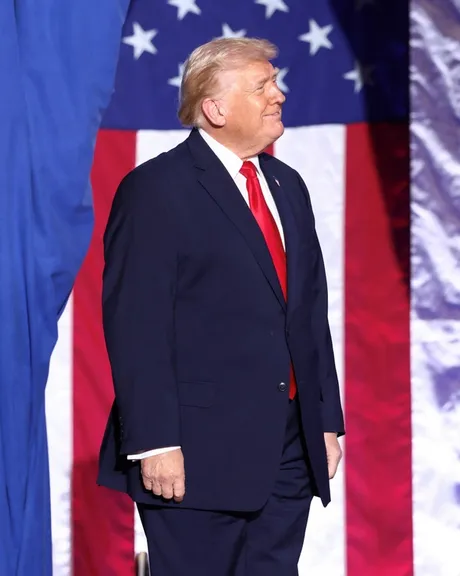
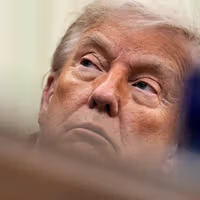
US President Donald Trump told Fox News it is true that Iran always wants to negotiate without being clear about the ultimate goal, "but they are negotiating, so we'll see what happens."
"The last time they negotiated, we had to take out their nuclear, didn't work, you know. Then we took it out a different way, and we'll see what happens," Trump said on Saturday.
US President Donald Trump on Saturday posted a video showing a heavy police presence in Tehran and reposted a comment that said, “HAPPENING NOW – Tehran. The IRGC are in panic mode. Fully sh*tting their pants.”
Security and law enforcement forces of the Islamic Republic have significantly increased their presence across parts of Iran, with reports pointing to an unusual buildup in Tehran as well as the western cities of Ardabil and Kermanshah, according to eyewitness accounts and local monitoring groups.
The Telegram channel Bazaar Civil Protest reported, citing field observations, that the deployment of security and police forces in Tehran has risen to an unprecedented level.
The reports describe the large-scale positioning of foot patrols and vehicles, an increase in security patrols, and the organized presence of multiple units across different parts of the capital.
According to witnesses quoted by the channel, the heightened security presence reflects concerns within the authorities over the possibility of renewed unrest. The same source said similar deployments have been observed in Ardabil and Kermanshah, suggesting a broader security alert beyond Tehran amid fears of fresh protests.
A website affiliated with Iran’s Revolutionary Guard Corps said Tehran had accepted sweeping nuclear restrictions, inspections and even the removal of highly enriched uranium, but Trump is not seeking negotiations but the disarmament and humiliation of Iran.
“Iranians know the nuclear issue is merely a pretext, because the reality is that Iran accepted everything reasonable and logical in this case, from extensive limitations to inspections and even readiness to remove highly enriched uranium within a defined framework," reads an article published by Basirat news website, which is affiliated with the IRGC's political department.
“Trump is not talking about negotiation; he is talking about surrender — a surrender that means stripping national will, weakening defensive power, and ultimately returning Iran to dependency.”
“What the United States wants is not reassurance, but the disarmament of Iran for the purpose of humiliation and fragmentation," the article added.
In a report earlier this week, Axios quoted US officials as saying any deal with Iran would have to include the removal of all enriched uranium from Iran, a cap on Iran's stockpile of long-range missiles, a change in Iran's policy of supporting proxies in the region and a ban on independent uranium enrichment in the country.
Security forces were given free rein to use lethal force during the January 8–9 crackdown to spread fear and deter further protests in Iran, a senior government official said in a closed-door meeting, according to a source familiar with the talks.
The closed-door meeting was held to brief senior government officials and local governors on the brutal crackdown on protesters, the source told Iran International.
The senior official said security forces were given “full authority and a blank check to attack, with the aim of creating maximum fear to deter the resurgence of protests," the source said.
The order, he added, made no distinction between civilians and others.
The senior official speaking at the meeting was presenting assessments by security bodies that sharply contradict the government’s official figures on the killings.
While the official death toll stands at nearly 3,000, classified documents and eyewitness reports reviewed by Iran International’s editorial board show that more than 36,500 people were killed during the targeted suppression of Iran’s national uprising on the orders of Supreme Leader Ali Khamenei.
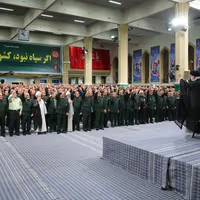
Following Khamenei’s speech on January 9, briefing sessions and internal discussions among senior Islamic Revolutionary Guard Corps (IRGC) commanders used phrases such as “victory through terror” and “fight them until there is no more sedition," according to sources familiar with the discussions.
The same language later appeared on Telegram channels linked to pro-government groups.
Use of foreign forces
During the closed-door meeting, the senior government official confirmed earlier reports about the use of foreign forces in suppressing the protests, saying the Revolutionary Guards, its Basij militia, as well as Quds Force-linked units trained in Chechnya, Iraq, Pakistan, and Sudan were involved.
Iran International reported earlier this month that Iranian-backed Iraqi militias had begun recruiting and deploying fighters to assist Iranian forces in cracking down on protests.
That report said hundreds of Shiite militiamen from groups including Kataib Hezbollah, Harakat al-Nujaba, Kataib Sayyid al-Shuhada and the Badr Organization had been sent into Iran through multiple border crossings.
The fighters were transferred under the guise of pilgrimage trips and gathered at a base in Ahvaz before being dispatched to various regions, Iran International reported.
The building damaged in a blast in Bandar Abbas on Saturday was not connected to a gas network, said a resident contradicting reports by some Iranian media that attributed the incident to a gas explosion.
In a video shared after the blast, the resident said the building had never been fitted with gas piping. State media later said that the cause of the incident was under investigation.
The head of crisis management at the Hormozgan Governorate said the blast left 14 people injured and one person dead.
Some reports said the blast killed the commander of the Islamic Revolutionary Guard Corps Navy, Alireza Tangsiri, which the IRGC’s public relations office denied.